
Sports Injuries Treatment Treated by Sports Physiotherapists

Updated: Mar 16

Sports Injuries Treatment & Sports Physiotherapy
Sports and physical activities play an important role in maintaining fitness, mental well-being, and overall health. However, whether you are a professional athlete, a fitness enthusiast, or someone who plays sports recreationally, injuries can occur due to overuse, improper technique, lack of conditioning, or sudden impact. This is where sports physiotherapy becomes essential.
Sports physiotherapists specialize in diagnosing, treating, and preventing injuries related to physical activity.
At Healthy Jeena Sikho, Sports Injuries Treatment focuses not only on pain relief but also on restoring strength, flexibility, coordination, and long-term performance while minimizing the risk of re-injury.
This blog explains the Common Sports Injuries Treated by Sports Physiotherapists and how physiotherapy supports safe and effective recovery.
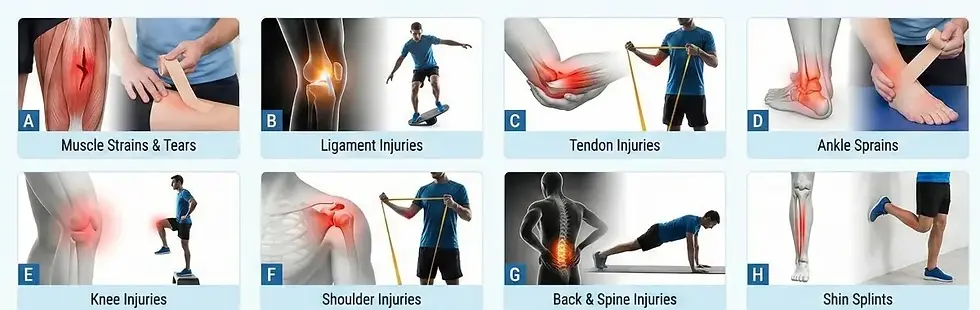
Muscle Strains and Tears
Muscle strains are among the most common sports injuries and occur when muscle fibers are overstretched or torn. These injuries often affect the hamstrings, quadriceps, calves, and lower back, especially in sports that involve sprinting, jumping, or sudden directional changes.
Sports physiotherapy plays a crucial role in reducing pain, improving blood circulation, and restoring muscle strength. Treatment usually involves controlled stretching, strengthening exercises, manual therapy, and gradual return-to-sport protocols to prevent recurrence.
Ligament Injuries
Ligaments connect bones to each other and provide joint stability. Injuries such as ACL (Anterior Cruciate Ligament) tears, MCL injuries, and ankle ligament sprains are common in sports like football, basketball, cricket, and badminton.
Sports physiotherapists focus on reducing swelling, restoring joint stability, improving balance, and rebuilding muscle strength around the injured joint. Post-surgical ligament rehabilitation is incomplete without structured physiotherapy, which ensures safe and confident return to activity.
Tendon Injuries (Tendinitis and Tendinopathy)
Tendon injuries develop due to repetitive stress and overuse. Common examples include Achilles tendinitis, tennis elbow, golfer’s elbow, and patellar tendinitis.
Sports physiotherapy addresses tendon injuries through load management, eccentric strengthening exercises, flexibility training, and movement correction. Proper rehabilitation helps reduce pain, improve tendon healing, and prevent chronic degeneration.
Ankle sprains are extremely common in running, football, basketball, and trail sports. They occur when the ankle rolls or twists beyond its normal range, damaging surrounding ligaments.
Sports physiotherapists treat ankle sprains by restoring mobility, strengthening stabilizing muscles, and improving balance and proprioception. Without proper physiotherapy, repeated ankle sprains can lead to long-term instability.
The knee joint is highly vulnerable during sports activities. Common knee injuries include meniscus tears, runner’s knee, jumper’s knee, and ligament-related problems.
Sports physiotherapy focuses on correcting movement patterns, strengthening surrounding muscles like quadriceps and hamstrings, and improving joint alignment. This not only reduces pain but also protects the knee from future injury.
Sports involving throwing, swimming, or overhead movements often lead to shoulder injuries such as rotator cuff tears, shoulder impingement, and dislocations.
Physiotherapy treatment targets shoulder mobility, muscle balance, posture correction, and gradual strengthening. Sports physiotherapists ensure that the shoulder regains stability and strength without compromising performance.
Lower back pain and spinal injuries are common in sports requiring repetitive bending, twisting, or heavy lifting. Improper posture, weak core muscles, or sudden impact can contribute to these issues.
Sports physiotherapy addresses spinal injuries through core strengthening, posture correction, mobility exercises, and ergonomic education. This helps athletes return to sport safely while reducing the risk of chronic pain.
Shin Splints
Shin splints cause pain along the front or inner edge of the shin bone and are common among runners and athletes who suddenly increase training intensity.
Physiotherapists focus on correcting running mechanics, improving muscle flexibility, strengthening the lower limbs, and guiding gradual training progression to prevent recurrence.
Stress Fractures
Stress fractures are small cracks in the bone caused by repetitive impact and overtraining. They commonly occur in the feet, tibia, and hips.
Sports physiotherapy plays a supportive role during recovery by managing load, maintaining conditioning of unaffected areas, and guiding a safe return-to-activity plan once healing occurs.
Why Sports Physiotherapy Is Essential for Injury Recovery
Sports physiotherapy is not just about pain relief. It focuses on identifying the root cause of injury, correcting faulty movement patterns, improving strength and flexibility, and preventing future injuries.
At Healthy Jeena Sikho, sports physiotherapy is designed to support both amateur and professional athletes with personalized treatment plans, home physiotherapy options, and evidence-based rehabilitation protocols.

When Should You Consult a Sports Physiotherapist?
You should consult a sports physiotherapist if pain persists beyond a few days, movement feels restricted, swelling does not reduce, or performance is affected. Early intervention helps reduce recovery time and prevents minor injuries from becoming chronic problems.
Frequently Asked Questions (FAQs)
What does a sports physiotherapist treat? A sports physiotherapist treats muscle, ligament, tendon, joint, and sports-related injuries caused by physical activity, exercise, or athletic performance.
Is sports physiotherapy only for professional athletes? No. Sports physiotherapy is beneficial for anyone involved in physical activity, including gym-goers, runners, school athletes, and recreational sports players.
How long does recovery take with sports physiotherapy? Recovery time depends on the type and severity of the injury. Early physiotherapy intervention often leads to faster and safer recovery.
Can sports physiotherapy prevent injuries? Yes. Sports physiotherapists help improve strength, flexibility, posture, and movement techniques, which significantly reduce the risk of future injuries.
Does Healthy Jeena Sikho provide sports physiotherapy at home? Yes. Healthy Jeena Sikho offers professional sports physiotherapy services at home, ensuring comfort, continuity, and personalized care.
Conclusion
Sports injuries are common, but with timely and professional sports physiotherapy, recovery can be faster, safer, and more complete. From muscle strains to ligament injuries and joint problems, sports physiotherapists play a vital role in restoring performance and preventing long-term damage.
At Healthy Jeena Sikho, our goal is to help individuals recover confidently, return to activity safely, and maintain long-term physical health through expert sports physiotherapy care.
Healthy Jeena Sikho – Trusted Physiotherapy & Sports Injury Care at Home


Great write-up — Cole Anthony’s MetaMask hack is exactly the kind of lesson NFT holders need to see. I recommend this practical guide: https://www.youtube.com/watch?v=n0Yd4vZ7kQI It walks through securing MetaMask, spotting phishing attempts, and safer habits for managing NFTs.
Excellent overview of common sports injuries and the importance of timely physiotherapy for recovery. For additional context on how off-court pressures and media commitments can influence athletes' rehab and injury risk, I found this perspective useful: https://www.lsm.lv/raksts/sports/basketbols/martins-lauva-porzingis-ir-nujorkas-sovbiznesa-sastavdala.a16379 . Understanding those factors helps physiotherapists design more realistic, athlete-centered rehab plans.
During routine navigation through different pages, I opened chickenroad-game.net while checking information about the chicken road game and noticed how the interface shaped attention. The interest was in the visual pacing rather than the platform itself. Sometimes focus stayed anchored, and sometimes it moved smoothly. These subtle changes revealed natural attention patterns. The experience felt calm and balanced.
Hey! While taking a short break today, I stumbled upon https://odds96online.in/ and noticed how my mind instantly perked up, almost like when you start a new level in a game and don’t know what to expect next. It wasn’t about winning or losing, just the small thrill of curiosity — a little mental jump that made ordinary moments feel sharper. My attention bounced between focused observation and light, playful wandering, creating this back-and-forth rhythm that kept me surprisingly engaged. Watching how my thoughts shifted reminded me of the way we explore challenges in games: noticing patterns, reacting instinctively, and enjoying tiny surprises along the way. By the end, what started as a quiet pause became a subtle, lively exercise in observation,…
This is a fantastic and detailed breakdown of sports injuries and the recovery process! As someone who works closely with the mind-body connection, I found the section on physiotherapy treatments in India particularly interesting. It’s amazing how consistent physical rehab can transform recovery timelines.
I’m Jennifer Austin, an Online Hypnotherapist. In my practice, I often see how mental fatigue and stress can actually slow down the physical healing of the body, especially for those dealing with chronic pain or stress-related skin flare-ups like Eczema and TSW.
Quick question for the author: In your experience with sports physiotherapy, how much do you think an athlete’s 'mental resilience' or stress levels impact their physical response to these treatments? I’d love to hear your…