
Pelvic Floor Exercises at Home for Men and Women (Complete Guide)

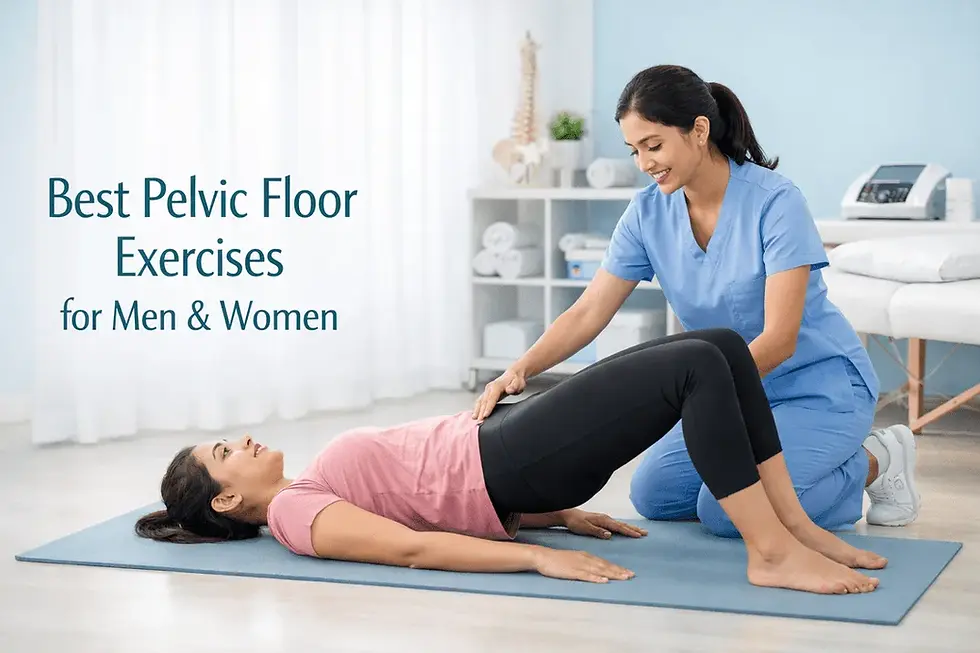
Weak pelvic floor muscles may be the hidden reason.
If you are searching for pelvic floor exercises at home, Kegel exercises for men and women, this complete guide will help you understand everything in simple words.
What Is the Pelvic Floor? (Understanding Pelvic Floor Muscles)
Where Are the Pelvic Floor Muscles Located?
The pelvic floor muscles are a group of muscles located at the bottom of your pelvis. They form a supportive hammock that holds:
Bladder
Uterus (in women)
Prostate (in men)
Rectum
These muscles stretch from the pubic bone (front) to the tailbone (back). They work with your core muscles and diaphragm to support internal organs and maintain control over urination and bowel movements.
Why Are Pelvic Floor Muscles Important for Your Health?
Strong pelvic floor muscles help in:
Supporting pelvic organs
Reducing lower back pain
Speeding up postpartum recovery
Weak muscles can cause urine leakage, pelvic organ prolapse, chronic pelvic pain.
Signs of a Weak Pelvic Floor
Urine leakage while coughing or sneezing
Difficulty controlling gas
Frequent urge to urinate
Pelvic heaviness or pressure
Pain during intercourse
If you notice these signs, it’s time to start pelvic floor strengthening exercises or consult a pelvic floor physiotherapist.
Best Pelvic Floor Exercises for Women
Kegel Exercises for Women – Step-by-Step Guide
Kegel exercises are the most effective pelvic floor exercises for women.
How to do Kegels correctly:
Sit or lie down comfortably.
Tighten the muscles you use to stop urine.
Hold for 5 seconds.
Relax for 5 seconds.
Repeat 10–15 times.
👉 Do 3 sets daily for best results.
Avoid tightening your stomach, thighs, or holding your breath.

Pelvic Floor Exercises After Pregnancy and Childbirth
Pregnancy and delivery weaken pelvic muscles. Safe postpartum exercises include:
Gentle Kegels
Diaphragmatic breathing
Pelvic tilts
These help in postpartum pelvic floor recovery and reduce bladder leakage.
Women recovering after delivery can benefit from guided postpartum recovery physiotherapy in Mohali to speed up healing and prevent complications.
Squats for Pelvic Floor Strengthening in Women
Squats naturally activate glutes and the pelvic floor.
Steps:
Stand with feet shoulder-width apart.
Lower down like sitting on a chair.
Tighten pelvic muscles while standing up.
Do 12 reps × 3 sets.
Bridge Exercise for Pelvic Floor Muscles
Lie on your back, knees bent.
Lift hips upward.
Squeeze pelvic floor at the top.
Hold for 5 seconds.
Repeat 10–12 times.
This strengthens both core and pelvic muscles.
Pelvic Tilts – Best Exercise for Postpartum Recovery
Lie on your back.
Flatten lower back against the floor.
Tighten pelvic muscles.
Hold 5 seconds.
Repeat 10 times.
Best Pelvic Floor Exercises for Men
Kegel Exercises for Men – How to Do Them Correctly
Kegel exercises for men help in improving bladder control.
Steps:
Tighten muscles used to stop urine flow.
Hold for 5–10 seconds.
Relax fully.
Repeat 10–15 times.
Do 3 sets daily.
Reverse Kegels for Men – Benefits and Technique
Reverse Kegels relax tight pelvic muscles and reduce pelvic tension.
Take a deep breath.
Gently push pelvic muscles downward.
Hold 3 seconds.
Relax.
How to Do Kegel Exercises Correctly (Step-by-Step)
How to Find Your Pelvic Floor Muscles
Try stopping urine mid-flow once to identify the muscles. Do not make this a habit.
Kegel Exercise Routine for Beginners
10 reps
Hold 5 seconds
3 times per day
Gradually increase hold time to 10 seconds.
How Many Kegels Should You Do Per Day?
👉 30–40 repetitions daily are ideal for most adults.
Common Kegel Mistakes to Avoid
Holding breath
Tightening stomach or thighs
Doing too many too fast
Not relaxing between repetitions
Advanced Pelvic Floor Exercises for Stronger Core
Since pelvic floor muscles support the spine, combining these exercises with lower back pain physiotherapy treatment in Mohali can improve overall recovery.
pelvic floor exercises at home for men and women
Dead Bug Exercise for Pelvic Floor and Core Strength
Improves coordination between core and pelvic muscles.
Bird Dog Exercise – Pelvic Floor and Spine Stability
Strengthens deep core muscles and improves balance.
Happy Baby Pose – Pelvic Floor Stretching and Relaxation
Helps relax tight pelvic floor muscles.
Diaphragmatic Breathing for Pelvic Floor Activation
Deep breathing improves coordination between diaphragm and pelvic muscles, reducing tension.
Pelvic Floor Exercises for Specific Conditions
Pelvic floor exercises for prolapse recovery provide organ support.
Safe pelvic floor exercises during pregnancy improve delivery outcomes.
Post C-section exercises should start after medical approval.
Combine Kegels with core rehab for diastasis recti recovery.
Workout Routine – Weekly Plan
pelvic floor exercises at home for men and women
Beginner (Week 1–2)
Kegels – 3 sets
Bridge – 10 reps
Pelvic tilts – 10 reps
Intermediate (Week 3–4)
Kegels (10 sec hold)
Squats
Bird Dog
Dead Bug
Advanced Plan
Weighted squats
Core strengthening
Reverse Kegels

Tips to Get Better Results from Pelvic Floor Training
How Long Does It Take to Strengthen Pelvic Floor Muscles?
With consistency, results appear in 4–8 weeks.
Should You Use a Pelvic Floor Trainer or Device?
Devices can help improve awareness, but correct technique and guidance from a physiotherapist are more important.
Can Yoga Help Strengthen the Pelvic Floor?
Yes. Yoga improves flexibility, breathing control, and muscle awareness.
Foods That Support Pelvic Floor Health
High-fiber foods (prevent constipation)
Adequate water
Protein-rich diet
Pelvic Floor Physiotherapy in Mohali – Expert Treatment Available
If exercises at home are not improving symptoms, you should consult experts at our physiotherapy centre near me in Mohali for proper pelvic floor assessment and personalized treatment.
If you are searching for:
physiotherapy centre near me in Mohali
pelvic floor therapy in Mohali
urinary incontinence treatment in Mohali
best physiotherapy centre in Mohali
Visit Healthy Jeena Sikho Physiotherapy Centre, Mohali.
Their certified physiotherapists provide:
Personalized pelvic floor rehabilitation
Treatment for urinary incontinence
Postpartum recovery programs
Men’s pelvic health therapy
Modern physiotherapy equipment
Why Healthy Jeena Sikho? – Your Trusted Health & Wellness Partner
Healthy Jeena Sikho is known for evidence-based physiotherapy and patient-centered care.
✔ Certified physiotherapists
✔ Advanced treatment techniques
✔ Personalized therapy plans
✔ Trusted by thousands of patients
Their focus is natural healing, long-term recovery, and preventive care.
Frequently Asked Questions About Pelvic Floor Exercises
Can men do Kegel exercises?
Yes, Kegel exercises for men are highly effective in improving bladder control.
How do I know if my pelvic floor is too tight?
Symptoms include pelvic pain, difficulty starting urination, and discomfort during intercourse.
Is it safe to do pelvic floor exercises every day?
Yes, daily training is safe when done correctly.
What happens if you don’t strengthen your pelvic floor?
You may develop urinary incontinence, pelvic organ prolapse, chronic pelvic pain.
Conclusion
Strong pelvic floor muscles are essential for bladder control, core strength, pregnancy recovery.
Start with simple Kegel exercises, stay consistent, and follow a structured weekly routine.
If symptoms persist, consulting a certified pelvic floor physiotherapist can help.
At Healthy Jeena Sikho Physiotherapy Centre, Mohali, our certified physiotherapists perform detailed pelvic floor assessments before creating personalized treatment plans.


I really enjoyed this post and the simple way it introduces numerología. The subject becomes much more interesting when the meanings and interpretations are explained clearly. I think this kind of content can help beginners understand the basic ideas while encouraging them to explore the topic with curiosity and an open mind. Very enjoyable read.
Your writing has a nice flow curve rush game, and I didn’t feel lost at any point. It made me want to keep reading until the very end.
very informative