
Government-Backed Preventive Healthcare Programs in India: Role of Physiotherapy (2026)
- Punya Bajaj
- Jan 3
- 6 min read

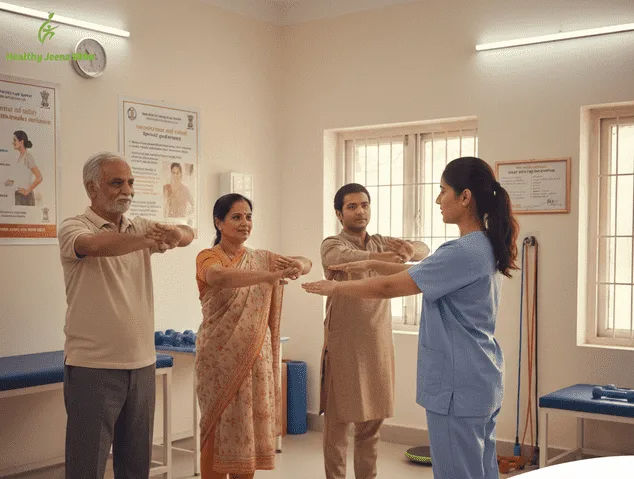
Understanding Government-Backed Preventive Healthcare Programs in India
India's healthcare system is shifting focus from treating diseases to preventing them from developing. Government-backed preventive healthcare programs represent a major transformation in public health, benefiting millions of citizens across urban and rural areas. Many Indians wonder how these programs work, what physiotherapy's role includes, and whether they can access these services—and understanding these answers reveals significant opportunities for better health outcomes.
The short answer: Yes, India's government-backed preventive healthcare programs actively integrate physiotherapy as a critical component for preventing diseases, identifying health problems early, and promoting wellness. These programs are increasingly accessible through various government schemes like Ayushman Bharat and the National Health Mission, offering affordable solutions for preventing chronic diseases such as arthritis, diabetes complications, heart disease, and falls in elderly populations.
How Government-Backed Preventive Healthcare Programs Work in India
Government-backed preventive healthcare programs function by identifying health risks early, educating communities about disease prevention, screening for health problems before they become severe, and providing accessible interventions through primary health centers.
Physiotherapy integrates into this framework by preventing musculoskeletal disorders through ergonomics training, reducing fall risk in elderly populations, managing chronic disease complications like diabetes, helping people recover quickly from injuries before they become chronic, educating communities about healthy movement patterns, supporting workers in preventing occupational injuries, and promoting healthy aging.
By incorporating physiotherapy into preventive initiatives, India reduces hospital pressure, decreases healthcare spending, prevents disabilities, and improves population health outcomes through evidence-based interventions.
Key Government Programs Incorporating Physiotherapy Services
Several flagship programs deserve attention for their physiotherapy components:
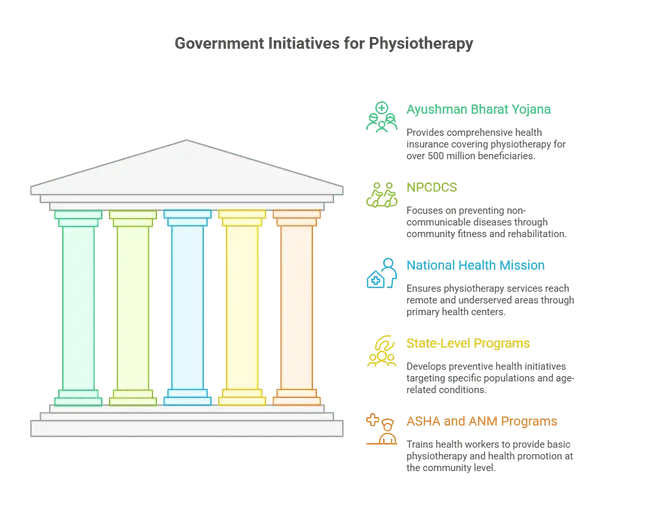
Ayushman Bharat - Pradhan Mantri Jan Arogya Yojana (PM-JAY):
This landmark scheme covers over 500 million beneficiaries with comprehensive health insurance including physiotherapy services at empanelled hospitals and clinics. Eligible families can access physiotherapy treatment without upfront costs, making treatment accessible to economically disadvantaged populations.
National Program for Prevention and Control of Cancer, Diabetes, Cardiovascular Disease and Stroke (NPCDCS):
This initiative focuses on preventing non-communicable diseases affecting millions. Physiotherapy plays a vital role through community fitness programs, patient education, and early rehabilitation services.
National Health Mission (NHM):
Operating across all states and union territories, NHM incorporates physiotherapy services from primary health centers to district hospitals, ensuring preventive services reach remote and underserved areas.
State-Level Programs:
Progressive states including Maharashtra, Tamil Nadu, Karnataka, and Punjab have developed preventive health initiatives with physiotherapy components targeting specific populations and age-related conditions.
ASHA and ANM Programs:
Accredited Social Health Activists and Auxiliary Nurse Midwives receive training in basic physiotherapy principles and health promotion, making preventive services available at grassroots community levels.
Physiotherapy delivers maximum preventive benefits in specific population groups:
Elderly Population: Government programs prioritize preventing falls, maintaining mobility, and preserving independence through physiotherapy-led interventions, significantly reducing hospitalizations.
Occupational Health: Workers in high-risk occupations benefit from physiotherapy-based ergonomic training, movement techniques, and injury prevention programs.
Diabetes Management: Physiotherapy prevents serious diabetic complications like neuropathy-related falls and joint stiffness through supervised exercise programs.
Childhood Development: Early detection and treatment of developmental delays prevents long-term disabilities and ensures normal development.
Cardiovascular Health: Physiotherapy-led cardiac rehabilitation reduces heart disease recurrence and prevents secondary cardiac events.
Post-COVID Recovery: Government programs increasingly include physiotherapy for managing post-COVID complications and preventing long-term sequelae.
Benefits of Government-Backed Preventive Healthcare Programs with Physiotherapy
Accessing physiotherapy through government preventive programs offers substantial advantages:
Financial Accessibility: Government programs eliminate or drastically reduce physiotherapy costs, making treatment accessible to economically disadvantaged populations who might otherwise avoid care.
Disease Prevention: Preventive approaches reduce disease burden, decrease mortality rates, improve functional capacity, and enhance overall quality of life more effectively than treating advanced conditions.
Reduced Healthcare System Burden: Preventing diseases reduces demand on hospitals, allowing resources to concentrate on acute and complex conditions.
Early Intervention: Government programs enable early detection and timely intervention before conditions progress to advanced stages, significantly improving outcomes.
Community Awareness: Government initiatives provide widespread health literacy about movement, fitness, and disease prevention, creating positive behavioral changes.
Worker Productivity: Physiotherapy prevention programs keep workers healthy and productive, reduce work-related injuries, and increase economic productivity.
Equitable Access: Government programs reduce disparities between urban and rural populations, ensuring physiotherapy benefits reach underserved and marginalized communities.
How to Access Physiotherapy Through Government Programs
Citizens and patients can access government-backed physiotherapy services through several pathways:
Visit your nearest primary health center (PHC) or government hospital and inquire about available physiotherapy services. Request referral from your general practitioner for physiotherapy treatment. Verify your Ayushman Bharat eligibility by checking the official portal using your mobile number. Contact your state health department about specific programs available in your district.
Attend community health camps organized by government health departments. Connect with your ASHA worker or ANM for information about local health programs. Enroll in occupational health programs if you work in partnering industries.
Important Considerations
While government preventive programs offer excellent opportunities, several factors require attention:
Verify Availability: Physiotherapy program availability varies by state and district. Contact your local health department to confirm which programs operate in your area.
Understand Eligibility: Different programs have different eligibility criteria. Check whether you qualify for Ayushman Bharat, NPCDCS, or state-specific health schemes.
Ensure Quality: Government programs should employ qualified, licensed physiotherapists. Verify practitioner credentials and ensure evidence-based treatment.
Maintain Consistency: Preventive physiotherapy effectiveness depends on consistent participation and adherence to recommended exercise programs.
Monitor Progress: Track improvements in symptoms and function. Regular reassessment ensures treatment remains appropriate and effective.
Frequently Asked Questions
Q.1 How can I access physiotherapy through government preventive programs?
Ans. Visit your nearest government health center or empanelled hospital with identification. Provide proof of eligibility for Ayushman Bharat or your state health scheme to access covered physiotherapy services.
Q.2 Is physiotherapy covered under Ayushman Bharat PM-JAY?
Ans. Yes, physiotherapy is included in PM-JAY benefits when prescribed by authorized doctors for eligible conditions at empanelled hospitals and clinics. Coverage may vary by state.
Q.3 Which government programs include physiotherapy services?
Ans. Major programs include Ayushman Bharat (PM-JAY), NPCDCS, National Health Mission (NHM), and various state-specific health initiatives. Contact your state health department for details.
Q.4 How effective are government preventive physiotherapy programs?
Ans. Research demonstrates significant effectiveness in reducing falls among elderly, preventing diabetic complications, improving mobility, reducing hospital readmissions, and preventing chronic disease progression.
Q.5 Can rural populations access physiotherapy through government programs?
Ans. Yes, government initiatives increasingly extend services to rural areas through primary health centers, mobile clinics, telemedicine platforms, and trained community health workers, though availability varies by state.
Q.6 What health conditions are covered?
Ans. Coverage typically includes musculoskeletal disorders, fall prevention for elderly, diabetic complications, post-COVID rehabilitation, occupational health issues, and pediatric developmental concerns, varying by specific program and state.
Conclusion
Government-backed preventive healthcare programs in India increasingly recognize physiotherapy as essential for preventing diseases, promoting health, and improving quality of life across all populations. These programs successfully make physiotherapy accessible to millions of Indians who otherwise lack financial means for such services, creating opportunities for preventing chronic diseases and maintaining independence.
India's integration of physiotherapy into programs like Ayushman Bharat and NPCDCS demonstrates strong commitment to evidence-based preventive medicine. However, maximizing these programs' impact requires addressing challenges through expanding the physiotherapy workforce, developing rural infrastructure, and enhancing public awareness.
If you're eligible for government health schemes, actively inquire about available physiotherapy services at your nearest health center. Preventive physiotherapy can substantially improve your health outcomes, reduce disease risk, enhance independence, and improve quality of life. For healthcare providers and policymakers, advocating for stronger physiotherapy integration in preventive programs represents a cost-effective strategy for improving population health.
Your long-term health depends on accessing evidence-based services within available government programs. Stay informed about your eligibility, utilize available physiotherapy services, and maintain regular communication with your healthcare team about incorporating disease prevention into your personal health strategy for optimal outcomes.
Professional Guidance in Mohali
If you're in the Mohali area, accessing integrated yoga and physiotherapy support is essential for long-term spine and joint health.
Healthy Jeena Sikho offers professional physiotherapy services combined with guidance on integrating therapeutic yoga for comprehensive musculoskeletal wellness.
Located at SCO No 48 & 49, First Floor, Sector 71, Mohali, Punjab 160071, Healthy Jeena Sikho provides expert physiotherapy assessment, targeted treatment addressing your specific dysfunction, and personalized guidance on yoga integration. Their experienced physiotherapists understand how yoga and physiotherapy complement each other and guide clients toward sustainable integrated programs. Expert guidance can make the crucial


thank you for sharing