
Sports Physiotherapy for Amateur vs Professional Athletes

Updated: Mar 16
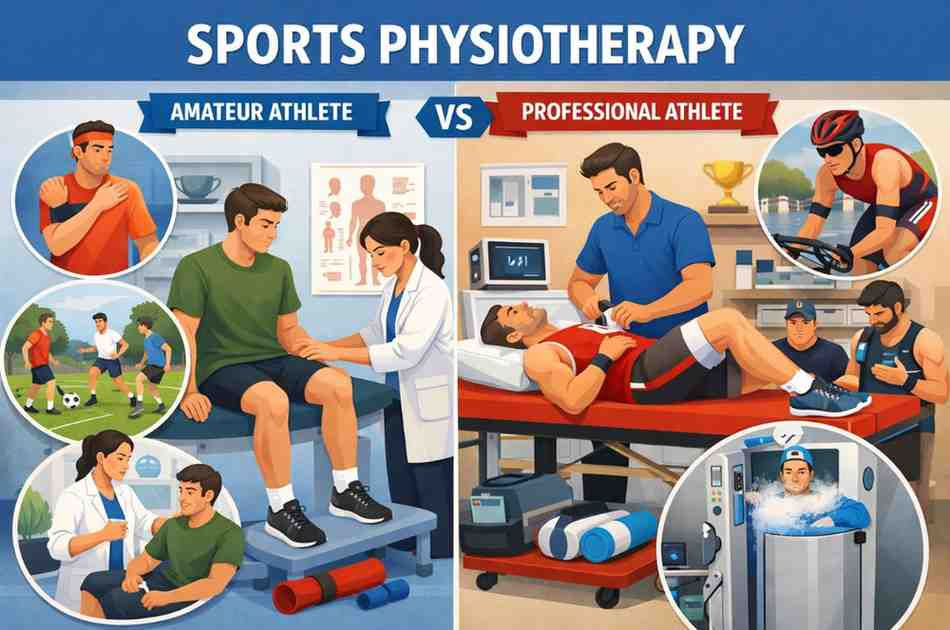
Understanding the Differences in Treatment, Recovery, and Performance Care
Sports physiotherapy plays a crucial role in injury prevention, rehabilitation, and performance enhancement for athletes at all levels. However, the approach to sports physiotherapy differs significantly between amateur athletes and professional athletes due to variations in training intensity, competition demands, recovery timelines, and performance expectations.
At Healthy Jeena Sikho, we work with individuals across the athletic spectrum—from fitness enthusiasts and amateur players to competitive and semi-professional athletes. This guide explains how sports physiotherapy is customized based on athletic level and why a one-size-fits-all approach does not work.
Understanding Amateur Athletes in Sports Physiotherapy
Amateur athletes include recreational players, gym-goers, school and college athletes, weekend sports participants, and individuals involved in fitness activities without professional contracts. These athletes often balance sports with work, studies, or daily responsibilities.
In amateur athletes, injuries commonly occur due to improper warm-up, poor technique, overtraining without guidance, lack of recovery time, or sudden increases in activity level. Common issues include muscle strains, ligament sprains, tendonitis, back pain, knee pain, and shoulder injuries.
Sports physiotherapy for amateur athletes focuses on safe recovery, injury prevention, and long-term joint health. Treatment plans emphasize pain reduction, restoration of normal movement, correction of faulty biomechanics, and education on proper exercise techniques. The goal is to help the athlete return to activity safely without risking re-injury.
Understanding Professional Athletes in Sports Physiotherapy
Professional athletes compete at high levels and depend on their physical performance for their careers. They are exposed to intense training loads, frequent competitions, travel stress, and performance pressure.
In professional sports physiotherapy, injuries are often more complex and sport-specific. These may include ligament tears, muscle ruptures, stress fractures, cartilage injuries, and repetitive overuse conditions. Even minor injuries can significantly affect performance and career longevity.
Physiotherapy for professional athletes focuses not only on recovery but also on performance optimization, rapid return-to-play, and injury risk management. Treatment plans are highly individualized, data-driven, and often integrated with strength coaches, sports doctors, nutritionists, and trainers.
Key Differences Between Sports Physiotherapy for Amateur and Professional Athletes

Treatment Goals
For amateur athletes, the primary goal is pain relief, safe healing, and return to normal activity levels. For professional athletes, the focus extends to peak performance, speed, endurance, agility, and competitive readiness.
Recovery Timeline
Amateur athletes can often afford longer recovery periods to allow complete healing. Professional athletes usually follow accelerated but medically safe recovery protocols due to competition schedules.
Training Load Management
Amateur athletes need guidance on gradually increasing activity and avoiding overuse. Professional athletes require precise load monitoring to balance performance and recovery without compromising fitness.
Injury Prevention Strategy
In amateurs, prevention involves posture correction, flexibility training, and basic strengthening. In professionals, injury prevention includes biomechanical analysis, sport-specific movement correction, and continuous monitoring.
Psychological Support
Professional athletes often require mental conditioning and confidence rebuilding after injury. Amateur athletes benefit more from education, motivation, and fear-of-movement reduction.
Role of Sports Physiotherapy in Injury Prevention for Both Groups
Regardless of athletic level, injury prevention is a core component of sports physiotherapy. For amateurs, this includes learning correct exercise techniques, warm-up routines, and recovery strategies. For professionals, it involves advanced screening, movement analysis, and sport-specific conditioning.
At Healthy Jeena Sikho, preventive physiotherapy programs are designed to reduce injury recurrence, improve movement efficiency, and support sustainable athletic participation.
Can Amateur Athletes Benefit from Professional-Level Sports Physiotherapy?
Yes. While amateur athletes may not require elite-level performance training, access to structured sports physiotherapy significantly improves outcomes. Early physiotherapy intervention prevents minor injuries from becoming chronic and helps amateurs enjoy sports safely for longer.
Healthy Jeena Sikho adapts professional physiotherapy principles into practical, affordable, and home-based care for amateur athletes.
Sports Physiotherapy Services at Healthy Jeena Sikho
Healthy Jeena Sikho provides personalized sports physiotherapy for both amateur and professional athletes, with services including injury rehabilitation, post-match recovery, mobility training, strength conditioning, and preventive care.
Our physiotherapy programs are available at home and focus on safe recovery, long-term health, and improved performance based on individual goals and activity levels.
Frequently Asked Questions (FAQs)
Is sports physiotherapy only for professional athletes?
No. Sports physiotherapy is equally important for amateur athletes. It helps prevent injuries, improves performance, and ensures safe participation in physical activities.
Do amateur athletes need sports physiotherapy for minor pain?
Yes. Ignoring minor pain can lead to chronic injuries. Early physiotherapy helps address the root cause and prevents long-term damage.
Is recovery faster for professional athletes compared to amateurs?
Professional athletes often follow structured and intensive recovery plans, but recovery speed depends on injury severity, overall health, and adherence to therapy—not just athletic level.
Can sports physiotherapy be done at home?
Yes. Healthy Jeena Sikho offers home-based sports physiotherapy, especially suitable for amateur athletes and individuals recovering comfortably at home.
How do I know if I need sports physiotherapy?
If you experience pain during or after sports, reduced performance, stiffness, or repeated injuries, consulting a sports physiotherapist is recommended.
Conclusion
Sports physiotherapy is not limited to elite athletes. While professional athletes require high-performance-focused rehabilitation, amateur athletes benefit greatly from structured physiotherapy that prioritizes safety, recovery, and injury prevention.
Understanding the differences ensures the right treatment approach is chosen for each individual. With expert guidance from Healthy Jeena Sikho, athletes at all levels can recover better, move stronger, and perform with confidence.
Healthy Jeena Sikho – Trusted Physiotherapy Care for Every Stage of Your Active Life


This article provides a helpful look at how physiotherapy considerations can differ between amateur and professional athletes. I liked the focus on individual needs rather than treating every athlete the same way. https://skyviewlaw.com/ discussion is useful because training intensity, recovery expectations, and injury management can vary considerably. It offers a clear perspective on why personalized support matters in sports.
The comparison between amateur and professional sports physiotherapy is clear, practical, and easy to understand.I found the sections on recovery timelines, training loads, and injury prevention especially useful because they show why treatment needs can vary.I recently came across a similar discussion on a review blog, https://bcbug.com/ and it offered an interesting perspective on maintaining health while staying active.
Mình có lần lướt đọc mấy trao đổi trên mạng شيخ روحاني thì thấy nhắc nên cũng tò mò mở ra xem thử cho biết. Mình không tìm hiểu sâu جلب الحبيب chỉ xem qua trong thời gian ngắn để quan sát bố cục جلب الحبيب cách sắp xếp شيخ روحاني các mục và trình bày nội شيخ روحاني dung tổng thể. Cảm giác là các phần được trình bày khá gọn, các Huren Berlin mục rõ ràng nên đọc lướt cũng không bị rối với mình như Hurentest Berlin vậy là đủ để nắm tin cơ bản rồi. جلب الحبيب
,
,
This article gives a useful comparison of sports physiotherapy for amateur and professional athletes, especially the differences in recovery goals, training loads, and injury prevention. I appreciated how https://www.kingsroofingllc.com/ discussion explains why treatment should be individualized rather than one-size-fits-all. The same thoughtful approach is valuable in service areas too, which made me think of kingsroofingllc and its focus on solutions.
A beautiful finish always starts with careful planning and skilled craftsmanship. It's refreshing to see a family-run team that values lasting quality over quick completion. peacock build has built a reputation for restoring cabinets, repainting interiors, and improving outdoor spaces with precision. Their workmanship guarantee provides homeowners with extra confidence in every completed project.