
10 Early Signs Your Child May Need Physiotherapy: A Parent's Guide to Early Intervention
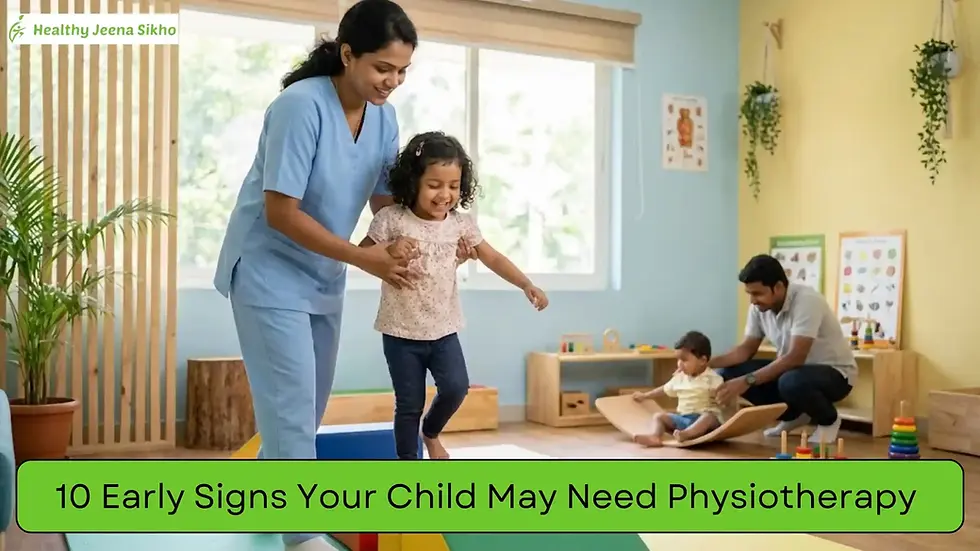
I'll never forget the day Meera's mother walked into our physiotherapy centre, her eyes carrying that familiar mix of worry and hope. Her 18-month-old daughter hadn’t started walking yet, while her cousin’s child—two months younger—was already running around. “Am I overthinking this?” she asked softly. “Everyone tells me she’ll catch up on her own.”
At Healthy Jeena Sikho, we hear this question from parents every single week. And our answer is always gentle but clear: a parent’s instinct is powerful, and when it comes to your child’s development, paying attention early is never a mistake.
The challenge is that early signs of developmental delay are often brushed off as normal differences. Well-meaning friends and relatives may say, “Every child develops at their own pace,” or “Just give it time.” While growth does vary from child to child, some red flags should never be ignored. Early identification and timely physiotherapy can significantly improve outcomes for your child’s movement, strength, posture, and overall development.
This guide is not meant to alarm you, but to strengthen you. When parents understand what to look for, they can make more confident decisions about their child’s health. And in paediatric physiotherapy, early action isn’t just important—it can make all the difference.
10 Early Signs Your Child May Need Physiotherapy
Early identification is the key to preventing long-term developmental challenges in children. If you notice any delays in movement, balance issues, or difficulty performing age-appropriate physical activities, it is important to seek professional guidance at the right time. At Healthy Jeena Sikho, our team of paediatric specialists provides comprehensive physiotherapy services in Tricity to support children with movement, coordination, and developmental concerns. Early intervention not only accelerates recovery but also ensures that your child achieves milestones with confidence.
1. Delayed Motor Milestones: When Your Child Misses Key Developmental Windows
Every parent eagerly awaits those magical firsts: rolling over, sitting up, crawling, taking those first wobbly steps. But what happens when these milestones don't arrive on schedule?
What to look for:
Not rolling over by 6 months
Unable to sit independently by 9 months
No crawling or scooting by 12 months
Delayed walking in babies beyond 18 months
Difficulty climbing stairs by age 2
What it indicates: Missed motor milestones may signal muscle weakness, poor muscle tone, neurological concerns, or developmental coordination disorder. These delays don't always indicate serious problems, but they do warrant professional assessment.
What you should do: Track your child's milestones using a developmental checklist. If your child is consistently 2-3 months behind expected milestones, consult a paediatric physiotherapist for a comprehensive evaluation.

2. Persistent Head Lag Beyond 4 Months: A Critical Indicator of Core Strength
Head control is one of the earliest and most important motor skills your baby develops. It's the foundation for all future movement patterns.
What to look for:
Baby's head flops backward when pulled to sitting position after 4 months
Difficulty holding head up during tummy time
Head tilts consistently to one side
Flat spots developing on the skull (plagiocephaly)
What it indicates: Persistent head lag beyond 4 months may indicate weak neck and core muscles, neurological development concerns, or conditions like torticollis. It can also affect feeding, visual tracking, and later gross motor development.
What you should do: Practice supervised tummy time from birth, gradually increasing duration. If head lag persists beyond 4 months or you notice asymmetry, seek immediate assessment. Early intervention for torticollis and plagiocephaly is highly effective.
3. W-Sitting Position: The Comfortable Habit That Causes Long-Term Problems
Walk into any playgroup, and you'll likely see several children sitting in the "W" position—knees bent, feet splayed out to the sides, bottom on the floor between the feet. While it looks comfortable, this position is a red flag that shouldn't be ignored.
What to look for:
Child consistently sits in W-position during play
Difficulty transitioning between positions
Avoids cross-legged or side-sitting positions
Appears more stable in W-sit than other positions
What it indicates: Habitual W-sitting often signals weak core muscles, poor trunk stability, tight hip muscles, or difficulty with balance and coordination. Over time, it can lead to hip dysplasia, knee problems, pigeon-toed walking, and limited trunk rotation affecting motor skills development.
What you should do: Gently redirect your child to other sitting positions—criss-cross, side-sitting, or long-sitting. If they immediately return to W-sitting or seem unstable in other positions, this indicates underlying weakness requiring intervention.
4. Toe Walking Beyond Age 2: More Than Just a Phase
Many toddlers experiment with walking on their toes—it's part of normal exploration. However, persistent toe walking beyond age 2 is a different story.
What to look for:
Walking on toes most or all of the time after age 2
Difficulty getting heels to touch the ground
Tight calf muscles
Awkward running pattern
Complaints of leg pain or fatigue
What it indicates: Idiopathic toe walking (no clear cause) affects about 5% of children, but it can also indicate tight Achilles tendons, sensory processing differences, muscular dystrophy, cerebral palsy, or autism spectrum disorder. Left unaddressed, it can lead to permanent muscle and tendon tightness, balance problems, and joint issues.
What you should do: Monitor the pattern—occasional toe walking is normal, but constant toe walking requires evaluation. Early stretching and strengthening programs are highly effective, while delayed treatment may require more intensive interventions.
5. Poor Posture in Kids: Slouching, Slumping, and Struggling to Sit Upright
In our screen-dominated world, poor posture in kids is increasingly common, but not all postural issues are simply bad habits.
What to look for:
Constant slouching while sitting
Rounded shoulders and forward head position
Leaning on furniture or hands for support while seated
W-shaped spine when viewed from the side
Complaints of back or neck pain
Fatigue during activities requiring sustained sitting
What it indicates: While some postural issues stem from excessive screen time, persistent poor posture often indicates weak core muscles, underdeveloped back muscles, hypermobility (overly flexible joints), or proprioceptive difficulties (poor body awareness).
What you should do: Encourage active play, limit screen time, and ensure proper furniture ergonomics. If your child struggles to maintain upright posture despite reminders or complains of pain, seek professional assessment. Poor posture in childhood can lead to chronic pain patterns in adulthood.
6. Frequent Tripping and Falling: When Clumsiness Signals Deeper Concerns
All children fall—it's part of learning to move through the world. But if your child seems to fall far more frequently than peers, it warrants attention.
What to look for:
Tripping over flat surfaces or own feet several times daily
Difficulty navigating uneven terrain
Reluctance to participate in physical activities
Slow running compared to peers
Excessive caution during movement
Frequent unexplained bruises
What it indicates: Frequent falling may signal developmental coordination disorder, weak ankle stability, poor visual-motor integration, balance and proprioception problems, or underlying neurological conditions. It affects confidence, social participation and can lead to genuine injuries.
What you should do: Document the frequency and context of falls. If falling is significantly impacting your child's activity participation or confidence, don't dismiss it as clumsiness. Early assessment can identify treatable causes and prevent secondary issues like anxiety around movement.
7. Difficulty with Fine Motor Skills: The Overlooked Connection to Core Stability
When we think of physiotherapy for infants and children, we often focus on gross motor skills—walking, running, jumping. But fine motor difficulties often have roots in physical development issues.
What to look for:
Delayed self-feeding skills
Difficulty with buttons, zippers, or snaps
Poor pencil grip and handwriting struggles
Difficulty using scissors
Awkward manipulation of small objects
Excessive force or overly gentle touch with objects
What it indicates: While occupational therapists specifically address fine motor skills, these difficulties often stem from poor core stability, shoulder girdle weakness, bilateral coordination issues, or sensory processing challenges—all areas where physiotherapy plays a crucial role.
What you should do: Recognise that fine motor skills build on a foundation of gross motor stability. If your child has fine motor delays alongside any gross motor concerns, a comprehensive physiotherapy assessment is essential.
8. One-Sided Preference Before 18 Months: Early Asymmetry Warning Signs
While most people eventually develop hand dominance, a clear preference for one side before 18 months is concerning.
What to look for:
Exclusive use of one hand before 12-18 months
One arm or leg is moving less than the other
Asymmetrical crawling pattern
Head consistently turned to one side
Curved spine when sitting or standing
What it indicates: Early one-sided preference may indicate muscle weakness on the neglected side, neurological differences such as cerebral palsy, birth-related nerve injury (brachial plexus injury), or scoliosis. The developing brain is meant to explore both sides equally during infancy.
What you should do: Encourage bilateral activities—reaching across midline, two-handed toy play. If you notice consistent asymmetry before 18 months, seek immediate assessment. Early intervention for asymmetry is crucial for optimal outcomes.
9. Difficulty Transitioning Between Positions: Hidden Weakness Revealed
The ability to move smoothly from lying to sitting to standing is a fundamental skill that requires strength, coordination, and motor planning.
What to look for:
Unusual methods of moving between positions
Difficulty getting up from the floor (using furniture for support)
Appearing "stuck" in certain positions
Excessive effort required for simple transitions
Avoiding floor play because getting up is hard
What it indicates: Transitional movement difficulties often indicate overall muscle weakness, poor core strength, motor planning challenges, or joint hypermobility. These struggles affect a child's independence and willingness to explore their environment.
What you should do: Observe how your child moves between positions. Do they use unusual strategies or avoid certain transitions? These seemingly minor issues often indicate significant underlying weakness that responds well to early physiotherapy.
10. Decreased Stamina and Exercise Tolerance: When Your Child Tires Too Easily
Children are naturally energetic. When a child consistently lags behind peers or avoids physical activity due to fatigue, something deeper may be occurring.
What to look for:
Tiring much faster than same-age peers
Requesting to be carried frequently despite age-appropriate walking ability
Breathing heavily during minimal exertion
Avoiding physical activities or sports
Preferring sedentary activities exclusively
Complaints of muscle pain or weakness
What it indicates: Reduced stamina may indicate weak cardiovascular fitness, muscle weakness or low muscle tone, undiagnosed heart or respiratory conditions, or obesity-related deconditioning. Sometimes it's simply lack of opportunity for physical activity, but persistent fatigue warrants investigation.
What you should do: Compare your child's activity level to peers during group activities. If they're consistently opting out or tiring quickly, don't attribute it to personality alone. Medical and physiotherapy assessment can identify treatable causes and prevent a lifetime of inactivity.
Why Early Physiotherapy Matters: The Critical Window of Opportunity
The first few years of life represent a remarkable period of neuroplasticity—when your child's brain is most adaptable to positive changes. During this critical window, early identification and support can create outcomes that become increasingly difficult to achieve as time passes.
Research consistently shows that children who receive early assessment and support achieve better long-term outcomes. When developmental concerns are identified early, we can prevent small issues from becoming larger problems, support your child's confidence and social participation, and maximize their natural developmental potential during the most responsive period of growth.
The cost of waiting: "Let's wait and see" often means missing the optimal window for support. Developmental delays rarely resolve independently, and abnormal movement patterns become more ingrained over time.
As one mother shared with me: "I thought I was being a pushy parent by seeking evaluation. Now I realise I was being an advocate for my child's best outcome."
Don't wait. Early assessment provides clarity, peace of mind, and the best possible start for your child's development.
How Healthy Jeena Sikho (Sector 71, Mohali) Supports Your Child's Development
At Healthy Jeena Sikho Physiotherapy Centre in Sector 71, Mohali, we understand that behind every concerned parent is a child deserving of the best possible start in life. Our paediatric physiotherapy program is built on three foundational principles: expertise, individualisation, and partnership with families.
Expert Paediatric Physiotherapists Who Understand Child Development
Our team comprises specially trained paediatric physiotherapists with extensive experience in infant and child development. We don't simply apply adult physiotherapy principles to smaller bodies—we understand the unique biomechanics, neurological development, and psychological needs of growing children.
Our physiotherapists:
Hold advanced certifications in paediatric physiotherapy
Maintain current knowledge through ongoing education in developmental therapy
Understand age-appropriate assessment and treatment approaches
Recognize when interdisciplinary referrals are needed
Communicate effectively with children of all ages and abilities
We've successfully treated hundreds of children with various developmental concerns, from premature infants to school-age children with coordination difficulties. This experience allows us to quickly identify concerns, design effective interventions, and anticipate potential challenges.
Customised Therapy Plans Designed Around Your Child
No two children are identical, and cookie-cutter approaches don't work in paediatric physiotherapy. During your initial comprehensive assessment, we evaluate:
Current developmental stage across all domains
Specific areas of strength and challenge
Underlying factors contributing to concerns
Your child's temperament, interests, and motivators
Your family's goals, resources, and daily routines
Based on this thorough evaluation, we create a completely individualized treatment plan that:
Targets your child's specific needs with evidence-based techniques
Builds on existing strengths while addressing weaknesses
Incorporates activities your child genuinely enjoys
Fits realistically into your family's lifestyle
Includes measurable goals and regular progress monitoring
We adjust the plan as your child grows and progresses, ensuring therapy remains appropriately challenging and engaging.
A Child-Friendly Environment Where Therapy Feels Like Play
Walk into our paediatric therapy area, and you'll immediately notice the difference. We've designed a space where children feel safe, comfortable, and excited to participate. Brightly colored equipment, engaging toys, and a warm atmosphere transform therapy from clinical to playful.
Our approach recognizes that children learn through play. We disguise therapeutic exercises as games, making each session enjoyable rather than tedious. A child strengthening core muscles might be "rescuing" toys from an obstacle course, while a toddler improving balance might be playing on age-appropriate climbing equipment.
This play-based approach ensures:
Children actively engage rather than resist therapy
Skills generalize to real-world play situations
Sessions remain positive experiences
Motivation stays high throughout the treatment course
Children develop a positive relationship with physical activity
Partnership With Families: You're Part of the Team
We recognize that parents are their child's first and most important teachers. Therapy sessions once or twice weekly won't create lasting change without reinforcement at home. That's why family education and involvement are central to our approach.
During each session, we:
Explain what we're working on and why
Demonstrate home exercises and activities
Answer your questions thoroughly
Address concerns and adjust plans based on your feedback
Celebrate your child's successes together
We provide:
Written home programs with clear instructions and photos
Video demonstrations when helpful
Strategies to incorporate therapeutic activities into daily routines
Ongoing support via phone or message between appointments
Resources and education about your child's condition
Our goal is to empower you with knowledge and skills so you feel confident supporting your child's development every day, not just during therapy visits.
Collaborative Care Approach
Child development is multifaceted, and sometimes concerns span multiple domains. We maintain strong relationships with other paediatric specialists including:
Paediatricians and developmental specialists
Occupational therapists
Speech-language pathologists
Orthopaedic specialists
Child psychologists
When needed, we coordinate care with these professionals to ensure comprehensive support for your child. We communicate with your child's other providers (with your consent) to ensure everyone works toward the same goals using complementary approaches.
Take the First Step: Your Child's Development Deserves Expert Support
If you've recognized any of these early signs in your child, you're likely feeling a mixture of concern and uncertainty. That's completely natural. The most important thing is that you're here, reading this, being proactive about your child's wellbeing.
Early assessment changes everything. Even if concerns turn out to be minor or temporary, professional evaluation provides clarity and peace of mind. If intervention is needed, starting early maximizes outcomes and minimizes long-term impact.
Booking Your Assessment
Don't let concerns linger or turn into worry. Take action today:
Call us: Contact Healthy Jeena Sikho Physiotherapy Centre, Sector 71, Mohali directly to schedule your child's comprehensive developmental assessment
Visit our centre: Stop by to meet our team, see our facilities, and learn more about our paediatric program
Ask questions: No question is too small or insignificant. We're here to support you with information and guidance
Early intervention isn't about labels, diagnoses, or admitting something is "wrong" with your child. It's about giving your child every opportunity to reach their full potential. It's about support, guidance, and expert help during a critical developmental window.
Your instincts brought you here. Trust them. Take the next step. Your child's future self will thank you.
Conclusion: Empowering Your Child's Best Development
The journey of child development is filled with joy, wonder, and sometimes unexpected challenges. As parents, we want nothing more than to see our children thrive, move confidently through the world, and embrace life with physical competence and enthusiasm.
Recognizing early signs that your child may need physiotherapy isn't about finding fault or admitting failure as a parent. It's about being observant, informed, and proactive—the very qualities that make you an excellent parent.
Throughout my years in paediatric physiotherapy, I've witnessed remarkable transformations. I've seen babies who couldn't hold their heads up develop into toddlers who climb and explore with confidence. I've watched children who fell constantly become athletes in their chosen sports. I've observed shy, withdrawn children blossom into active participants in school and play once motor challenges were addressed.
These successes don't happen through magic—they happen through early identification, evidence-based intervention, family partnership, and consistent effort. They happen because parents like you recognized signs, sought help, and committed to supporting their child's development.
Your child's developmental journey is unique. Comparisons to other children provide some guideposts, but ultimately, your child's progress is personal. What matters most is that they're moving forward, gaining skills, and developing confidence in their physical abilities.
If any of the signs discussed in this article resonate with your observations of your child, don't wait. Reach out to Healthy Jeena Sikho Physiotherapy Centre in Sector 71, Mohali. Let our experienced paediatric team assess your child's development and provide the expert guidance you need.
Remember: early intervention doesn't mean something is wrong—it means you're giving your child every advantage for optimal development. It means you're an advocate, a supporter, and a champion for your child's best possible future.
Take that first step today. Your child's development deserves expert support, and you deserve the peace of mind that comes from knowing you're doing everything possible to help your child thrive.
Frequently Asked Questions (FAQs)
Q1. At what age should I be concerned if my child isn’t walking?
If your child isn’t walking by 18 months, a physiotherapy assessment is recommended. Early evaluation is advised if precursor skills are delayed.
Q2. How do I know if clumsiness is normal?
Occasional falls are normal, but frequent tripping, avoidance of activities, or difficulty with self-care tasks may indicate developmental coordination disorder.
Q3. Can physiotherapy help posture problems?
Yes. Physiotherapy strengthens core and back muscles, improving posture beyond mere reminders to sit straight.
Q4. How serious is constant W-sitting?
Habitual W-sitting may cause hip, knee, and trunk rotation issues. Early intervention corrects the habit effectively.
Q5. When does toe walking require treatment?
Persistent toe walking beyond age 2 or with developmental delays requires assessment. Early therapy is simple and effective.
Q6. How long does therapy take?
Progress varies; most families see meaningful improvement within 8–12 weeks with consistent therapy.
Q7. Is physiotherapy temporary or lifelong?
Most children need limited intervention to achieve independence. Some may benefit from periodic check-ins during growth.


Comments