
Common CPAP & BiPAP Complications and How to Manage Them - Complete Detailed Guide (2026)

Updated: May 14
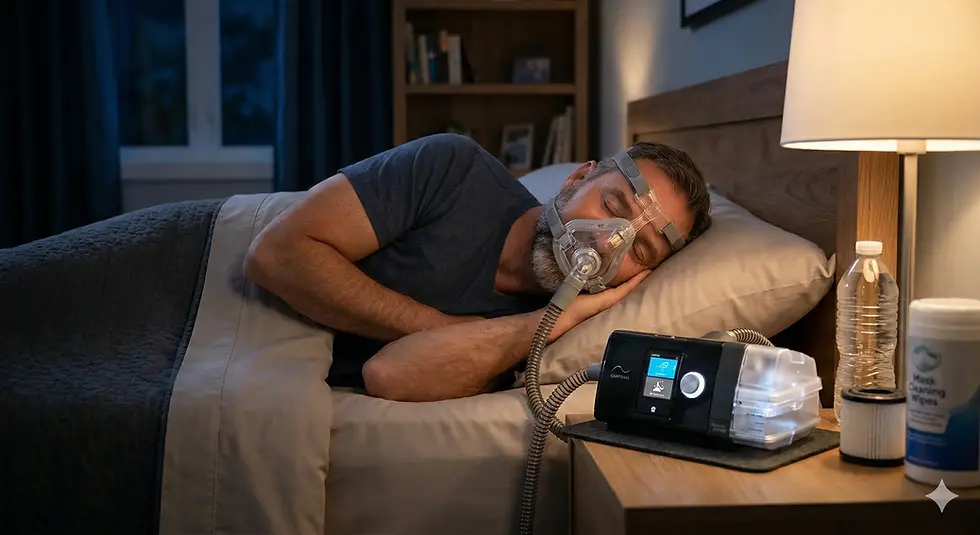
Sleep apnea treatment with CPAP and BiPAP machines has transformed respiratory care and significantly improved the quality of life for millions of patients. At Healthy Jeena Sikho, we regularly assist sleep apnea patients across India in selecting the right CPAP or BiPAP machine, optimizing pressure settings, and managing therapy-related challenges. One common concern we hear from new users is about side effects and complications during the initial adjustment period. Our experts at Healthy Jeena Sikho are here to help.
Get in touch to:
Call Now:
+91-98765-43210 🌐 Visit: www.healthyjeenasikho.com
The important clinical truth is this:
most CPAP and BiPAP side effects are temporary, manageable, and preventable with correct optimization and expert guidance.
This comprehensive guide explains everything in depth - from respiratory physiology to troubleshooting strategies - so patients, caregivers, and clinicians can improve long-term compliance and treatment outcomes.
Introduction
What is CPAP & BiPAP Therapy?
CPAP (Continuous Positive Airway Pressure) therapy delivers a steady stream of pressurized air that acts as a pneumatic splint, preventing the collapse of the upper airway during sleep. It is considered the gold standard treatment for Obstructive Sleep Apnea (OSA).
BiPAP (Bilevel Positive Airway Pressure) therapy provides two pressure levels:
Higher pressure during inhalation (IPAP)
Lower pressure during exhalation (EPAP)
This pressure differentiation reduces breathing effort and improves ventilation, making it suitable for patients with more complex respiratory conditions such as COPD, obesity hypoventilation syndrome, or neuromuscular disorders.
Why Is PAP Therapy Important for Sleep Apnea Patients?
Untreated sleep apnea does more than cause snoring. It significantly increases the risk of:
Hypertension
Coronary artery disease
Stroke
Pulmonary hypertension
Insulin resistance
Daytime fatigue and cognitive decline
By maintaining airway patency and improving oxygen saturation, CPAP and BiPAP therapy restore normal sleep architecture, improve daytime alertness, and reduce long-term cardiovascular risk.
However, initial side effects are common - especially in first-time users - and understanding them is key to successful adaptation and long-term compliance.
CPAP & BiPAP Machines at Healthy Jeena Sikho
Healthy Jeena Sikho offers a complete range of CPAP and BiPAP machines suitable for:
Mild sleep apnea
Severe obstructive sleep apnea
COPD
Obesity hypoventilation syndrome
Neuromuscular respiratory disorders
From entry-level CPAP machines to advanced AVAPS and ST-mode BiPAP systems, patients can choose devices based on clinical requirement and budget.
At Healthy Jeena Sikho , patients receive clinically approved CPAP and BiPAP machines designed for everything from mild obstructive sleep apnea to complex ventilatory disorders such as COPD and OHS.
Below is a detailed breakdown of key features and real-world patient benefits for each device category.
🔵 ResMed BiPAP Machines
Key Features:
Spontaneous/Timed (ST) mode
VAPS intelligent ventilation algorithm
Climate Control humidification compatibility
Quiet Easy-Breathe motor
Data monitoring capability
Benefits:
Provides backup breathing support when patient effort drops
Ideal for COPD and neuromuscular patients
Maintains stable oxygen and CO₂ levels
Reduces hospitalization risk
Comfortable night-long ventilation
Key Features:
Enhanced iVAPS mode
Advanced respiratory event detection
AirView remote monitoring support
High-pressure capability
Benefits:
Personalized pressure delivery
Remote clinical monitoring improves therapy accuracy
Smooth transition from hospital to home care
Improved long-term compliance
Key Features:
Auto-adjusting ST + iVAPS
Detailed compliance reporting
Advanced breath synchronization
Benefits:
Suitable for complex respiratory insufficiency
Precise pressure titration
Optimized ventilation even in unstable breathing patterns
🔵 Philips BiPAP Machines
4️⃣ Philips DreamStation AVAPS 25 – ₹75,000
Features:
AVAPS (Average Volume Assured Pressure Support)
Integrated humidifier
Digital display with user-friendly interface
Benefits:
Maintains consistent tidal volume
Ideal for COPD & OHS
Reduces breathing effort
Improves ventilation stability
5️⃣ Philips DreamStation AVAPS 30 – ₹95,000
Features:
Extended pressure range up to 30 cmH₂O
Automatic volume targeting
Cellular connectivity (select models)
Benefits:
Suitable for severe respiratory insufficiency
Handles high-pressure therapy safely
Continuous monitoring improves safety
6️⃣ Philips DreamStation BiPAP Pro – ₹66,900
Features:
Flex technology for exhalation comfort
Integrated humidification
Data tracking via DreamMapper
Benefits:
Easier exhalation than CPAP
Improved sleep comfort
Excellent option for CPAP-intolerant patients
7️⃣ Philips DreamStation Auto BiPAP – ₹73,000
Features:
Auto-adjusting IPAP & EPAP
Real-time sleep data tracking
Benefits:
Adapts to nightly pressure variation
Reduces unnecessary high pressure
Better comfort and therapy compliance
🔵 OxyMed BiPAP Machines
8️⃣ OxyMed AirSmart ST 30 – ₹44,000
Features:
ST mode support
Lightweight design
Affordable price
Benefits:
Cost-effective ventilatory support
Reliable home use solution
Good for moderate respiratory support needs
9️⃣ OxyMed AirSmart Auto BiPAP – ₹30,000
Features:
Auto bilevel adjustment
Quiet motor technology
Benefits:
Budget-friendly advanced therapy
Adapts pressure automatically
Suitable for home-based care
🔵 Budget BiPAP Options
🔟 Niscomed BiPAP – ₹23,000
Features:
Basic bilevel functionality
Simple interface
Benefits:
Affordable entry-level BiPAP
Easy for elderly users
1️⃣1️⃣ Evox BiPAP – ₹35,000
Features:
Compact build
Humidification compatible
Benefits:
Portable respiratory support
Good for regular home users
1️⃣2️⃣ Resplus 30T Auto BiPAP – ₹23,000
Features:
Auto-titrating pressure
Extended pressure range
Benefits:
Handles higher pressure needs
Good alternative to premium brands
🔵 CPAP Machines – Features & Benefits
ResMed CPAP Series
Features:
Auto-adjusting pressure
Easy-to-use display
Compact design
Benefits:
Ideal for new OSA patients
Automatically adapts pressure
Affordable and reliable
Features:
Gender-specific algorithm
SmartStart & SmartStop
Advanced humidification
Benefits:
Customized therapy for women
Reduced respiratory events
Enhanced comfort & data tracking
Features:
Ultra-compact
Travel-friendly
Auto pressure adjustment
Benefits:
Ideal for frequent travelers
Full therapy in portable size
Budget CPAP Options
Features:
Fixed pressure therapy
Simple interface
Benefits:
Best for tight budgets
Easy for first-time users
Features:
Auto pressure algorithm
Quiet operation
Compact build
Benefits:
Mid-range pricing
Reliable nightly therapy
Good balance of cost & technology
Understanding CPAP vs BiPAP
CPAP vs BiPAP – Detailed Comparison Table
Parameter | CPAP (Continuous Positive Airway Pressure) | BiPAP (Bilevel Positive Airway Pressure) |
Pressure Type | Single continuous pressure | Two pressures (IPAP & EPAP) |
Breathing Cycle Support | Same pressure during inhale & exhale | Higher pressure during inhale, lower during exhale |
Exhalation Comfort | May feel resistance at high pressure | More comfortable due to lower EPAP |
Primary Function | Keeps airway open (prevents collapse) | Keeps airway open + assists ventilation |
Best For | Mild to moderate OSA | Severe OSA, CPAP intolerance |
Suitable for COPD | ❌ Limited support | ✔️ Yes (especially ST/AVAPS modes) |
Obesity Hypoventilation Syndrome (OHS) | ❌ Not recommended | ✔️ Strongly recommended |
Neuromuscular Disorders | ❌ Not sufficient | ✔️ With backup respiratory rate |
Pressure Range | Typically 4–20 cmH₂O | Wider range, often up to 30 cmH₂O |
Advanced Modes | Auto CPAP (APAP) | ST, AVAPS, iVAPS |
Backup Respiratory Rate | ❌ No | ✔️ Available in ST mode |
Volume-Assured Ventilation | ❌ No | ✔️ Yes (AVAPS/iVAPS models) |
Cost | Generally more affordable | More expensive due to advanced technology |
Comfort Level | Good for most OSA patients | Better for high-pressure or complex cases |
Most Common CPAP Problems and Solutions

1. Mask Leaks & Poor Fit
One of the most frequent complaints among CPAP users is air leakage from the mask. When a mask does not seal properly, therapeutic pressure drops, resulting in residual apneas and disturbed sleep.
Mask leaks usually occur due to:
Incorrect mask size
Overtightened or loose straps
Worn-out cushions
Facial hair interference
A professional mask fitting session dramatically reduces leak rates. Cushions should ideally be replaced every 3–6 months. Patients struggling with leaks may benefit from switching mask styles - for example, moving from a nasal mask to a full-face mask if mouth breathing persists.
Persistent leaks not only reduce therapy effectiveness but also increase noise and dry eyes.
2. Dry Mouth & Nasal Congestion
Dryness occurs because pressurized air increases evaporation in nasal passages. Mouth breathing further worsens the issue.
Patients often report:
Sore throat
Cracked lips
Nasal irritation
Occasional nosebleeds
Using a heated humidifier significantly improves comfort. Gradually adjusting humidity levels and adding heated tubing prevents excessive dryness while reducing condensation risk.
In cases of chronic nasal congestion, saline sprays and consultation with an ENT specialist may help.
3. Aerophagia (Air Swallowing & Bloating)
Aerophagia occurs when air enters the esophagus and stomach instead of staying in the airway.
This leads to:
Abdominal bloating
Gas
Morning discomfort
Frequent belching
It typically happens when pressure settings are too high or when patients sleep on their back.
Clinical management includes:
Activating Ramp feature
Slight pressure reduction (under medical supervision)
Switching to Auto CPAP
Transitioning to BiPAP if pressure intolerance persists
Side sleeping
In most cases, aerophagia resolves after optimization.
4. Skin Irritation & Pressure Sores
Skin breakdown occurs due to friction and prolonged pressure from the mask.
Common areas affected:
Bridge of the nose
Cheeks
Upper lip
Using mask liners, adjusting strap tension, and trying memory foam cushions can prevent pressure sores. Patients with silicone sensitivity may require hypoallergenic mask materials.
Daily cleaning is essential to prevent bacterial buildup and dermatitis.
5. Claustrophobia & Anxiety
Psychological discomfort is underestimated in CPAP therapy. Some patients feel trapped or panicked when wearing a full-face mask.
Gradual desensitization works best. Patients should:
Wear the mask while awake for short periods
Practice relaxation breathing
Start with low pressure settings
Consider smaller nasal pillow masks
Within 2–4 weeks, most patients adapt successfully.
6. Difficulty Exhaling (Pressure Intolerance)
Exhaling against constant pressure can feel unnatural, especially at higher settings.
Modern CPAP machines offer Expiratory Pressure Relief (EPR), which lowers pressure slightly during exhalation. If EPR is insufficient, upgrading to BiPAP provides a true pressure differential and greatly improves comfort.
Persistent intolerance should not be ignored, as it directly impacts compliance.
7. Noise & Sleep Disturbance
Modern PAP machines are engineered to operate quietly, typically below 30 decibels.
However, perceived noise often comes from:
Mask leaks
Loose tubing
Dirty filters
Placing the machine below mattress level and ensuring regular filter replacement reduces noise.
8. Rainout (Water in the Tube)
Rainout occurs when humidified air cools in the tubing and condenses into water droplets.
This can cause:
Gurgling sounds
Sudden splashes of water
Sleep disruption
Using heated tubing and insulating the hose prevents temperature fluctuations and condensation.
BiPAP-Specific Complications
BiPAP therapy is more advanced and therefore may present additional challenges.
Treatment-Emergent Central Sleep Apnea
Some patients develop temporary central apneas when pressure changes alter respiratory drive. In many cases, this resolves within a few weeks. Persistent central events may require retitration or advanced ventilatory modes.
Pressure Synchronization Issues
BiPAP machines must synchronize with the patient’s breathing rhythm. If timing is mismatched, patients may feel breath-stacking or discomfort.
Fine-tuning trigger sensitivity, rise time, and backup rate settings improves synchronization.
Overtitration or Undertitration
Incorrect pressure settings can either cause excessive air leaks (too high) or persistent apneas (too low).
A proper sleep study and titration process are essential for optimal results.
General Management Strategy
Successful long-term therapy depends on:
Consistent nightly usage (minimum 4 hours)
Regular equipment maintenance
Scheduled follow-up with sleep specialist
Data monitoring via mobile apps
Keeping a sleep diary to track improvements
Adherence rates significantly improve when patients receive structured education and professional support.
Warning Signs You Shouldn't Ignore
Seek medical advice if you experience:
Worsening apnea symptoms
Persistent morning headaches
Chest pain
Severe bloating
Oxygen desaturation
Sudden increase in central apneas
Repeated machine error alerts
Early evaluation prevents complications.
Overall Benefits of Buying from Healthy Jeena Sikho
Expert device selection guidance
Pressure titration assistance
After-sales technical support
Genuine branded machines
Competitive pricing & EMI options
Pan-India doorstep delivery
Why Choose Healthy Jeena Sikho?
Patients prefer Healthy Jeena Sikho because of:
Wide selection of genuine CPAP & BiPAP machines
Expert consultation support
Setup assistance & pressure guidance
After-sales troubleshooting
Affordable pricing
Pan-India doorstep delivery
Proper guidance significantly reduces therapy drop-out rates.
Conclusion
CPAP and BiPAP therapy remain the most effective treatments for sleep apnea and hypoventilation disorders. While complications like dry mouth, bloating, mask discomfort, or pressure intolerance are common, they are rarely permanent.
With proper mask fitting, pressure optimization, humidification adjustments, and professional supervision, most patients adapt successfully and experience:
Better sleep quality
Improved oxygen levels
Reduced cardiovascular risk
Enhanced daytime productivity
If therapy feels uncomfortable, it doesn’t mean it isn’t working – it means it needs adjustment.
FAQs – Common CPAP & BiPAP Complications
1️⃣ Is it normal to have problems when starting CPAP or BiPAP therapy?
Yes. Mild issues like mask discomfort, dry mouth, or pressure intolerance are common during the first few weeks. Most side effects improve with proper mask fitting and pressure adjustment.
2️⃣ Why does my CPAP mask keep leaking air?
Mask leaks usually happen due to incorrect size, loose straps, worn-out cushions, or facial hair. A professional mask fitting and regular cushion replacement can significantly reduce leaks.
3️⃣ How can I stop dry mouth while using CPAP?
Using a heated humidifier, adjusting humidity settings, and wearing a chin strap (if mouth breathing) can help prevent dryness and throat irritation.
4️⃣ What is aerophagia in CPAP therapy?
Aerophagia is air swallowing that causes bloating and gas. It often occurs due to high pressure settings. Using the Ramp feature, adjusting pressure, or switching to Auto CPAP or BiPAP may help.
5️⃣ Why do I feel anxious or claustrophobic with my CPAP mask?
Some users feel discomfort initially. Gradual desensitization — wearing the mask during the day and starting with lower pressure — usually improves tolerance within 2–4 weeks.
6️⃣ What should I do if I find it hard to exhale against CPAP pressure?
Enable Expiratory Pressure Relief (EPR) in your device settings. If discomfort continues, your doctor may recommend switching to BiPAP for better exhalation comfort.
7️⃣ Why is there water in my CPAP tube?
This is called “rainout.” It happens when humidified air condenses in the tubing. Using heated tubing or adjusting humidity levels can prevent it.
8️⃣ Can BiPAP cause central sleep apnea?
In some cases, treatment-emergent central sleep apnea may occur temporarily due to pressure changes. It often resolves on its own but should be monitored by a sleep specialist.
9️⃣ How many hours per night should I use my CPAP or BiPAP machine?
For effective therapy, a minimum of 4 hours per night is recommended, though full-night usage provides the best results.
🔟 When should I contact my doctor?
Seek medical advice if you experience worsening symptoms, persistent chest pain, severe bloating, frequent headaches, or machine error alerts.


It's refreshing to find content that is both informative and simple to understand. Every section offers useful information for readers. I also checked 10.0.0.0.1, and it was another helpful resource worth exploring.
I have always been curious about the ways people interact with information online. While examining different digital platforms, I encountered https://mcwcasino.eu.com/ as part of a larger effort to understand how attention functions in connected environments. What became clear was that even small design elements can influence how users process information and maintain focus. Certain moments encouraged a more deliberate approach, while others felt fluid and spontaneous. This gradual awareness helped me recognize patterns in my own online behavior. Over time, those insights made it easier to approach digital activities with greater balance and intention.
CPAP and BiPAP capybara clicker are effective treatments for sleep apnea and respiratory illnesses, but users need patience to get through the initial stages. With medical support and proper adjustments, most complications can be managed, leading to improved sleep quality and long-term health.
Hi,
A recent Wix update introduces new ADA accessibility requirements for U.S. websites. With enforcement increasing, non-compliant sites may face fines, legal exposure, and other associated costs. The compliance deadline is March 3, making timely action critical.
Are you aware of this update and your website’s current ADA compliance status? If not, non-compliance can carry significant financial and legal risks. On the positive side, ensuring compliance enhances user accessibility, boosts SEO performance, and builds trust with a wider audience.
Would you like me to proceed with this and begin the compliance review?
Best regards,
Brittany Taylor
Wix Pro Expert