
Why BiPAP Is Used: 2025 Guide

Updated: Mar 17

Breathing problems can affect daily life deeply and become life‑threatening if not treated correctly. Patients with lung diseases like COPD, elderly individuals, post‑COVID lung weakness, and people with weak respiratory muscles often struggle to breathe normally. In modern respiratory care, a device called BiPAP plays a critical role in helping patients breathe better.
Many patients and families feel worried when they hear the term BiPAP and often ask questions like:
Why is BiPAP used in 2025 for breathing support?
What does BiPAP do differently from oxygen therapy?
Can BiPAP be used at home safely?
Is BiPAP effective for COPD and respiratory failure?
Is BiPAP safe for elderly patients?
Important Safety Note
BiPAP machines are medical devices, and their use requires careful guidance.
Always use BiPAP only on a doctor’s prescription
Never change pressure settings without doctor advice
Do not start or stop BiPAP at your own decision
Take training from professionals before home use
This blog is for education and awareness only and not for self‑treatment.
What Is BiPAP in Medical Terms?
BiPAP stands for Bilevel Positive Airway Pressure.
It is a device that delivers air pressure through a mask to support breathing. Unlike oxygen therapy, which only increases oxygen levels, BiPAP actively supports the breathing process by providing two levels of pressure:
Higher pressure while inhaling (IPAP) – makes it easier to take air in
Lower pressure while exhaling (EPAP) – makes it easier to breathe out
This makes breathing smoother, reduces fatigue, and helps the lungs work better.
Why BiPAP Is Used in 2025
BiPAP is widely used in 2025 because it offers non‑invasive ventilation support and has become a key tool in treating chronic lung conditions, severe breathing problems, and respiratory failure. In modern respiratory care, BiPAP is recommended when standard oxygen therapy is not enough.
Key Reasons BiPAP Is Used:
1. To Improve Breathing Efficiency
When lungs are weak or damaged, patients must work harder to inhale and exhale. BiPAP makes breathing easier by pushing air in and out gently and efficiently.
2. For COPD and Chronic Lung Diseases
In diseases like COPD (Chronic Obstructive Pulmonary Disease), airways are narrowed and lungs are less elastic. The breathing effort increases, and BiPAP helps reduce this load.
3. To Balance Oxygen and Carbon Dioxide
Many patients retain carbon dioxide due to poor lung function. BiPAP improves gas exchange by helping remove carbon dioxide and improving oxygen levels simultaneously.
4. To Prevent Respiratory Failure
Patients with severe lung conditions risk respiratory failure. BiPAP provides respiratory support that can prevent emergency ventilator support.
5. For Better Sleep and Reduced Fatigue
Many breathing‑compromised patients have disturbed sleep due to nighttime breathing difficulty. BiPAP supports breathing during sleep, reducing fatigue and improving sleep quality.
When Is BiPAP Used Instead of Oxygen?
While both BiPAP and oxygen therapy help with breathing, they work differently:
Oxygen Therapy increases oxygen levels in the blood
BiPAP improves airflow and supports the breathing process itself
BiPAP is used instead of oxygen when a patient’s body cannot breathe effectively with oxygen alone. This includes conditions where:
The lungs cannot expand normally
Carbon dioxide levels are high
Breathing muscles are weak
There is risk of respiratory failure
Only a doctor can decide whether to use BiPAP, oxygen, or both together.
Medical Conditions Where BiPAP Is Used in 2025
BiPAP is used in several serious health conditions, such as:
COPD (Chronic Obstructive Pulmonary Disease)
Severe Asthma flare‑ups
Respiratory failure
Post‑COVID lung weakness
Neuromuscular disorders
Sleep apnea with breathing weakness
High carbon dioxide levels in blood
In each of these conditions, BiPAP supports the lungs without the need for invasive breathing tubes.
What Are BiPAP Machines Used For?
BiPAP machines are used for Non‑Invasive Positive Pressure Ventilation (NIPPV). This means breathing support is provided without intubation or ventilators.
Main Uses of BiPAP Machines:
Support weak respiratory muscles
Reduce breathing work
Improve oxygen delivery
Remove carbon dioxide
Prevent emergency ICU stays
Improve comfort and quality of life
These benefits make BiPAP highly effective for both hospital and home use in 2025.
Can BiPAP Be Used at Home?
Yes, BiPAP can be safely used at home if:
It’s prescribed by a doctor
Installed by trained professionals
Caregiver and patient are trained
Regular follow‑ups are done
Home BiPAP therapy provides comfort, reduces repeated hospital visits, and helps with recovery in a familiar environment.
Can BiPAP Be Used Without Oxygen?
Yes, BiPAP can be used with or without oxygen.
BiPAP mainly provides support to breathing muscles
Oxygen is added only if needed
Many patients need pressure support more than extra oxygen
Doctors will check oxygen levels and prescribe oxygen with BiPAP only when necessary.

How to Use a BiPAP Machine Safely?
To use BiPAP safely:
Use the correct mask size
Place the machine on a stable surface
Follow doctor‑prescribed pressure settings
Clean mask and tubing daily
Get regular medical follow‑ups
🚫 Never adjust pressure settings without medical advice.
Which BiPAP Machine Is Best in 2025?
There is no single best BiPAP machine for everyone. The right machine depends on:
Patient’s medical condition
Comfort needs
Doctor’s prescription
High‑Demand Features in 2025:
Auto‑adjusting pressure technology
Built‑in humidifier to reduce dryness
Quiet operation for better sleep
Data tracking for doctor review
Integrated oxygen support if needed
At Healthy Jeena Sikho, we provide well‑maintained, doctor‑recommended BiPAP machines with proper mask fitting and training.
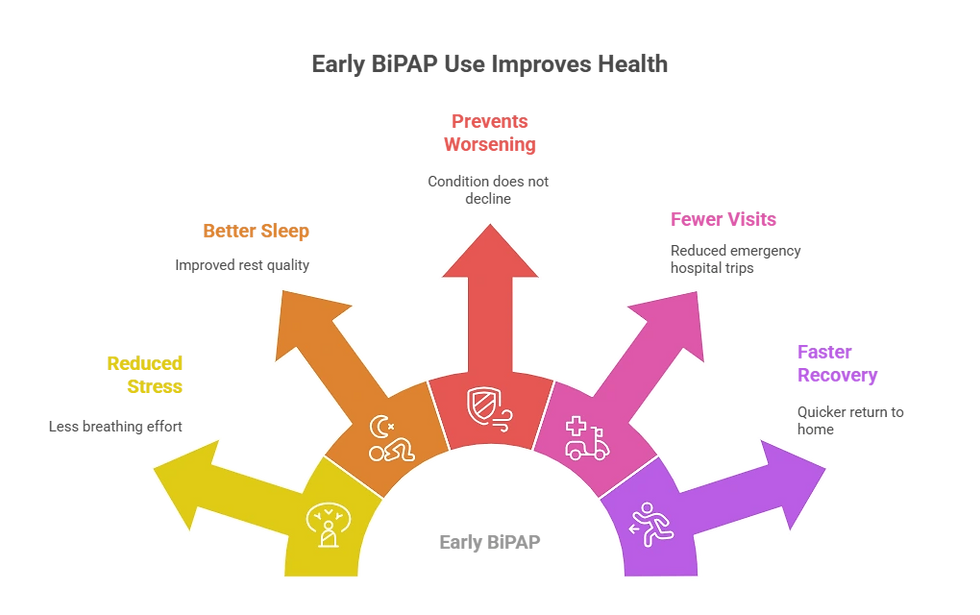
Benefits of Early BiPAP Support
Early use of BiPAP can have major benefits:
Reduces breathing stress and fatigue
Improves sleep quality
Prevents worsening of condition
Reduces emergency hospital visits
Supports faster recovery at home
With proper guidance, BiPAP therapy helps patients breathe more comfortably and live better.
Frequently Asked Questions (FAQs)
Why is BiPAP stronger than oxygen therapy? Because BiPAP supports breathing with pressure, not just oxygen flow.
Is BiPAP better than CPAP? BiPAP is better for serious breathing issues while CPAP is mainly for sleep apnea.
Is BiPAP safe for elderly patients? Yes, with medical supervision and regular follow‑ups.
Can BiPAP prevent hospital admission? Yes, timely BiPAP use can reduce emergency visits.
Is BiPAP a life‑support machine? BiPAP is a non‑invasive breathing support device, not a full ventilator.
Conclusion
Understanding why BiPAP is used in 2025 helps patients and caregivers make confident health decisions. BiPAP provides advanced breathing support for people with weak lungs, serious respiratory conditions, and breathing failure. When used correctly with medical guidance, BiPAP improves breathing comfort, oxygen balance, and overall quality of life.

Lần đầu biết đến v799n.com, mình bắt gặp cái tên này khá nhiều trong những bài thảo luận về nền tảng giải trí trực tuyến. Từ sự tò mò, mình đã truy cập thử để xem cách website vận hành cũng như quan sát phần giao diện bên ngoài. Cảm nhận đầu tiên là trang được thiết kế theo hướng khá tối giản, các khu vực chính được sắp xếp tương đối dễ nhìn và màu sắc không gây cảm giác quá chói. Quá trình thao tác cũng khá ổn, thời gian tải trang tương đối nhanh và việc chuyển đổi giữa các mục diễn ra khá mượt. Dù vậy, mình vẫn giữ thái độ thận trọng vì chưa có…
Mình cũng từng thấy https://x88s.net/ được nhắc trong vài cuộc thảo luận nên tò mò vào xem thử. Ấn tượng đầu tiên là giao diện khá gọn, các mục được sắp xếp tương đối dễ nhìn.
besttt
Imformative
Helpful