
Choosing a Portable Oxygen Concentrator for Travel

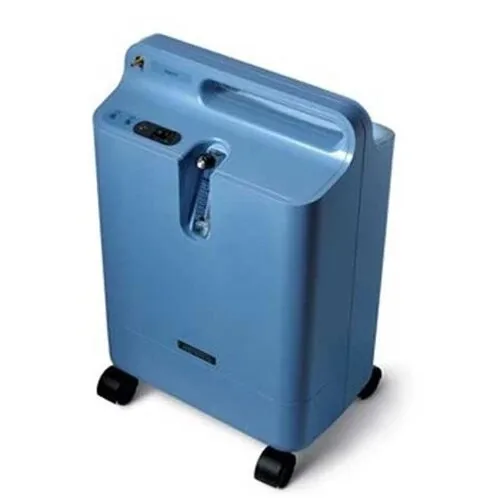
Travel takes more planning when oxygen is part of your care. The right portable oxygen concentrator for travel must match your prescription first, then fit the journey you have planned.
We analyzed 72 comments and questions from YouTube and Quora about portable oxygen concentrators for travel and found that 24% mentioned limited availability and insurance coverage.
We’ll explain what to check before you book, including oxygen delivery, weight, battery use, airline rules and rental options in India.
Table of Contents
Start With the Oxygen Prescription, Not the Device
Begin with the treating doctor’s instructions. Ask whether the patient needs oxygen only during activity, while asleep, or throughout the day. Also confirm the prescribed delivery mode and the exact device settings the clinician has approved.
This matters because portable units may deliver oxygen differently. Pulse-dose devices release oxygen when they detect an inhalation. Continuous-flow devices deliver a steady stream. The modes are not interchangeable, and a pulse setting is not the same as a continuous-flow rate.
Ask the clinician to check the patient with the intended device and settings, including during the kind of activity planned for the trip. A unit that seems suitable while sitting may not meet the patient’s needs while walking or sleeping. Don’t change the setting to solve a problem during travel. Contact the treating clinician instead.
Healthy Jeena Sikho ’s oxygen concentrator listing shows a maximum rating of 5 L/min. That is a device specification, not a recommended setting for any patient. Ask the clinician to confirm whether the device’s delivery type and capacity fit the prescription before you rent or buy.
If you’re weighing a short-term rental, our guide to renting an oxygen concentrator for travel covers the planning questions families should settle before setting off.
Key Takeaway:The prescription sets the requirements. Portability comes second.
How Weight, Size and Oxygen Output Affect Portability
A portable unit still has to be carried, stored and used through the whole trip. Check the machine’s weight with its battery attached. Then consider who will carry it, how long they’ll walk, and whether a shoulder strap or wheeled bag suits them better.
Size matters at each handoff. The unit needs a secure place in a car, enough room near the passenger during a journey, and clear access to its air vents. A bag can make carrying easier, but it must not block the machine’s air intake or exhaust.
Look at oxygen delivery alongside weight. A light unit may be easier to carry, but that doesn’t make it suitable for every prescription. A higher maximum rating also doesn’t mean the patient should use that amount. The clinician must confirm that the model’s delivery type and prescribed setting work for the patient.
Some product listings state weight and output in clear terms; others leave families with questions. Ask for the complete specification sheet for the exact unit being supplied. Check whether the stated weight includes the battery and whether the oxygen output figure refers to pulse delivery or continuous flow.
Healthy Jeena Sikho has portable oxygen concentrator information on its portable concentrator page . Use the product details as a starting point, then confirm the specific unit, accessories and prescription fit before arranging travel.
For a family member recovering after discharge, the carrying plan deserves a trial at home. Have the person wear or wheel the unit for a short period, with a caregiver nearby, and note whether it gets in the way of walking or transfers.
Battery Runtime, Charging and Backup Planning
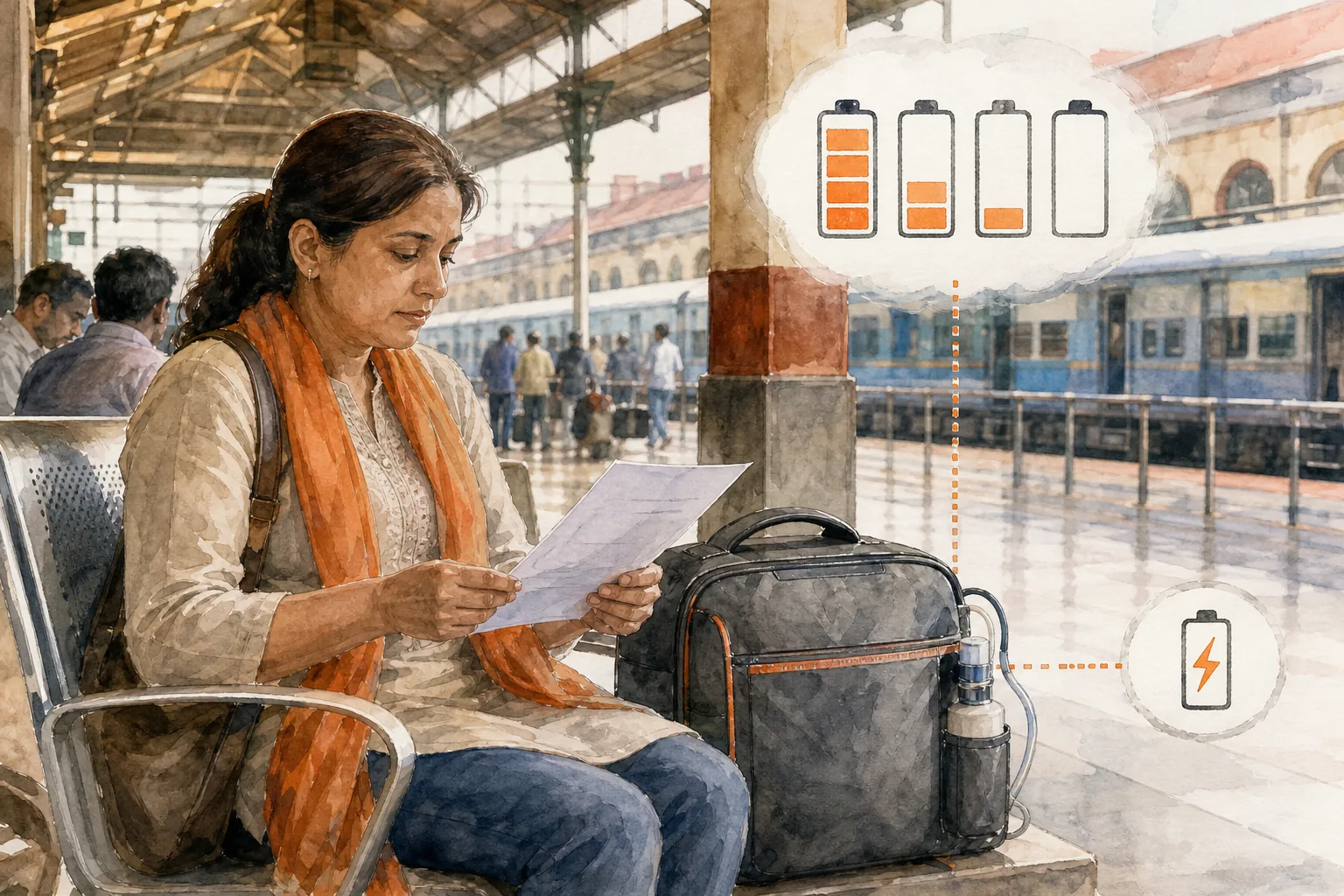
Battery planning starts with the full door-to-door trip, not the flight time alone. Include the ride to the airport, check-in, waiting, boarding, delays and the journey from the destination airport. A connection or traffic delay can add hours to the day.
Runtime varies with the device, battery and prescribed setting. Ask the supplier for the expected runtime for the exact model and setting the clinician has approved. Treat a quoted maximum as a reference, not a promise for every patient or situation.
Find out whether the unit can run while connected to power. Confirm which charger is included and whether it works in the car you’ll use. Ask how long a full recharge takes, whether batteries can be changed safely, and how the supplier advises storing spare batteries during the trip.
Read the device manual before travel. It explains the approved charging method and the unit’s alerts. For example, the concentrator user manual is the place to check model-specific operating and care instructions rather than relying on a general rule.
Build a backup plan for the parts of the journey where power may not be available. Keep the approved charger accessible, and ask the airline where power can be used, if at all. Don’t assume an airport seat or aircraft seat will have a usable outlet.
Our battery runtime and rental add-ons guide can help you prepare questions about extra batteries and trip length. Keep the supplier’s instructions with the equipment, and don’t try an unfamiliar battery or charger without checking compatibility.
Pro Tip:Write down the expected runtime for the prescribed setting, then map it against every leg of the trip. Ask the clinician and supplier what backup is safe if the plan changes.
Indian Airline Rules, Documents and Trip Coordination
Airline approval is a separate check from medical suitability. Contact the airline before booking, or as soon as the booking is made. Ask whether the exact concentrator model is permitted for use onboard and what documents or advance notice it requires.
Check the airline’s own instructions for current requirements. A device marking or approval label does not replace the airline’s process. Requirements can differ, so get the answer for your flight and keep it in writing.
Ask the airline what it needs from the treating doctor. It may request a prescription or a medical form. Confirm the deadline for submitting paperwork, how batteries must be carried, and whether the unit can be used during each stage of travel.
Keep the following items easy to reach:
The prescription and any airline forms the carrier requests.
The device manual and model details.
Written confirmation of the airline’s requirements.
A charging and backup plan for the full journey.
Coordinate with the doctor before travel, especially if the destination or route involves a major change in altitude or activity. The clinician can advise whether the planned journey is suitable and whether the existing oxygen plan needs review.
For rental planning, confirm the rental term and return process before departure. Healthy Jeena Sikho’s rental service covers 15 cities in North India, while equipment sales are available across India. Check the current product page for rental details and confirm that the required unit can be arranged for your location and dates.
Noise, Maintenance, Reliability and Rental Questions
Noise can affect rest in a hotel room or make conversation harder in a quiet setting. Ask for the sound level of the exact model and the conditions used to measure it. If possible, hear the unit running before the trip. A number alone may not tell you how its sound feels in a small room.
Ask how to keep the machine clean and working as intended. The manual should explain filter care, battery handling and what to do when an alert appears. Don’t clean or remove parts in a way the manual doesn’t allow. Keep the air path clear, and leave space around the concentrator so air can move freely.
Reliability is also about support when plans change. Before renting or buying, ask who can help with a fault, how the unit should be handled if it stops, and whether service is available near your destination. Check what is included with the rental, such as the required charger, carry case or spare battery, rather than assuming these come with the machine.
When reviewing a device, ask for its model name, user manual, delivery mode and written specifications. For information about a device, consult reliable official resources. If a supplier makes a safety or certification claim, ask for the supporting document and verify that it applies to the exact model.
Keep oxygen away from smoking and open flames. Place the concentrator clear of walls and anything that blocks airflow. Never exceed the flow prescribed by the treating clinician. If an alarm sounds or the patient’s condition changes, follow the manual and the care team’s instructions.
Healthy Jeena Sikho provides medical equipment for rent and sale. Families can check the oxygen machine rental page for current details. Rental coverage is limited to the service network, so confirm availability for your city and dates before making travel plans.
Frequently Asked Questions
Can I take a portable oxygen concentrator on an Indian flight?
You may be able to take one on a flight, but you must confirm the rules with your airline for the exact model and journey. Ask about advance approval, medical paperwork, battery requirements and when the unit may be used. Check the DGCA’s current information too. Do this before travel day, not at the airport gate.
Is pulse-dose oxygen the same as continuous flow?
No. Pulse-dose delivery gives oxygen when the device detects a breath, while continuous flow provides a steady stream. Their settings are not interchangeable. A device setting or maximum output figure doesn’t tell you what a patient should use. Ask the treating clinician to confirm the right delivery mode and setting for the individual.
How much battery runtime should I plan for?
Plan for the full trip, including ground travel, airport waiting and possible delays. Runtime depends on the model, battery and prescribed setting, so ask the supplier for the expected runtime for your exact setup. Then ask the airline about power access and make a backup plan with the clinician and equipment supplier.
Can I rent an oxygen concentrator for a trip in India?
Rental may suit a temporary need, but availability depends on the location and the equipment required. Healthy Jeena Sikho rents medical equipment within its 15-city North India service network. Confirm the model, rental dates, accessories and return plan before booking. If your trip starts outside that network, ask about equipment sales available across India.
What should I check before choosing a travel oxygen concentrator?
Start with the doctor’s prescription and confirm the device’s delivery mode. Then check its weight, expected battery runtime, charging options, airline requirements and service plan. Ask for the exact model’s manual and written specifications. Don’t choose by weight or a maximum output figure alone, since neither proves that a device suits the patient.
Conclusion
Choose a travel concentrator only after the treating clinician confirms it matches the prescription and the airline confirms its requirements. Before booking, check Healthy Jeena Sikho’s oxygen rental details and confirm availability for your city and travel dates.

Comments