
Can BiPAP Be Used Without Oxygen?Complete Medical Guide for Patients (2026)
- Riya Barman
- Dec 23, 2025
- 5 min read


Understanding BiPAP and Oxygen Use
BiPAP (Bilevel Positive Airway Pressure) therapy is a non-invasive breathing assistance device commonly prescribed for patients with sleep apnea and respiratory conditions. Many patients wonder whether BiPAP can be used without supplemental oxygen, and the answer is more nuanced than a simple yes or no.
The short answer: Yes, BiPAP can be used without oxygen supplementation, and in many cases, it is. However, whether oxygen should be added depends on your individual medical condition, oxygen saturation levels, and your doctor's recommendations.
How BiPAP Works
Before exploring whether oxygen is necessary, it's important to understand how BiPAP functions. Unlike CPAP (Continuous Positive Airway Pressure), which delivers a single pressure level, BiPAP provides two pressure levels—a higher pressure during inhalation and a lower pressure during exhalation. This dual-pressure system makes BiPAP more comfortable for many patients, as it reduces the effort required to breathe out.
BiPAP works by gently pushing air through your airway to keep it open, preventing the collapse that occurs during sleep apnea episodes. This allows oxygen naturally present in the air to enter your lungs more effectively.
When Is BiPAP Without Oxygen Sufficient?
For many patients, BiPAP alone provides adequate oxygenation without the need for supplemental oxygen.
This is typically the case for:
Obstructive Sleep Apnea Patients: Individuals with obstructive sleep apnea (OSA) often benefit significantly from BiPAP alone. Since the primary problem is airway obstruction rather than low blood oxygen levels, opening the airway with BiPAP allows normal oxygen absorption.
Patients with Adequate Baseline Oxygen Saturation: If your oxygen saturation levels remain above 88-90% while using BiPAP, supplemental oxygen may not be necessary. Your sleep specialist monitors these levels during sleep studies to make this determination.
Patients Without Underlying Lung Disease: Those without COPD, interstitial lung disease, or other serious pulmonary conditions often maintain adequate oxygen levels with BiPAP therapy alone.
When Should Oxygen Be Added to BiPAP?
Your physician may recommend adding supplemental oxygen to your BiPAP therapy if:
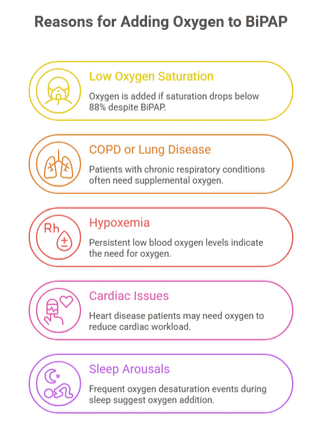
Low Oxygen Saturation Levels: If your oxygen saturation drops below 88% despite BiPAP therapy, your doctor may prescribe supplemental oxygen to maintain safer levels during sleep.
COPD or Chronic Lung Disease: Patients with COPD, pulmonary fibrosis, or other chronic respiratory conditions often require supplemental oxygen with BiPAP to maintain adequate oxygenation.
Hypoxemia: Persistent daytime low blood oxygen levels (hypoxemia) indicate the need for supplemental oxygen along with BiPAP.
Cardiac Issues: Patients with heart disease may require oxygen supplementation to reduce cardiac workload and maintain healthy oxygen saturation.
Multiple Sleep Arousals: Frequent oxygen desaturation events during sleep suggest that supplemental oxygen should be added to your BiPAP setup.
Benefits of Using BiPAP Without Oxygen
Using BiPAP without supplemental oxygen when medically appropriate offers several advantages:
Cost Reduction: Supplemental oxygen adds to treatment costs through equipment rental, refills, and maintenance. Using BiPAP alone reduces these expenses.
Increased Mobility: Patients using BiPAP without oxygen have greater freedom of movement during sleep without managing oxygen tubing or concentrators.
Simpler Equipment: Fewer devices mean simpler setup, easier cleaning, and less time spent on therapy maintenance.
No Oxygen Dependency Concerns: While oxygen is life-saving when needed, avoiding unnecessary supplementation prevents potential dependency issues and equipment complications.
Safety Considerations
While BiPAP can be effective without oxygen for suitable candidates, safety should always be the priority:
Regular Monitoring: Your oxygen saturation levels should be monitored through periodic sleep studies and home monitoring devices. If levels decline, supplemental oxygen should be added.
Follow Medical Advice: Never modify your BiPAP prescription or oxygen use without consulting your healthcare provider. Your doctor bases these decisions on clinical evidence specific to your condition.
Use Pulse Oximetry: Consider using a pulse oximeter during sleep to track your oxygen levels. Many modern BiPAP machines have built-in monitoring capabilities.
Attend Sleep Studies: Initial and periodic sleep studies help determine whether your current therapy is adequate or needs adjustment.
Choosing the Right BiPAP Settings
The pressure settings on your BiPAP machine are calibrated during a titration study. Your sleep specialist determines the minimum and maximum pressures needed to keep your airway open throughout the night. Proper settings are crucial for effectiveness, whether or not you use supplemental oxygen.
If you're using BiPAP without oxygen, your settings may differ fromthose of someone using supplemental oxygen.
Your device settings should be regularly reviewed with your sleep specialist to ensure optimal therapy.
FAQs About BiPAP and Oxygen
Can I stop using oxygen if I switch to BiPAP? This decision must be made with your doctor after appropriate testing. Never discontinue oxygen without medical guidance.
What if my oxygen saturation drops with BiPAP alone? Contact your sleep specialist immediately. You may need supplemental oxygen or adjusted BiPAP settings.
Is BiPAP effective for all types of sleep apnea? BiPAP is most effective for obstructive sleep apnea. Central sleep apnea often requires different treatments and may require oxygen supplementation.
How long does it take to adjust to BiPAP? Most patients adjust within 1-2 weeks, though some take longer. Consistent use improves acclimatisation.
The Bottom Line
BiPAP can absolutely be used without supplemental oxygen for many patients, particularly those with obstructive sleep apnea and adequate oxygen saturation levels. However, the necessity of oxygen depends entirely on your individual medical condition, sleep study results, and oxygen saturation patterns.
The best approach is working closely with a board-certified sleep medicine specialist who can evaluate your specific situation through proper testing and monitoring. Your treatment plan should be personalised to your needs, whether that includes oxygen supplementation or not.
If you're currently using BiPAP without oxygen and experiencing symptoms like persistent fatigue, morning headaches, or daytime sleepiness, contact your sleep specialist to ensure your therapy remains adequate. Conversely, if you're using oxygen with BiPAP and want to explore whether you truly need it, discuss this with your doctor—they can arrange appropriate testing to determine if adjustments are warranted.
Your health and sleep quality depend on having the right therapy for your unique condition. Stay informed, follow medical guidance, and maintain regular communication with your healthcare team for the best outcomes.
About the Author

Dr. Aman Jain
Dr. Aman Jain | MBBS (GMCH Sec-32, Chandigarh) Ex-Resident Doctor, General Hospital Sec-16, Chandigarh
Dr. Aman Jain is a medical professional with 17 years of experience in general medicine and over 22 years as a health and fitness coach. A graduate of Government Medical College & Hospital, Chandigarh, he brings deep clinical expertise across general medicine combined with extensive knowledge of strength training, yoga, martial arts, and calisthenics.
His holistic approach to patient care — blending evidence-based medicine with practical wellness guidance — makes him a trusted voice in both healthcare and fitness. The medical content in this blog has been reviewed and guided by Dr. Jain to ensure accuracy, safety, and relevance for patients and caregivers.


Good
Helpful
Informative
Great insights!
very informative