
Why Young Indians in Their 20s Are Suddenly Needing CPAP Machines
- 2199jessica
- May 21
- 11 min read

What Is Sleep Apnea and What Is a CPAP Machine?
Sleep apnea is a serious sleep disorder in which breathing repeatedly stops and starts during sleep. The most common type is Obstructive Sleep Apnea (OSA), where the muscles in the throat relax too much and block the airway. This can happen dozens — sometimes hundreds — of times per night, cutting off oxygen to your brain and heart each time.
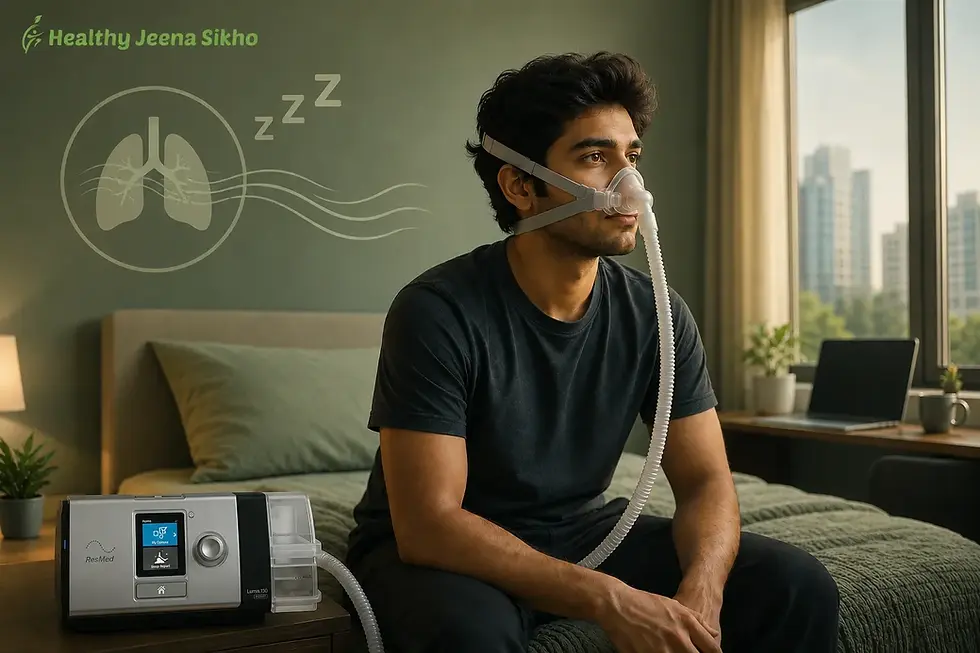
A CPAP machine is the gold-standard treatment for sleep apnea. It delivers a constant, gentle stream of air through a mask worn over the nose or mouth, keeping the airway open so you can breathe normally throughout the night.
Sleep apnea was once considered a condition that only affected overweight middle-aged men. That stereotype is dangerously outdated. Today, doctors are seeing it in slim 22-year-old women, in college students, in IT professionals barely into their careers, and in athletes who look perfectly healthy on the outside.
Why Are Young Indians Suddenly Getting Sleep Apnea?
There is no single reason. It is a combination of lifestyle, genetics, environment, and some unique Indian risk factors that are creating a perfect storm for sleep disorders among the young. CPAP machines for young Indians are no longer a rare sight — doctors across the country are prescribing them to patients barely in their 20s.
1. The Obesity and Weight Gain Epidemic
India is in the middle of an obesity crisis that does not get discussed enough. According to the National Family Health Survey (NFHS-5), obesity rates among Indian adults have nearly doubled in less than a decade, and urban youth are the worst affected.
Even a modest weight gain — as little as 5 to 10 kilograms — can significantly increase the risk of sleep apnea. Fat deposits around the neck and throat narrow the airway, making it more likely to collapse during sleep. And it does not take being "obese" to have this problem. Many young Indians with a BMI in the "overweight" range are already developing early signs of OSA.
Add to this the shift from physical activity to sedentary desk jobs, late-night food delivery apps, and high-calorie processed foods, and you have a generation that is gaining weight fast — and quietly damaging their sleep quality along the way.
2. India's Unique Craniofacial Structure
This is one factor most people have never heard about, and it is critically important. Multiple research studies, including work published in the Indian Journal of Medical Research, have found that South Asians - including Indians - have a different jaw and facial structure compared to Western populations.
Indians tend to have a smaller, more recessed jaw, a narrower upper airway, and a relatively larger tongue compared to Caucasians. This means the airway is naturally more vulnerable to collapse - especially during deep sleep when throat muscles relax.
This is why Indians can develop severe sleep apnea at a much lower body weight compared to Westerners. A Caucasian person might need to be significantly obese to develop OSA. An Indian person can develop it at a normal or even lean weight — simply because of genetics and jaw structure.
3. Chronic Sleep Deprivation and Irregular Sleep Schedules
Ask any young Indian professional what time they sleep, and the answer is rarely before midnight. The combination of long work hours, social media scrolling, Netflix binging, and constant digital stimulation has pushed the average bedtime for urban Indians in their 20s well past 12 or 1 AM.
Chronic sleep deprivation does not just make you tired — it actively worsens sleep apnea . When you are sleep deprived, your upper airway muscles become weaker and more prone to collapse. Your body also spends more time in deep sleep stages when apnea events are most frequent, creating a vicious cycle.
Inconsistent sleep timings - sleeping at 2 AM on weekdays and 4 AM on weekends - further disrupts the body's circadian rhythm, making quality sleep even more elusive.
4. Rising Stress and Mental Health Burden
India's young workforce faces enormous pressure - competitive job markets, financial stress, relationship challenges, and the constant anxiety of social comparison fueled by social media. Chronic stress and anxiety are closely linked to sleep disorders.
Stress increases cortisol levels, keeps the nervous system in a heightened state, and prevents the body from reaching deep, restorative sleep. It also contributes to weight gain - which, as we discussed, is a major risk factor for sleep apnea.
There is also a bidirectional relationship here: sleep apnea worsens anxiety and depression, and anxiety and depression make sleep apnea harder to manage. Many young Indians are caught in this loop without realizing it.
5. Alcohol, Smoking, and Sedative Use
Alcohol and tobacco use among young urban Indians has risen significantly over the past decade. Both are major risk factors for sleep apnea. Alcohol relaxes the throat muscles, making airway collapse more likely. Smoking causes inflammation and swelling in the airway, narrowing it further.
Sedatives and sleeping pills - increasingly used by stressed young professionals trying to force themselves to sleep - can suppress breathing and significantly worsen undiagnosed sleep apnea.
6. Nasal and Sinus Problems Caused by Air Pollution
India's urban air quality is among the worst in the world. Cities like Delhi, Mumbai, Kanpur, and Lucknow regularly top global pollution indexes. Chronic exposure to air pollution causes nasal inflammation, congestion, allergic rhinitis, and sinusitis - all of which obstruct nasal breathing.
When nasal breathing is blocked, people automatically shift to mouth breathing during sleep. Mouth breathing changes the mechanics of the airway and significantly increases the risk of snoring and obstructive sleep apnea. It is one of the most underappreciated environmental causes of sleep disorders in Indian youth.

Symptoms of Sleep Apnea You Should Never Ignore
One dangerous aspect of sleep apnea is that it occurs while you are asleep - so most people have no idea it is happening. Here are the sleep apnea warning signs that should prompt you to see a doctor:
Loud, persistent snoring — especially if others have noticed you gasping or choking during sleep
Waking up feeling exhausted even after a full night of sleep
Morning headaches — waking up with headaches regularly
Difficulty concentrating, memory problems, or brain fog during the day
Mood swings, irritability, anxiety, or depression
Frequent nighttime urination (waking up to use the bathroom multiple times)
Dry mouth or sore throat in the morning
High blood pressure that seems difficult to control
Falling asleep unintentionally during the day — while reading, watching TV, or even driving
Decreased interest in or reduced performance at work or studies
If you or someone you know has three or more of these symptoms regularly, it is important to consult a sleep specialist or ENT doctor. Many of these symptoms are easy to dismiss as "just stress" or "just poor sleep habits" — but they can indicate a serious, treatable medical condition.
What Happens If Sleep Apnea Goes Untreated in Your 20s?
Young people often think: "I will deal with it later." But sleep apnea is not a condition that waits. Every night it goes untreated, it is quietly damaging your body. Here is what untreated sleep apnea can lead to:
Heart Disease and High Blood Pressure: Each apnea event causes a surge of stress hormones and a dip in blood oxygen. Over time, this strains the heart and blood vessels, significantly increasing the risk of hypertension, heart attack, and stroke — even in people in their 30s.
Type 2 Diabetes: Sleep apnea impairs insulin sensitivity and glucose regulation, dramatically increasing the risk of developing diabetes.
Mental Health Deterioration: Untreated sleep apnea is strongly associated with depression, severe anxiety, and even increased risk of suicidal ideation in younger populations.
Career and Academic Damage: The cognitive impairment from sleep apnea poor memory, slow reaction time, difficulty focusing can seriously disrupt careers and academic performance during the most critical years of life.
Road Accidents: Drowsy driving caused by untreated sleep apnea is a major and underreported cause of road accidents in India.

How Is Sleep Apnea Diagnosed in India?
The gold-standard diagnosis for sleep apnea is a Polysomnography test, also called a Sleep Study. This can be done in a hospital sleep lab (Level 1 study) or at home using a Home Sleep Test (HST) device that monitors your breathing, oxygen levels, heart rate, and body position while you sleep.
We offer sleep tests starting at just ₹999. Many cities now have dedicated sleep clinics, and several hospitals including AIIMS, Fortis, and Apollo have specialized sleep medicine departments.
The severity of sleep apnea is measured using the Apnea-Hypopnea Index (AHI) — the number of breathing interruptions per hour. Mild is 5 to 14 events per hour, moderate is 15 to 29, and severe is 30 or more. Many young Indians are being diagnosed with moderate to severe OSA and put directly on CPAP therapy.
CPAP Machines: What Young Patients Need to Know
A CPAP machine sounds intimidating, but modern devices have become much smaller, quieter, and easier to use. Here is what you should know if you or a family member has been prescribed one:
Cost in India — Rent or Buy, You Have Options:
At Healthy Jeena Sikho, we make CPAP therapy accessible with both rental and purchase options. Here is the current price list:
CPAP Machine Rental Prices (Per Month):
Niscomed CPAP Machine - Rs. 2,200 per month
ResMed AirStart 10 CPAP - Rs. 3,000 per month
ResMed AirSense 10 CPAP - Rs. 5,000 per month
CPAP Machine Sale Prices:
Niscomed Auto CPAP Machine - Rs. 18,000
ResPlus CPAP Machine - Rs. 30,000
ResMed AirSense 10 Elite Manual CPAP - Rs. 38,000
Oxymed Auto CPAP Machine - Rs. 45,000
ResMed AirMini CPAP (Portable) - Rs. 62,000
ResMed AirSense 10 AutoSet for Her - Rs. 61,000
ResMed AirSense 11 CPAP - Rs. 75,000
You can also rent before you buy — many patients start with a monthly rental to get comfortable with therapy before committing to a purchase.
Need Help With Sleep Apnea or CPAP Therapy?
If you think you may have sleep apnea, speaking with a qualified sleep specialist is the best first step.
HealthyJeenaSikho offers:
Home sleep tests
CPAP machine rentals
CPAP purchases
Sleep therapy guidance
Call or WhatsApp: +91-9876978488
Adjustment Period: It takes most people 2 to 4 weeks to get fully comfortable sleeping with a CPAP mask. Starting with shorter sessions and trying different mask types — nasal pillows, full face masks — helps significantly.
Immediate Benefits: Many users report improvements within the first few weeks of consistent CPAP use. Many describe it as feeling awake for the first time in years.
Long-Term Compliance: CPAP is highly effective — but only when used consistently every night. Skipping nights significantly reduces its protective benefits. Think of it like glasses for your eyes — it works when you use it.
Can Sleep Apnea Be Treated Without a CPAP Machine?
For mild to moderate sleep apnea, several alternatives and complementary approaches exist:
Weight Loss: Even a 10% reduction in body weight can reduce sleep apnea severity by up to 30%. For overweight patients, this is often the single most impactful intervention.
Positional Therapy: Many people experience apnea only when sleeping on their back. Training yourself to sleep on your side — or using positional pillows — can significantly reduce events.
Oral Appliance Therapy: A dentist-fitted mandibular advancement device (MAD) repositions the jaw forward during sleep, helping keep the airway open. It is effective for mild to moderate OSA.
Surgical Options: For cases caused by anatomical issues such as enlarged tonsils, deviated nasal septum, or retrognathia, surgical correction can eliminate or greatly reduce sleep apnea.
Lifestyle Modifications: Quitting smoking, limiting alcohol, treating nasal allergies, and maintaining a consistent sleep schedule are critical supportive steps.
However, for moderate to severe sleep apnea, CPAP is widely considered the most effective treatment for moderate to severe OSA. Lifestyle changes are important additions — not substitutes.
How Young Indians Can Protect Their Sleep Health
Prevention is always better than cure. Even if you do not currently have sleep apnea, these habits will dramatically lower your risk:
Maintain a healthy weight. Even if you are not obese, keeping your BMI below 25 significantly reduces airway fat deposits.
Sleep at consistent times. Aim for 7 to 9 hours of sleep every night and try to wake up at the same time daily, including weekends.
Exercise regularly. Physical activity strengthens upper airway muscles and helps maintain healthy weight. Even 30 minutes of walking 5 days a week makes a meaningful difference.
Sleep on your side. This is one of the simplest and most effective ways to reduce snoring and apnea events.
Treat nasal allergies proactively. If you have chronic nasal congestion or allergic rhinitis, manage it with your doctor's guidance. Clear nasal passages mean better sleep.
Limit alcohol — especially within 3 hours of bedtime. Alcohol dramatically relaxes throat muscles.
Quit smoking. Smoking inflames and narrows the airway. Quitting reduces sleep apnea risk significantly within months.
Manage stress. Chronic stress worsens sleep quality. Build stress management into your daily routine through exercise, meditation, or time outdoors.
A Real Talk for Young India
There is still an enormous stigma around sleep disorders in India. Young people hesitate to mention snoring or fatigue because it does not seem like a "real" medical problem. "Just drink more coffee," people say. "Sleep when you are old."
But the data is clear. A 2023 report by the Indian Sleep Disorders Association estimated that millions of Indians suffer from sleep-disordered breathing, and the vast majority remain undiagnosed. Among urban youth specifically, the numbers are growing every year.
Your 20s are the decade that shapes your cardiovascular health, your brain, and your mental wellbeing for the rest of your life. Untreated sleep apnea in your 20s means a higher risk of heart disease by 40, diabetes by 45, and cognitive decline by 60.
Getting a CPAP machine at 25 is not embarrassing. It is smart. It is self-care. It could literally save your life.
FAQs
1. Can young people in their 20s really get sleep apnea?
Yes. Sleep apnea is no longer limited to older adults. In India, increasing stress, obesity, poor sleep schedules, air pollution, and genetic airway structure are causing many people in their 20s to develop obstructive sleep apnea (OSA).
2. What are the early symptoms of sleep apnea in young adults?
Common symptoms include loud snoring, daytime tiredness, morning headaches, brain fog, poor concentration, dry mouth, mood swings, and waking up gasping for air during sleep.
3. Why are more young Indians needing CPAP machines?
Young Indians are increasingly being diagnosed with moderate to severe sleep apnea due to sedentary lifestyles, irregular sleep habits, rising obesity, stress, smoking, alcohol use, and India’s unique craniofacial anatomy that makes airway collapse more likely.
4. Is a CPAP machine safe for daily use?
Yes. CPAP therapy is completely safe and is considered the gold standard treatment for obstructive sleep apnea. Regular use improves sleep quality, energy levels, focus, heart health, and overall wellbeing.
5. How much does a sleep apnea test cost in India?
Sleep study costs vary depending on the city and type of test. Healthy Jeena Sikho (HJS) offers sleep tests starting at just ₹999, making diagnosis more affordable and accessible.
6. Can sleep apnea go away without a CPAP machine?
Mild sleep apnea may improve with weight loss, side sleeping, quitting smoking, treating nasal allergies, and better sleep habits. However, moderate to severe sleep apnea usually requires CPAP therapy for effective long-term treatment.
7. How long does it take to adjust to a CPAP machine?
Most people adjust to CPAP therapy within 2 to 4 weeks. Using the machine consistently every night and choosing the right mask type can make the transition much easier and more comfortable.
Conclusion: Do Not Ignore the Signs
Sleep apnea in young adults in India is a real, rising, and serious health crisis. The combination of India's unique genetic risk factors, rapid urbanization, poor air quality, rising obesity rates, and stressful modern lifestyles has made young Indians especially vulnerable.
The good news is that sleep apnea is completely treatable. With the right diagnosis and consistent CPAP therapy - combined with healthy lifestyle changes - most people experience a dramatic and life-changing improvement in their health, energy, mood, and quality of life.
If you snore loudly, wake up tired every day, or feel that your sleep is just never good enough - please do not wait. Talk to your doctor. Ask for a sleep study. You deserve to wake up feeling truly rested.
At HealthyJeenaSikho, we believe that health education is the foundation of a better life.
Share this blog with someone who might need to hear it - a friend who snores, a sibling who is always tired, or a colleague who keeps falling asleep in meetings. It could make all the difference.
If you experience snoring, daytime fatigue, or poor sleep quality, book a sleep assessment today.


Comments