
Why Sleep Apnea Symptoms Look Different in Women Than Men

Updated: Jun 25

Millions of women are exhausted, anxious, and mentally drained - and they have no idea their breathing during sleep is the real cause. Here's the truth no one is telling them.
I feel tired all the time. I wake up exhausted. I feel anxious for no reason. My mind is foggy. And no matter how long I sleep - I never feel rested."
If you are a woman and these words sound painfully familiar - please read this carefully. Because what you are experiencing may not be stress. It may not be hormones. It may not be aging or anxiety or depression.
It may be sleep apnea - silently robbing you of oxygen, deep sleep, mental clarity, and emotional stability every single night - while going completely undetected for years.
Sleep apnea is not just a "man's condition." It affects millions of women across India and the world. But the way it shows up in women is so fundamentally different from how it looks in men that it is consistently missed, misdiagnosed, and mistreated for years - even decades.
This comprehensive guide will explain exactly why sleep apnea symptoms look different in women than men, the hormonal and biological reasons behind it, and how Healthy Jeena Sikho - with sleep therapy starting at just ₹1999 - can help you finally get the answers and treatment you deserve.
The Core Difference: Why Sleep Apnea Symptoms Are So Much Subtler in Women
For decades, the medical community painted one picture of sleep apnea: an overweight, middle-aged man who snores thunderously and stops breathing in his sleep while his partner lies awake in alarm. Because research was historically conducted mostly on male subjects, this became the textbook definition — and it left women behind entirely.
The biological reality is more nuanced. Sleep apnea occurs when the muscles of the upper airway relax too much during sleep, causing the airway to narrow or collapse and reducing oxygen delivery to the brain. But how this plays out differs significantly between men and women.
Women are significantly more likely to experience:
Hypopneas — partial airway narrowing that reduces airflow without completely stopping it, causing subtler drops in oxygen that still fragment sleep severely
REM-related sleep apnea — breathing events that cluster specifically during dreaming sleep, when muscle tone is naturally lowest
Upper Airway Resistance Syndrome (UARS) — increased effort to breathe against resistance, causing arousals without full apnea events on standard tests
Shorter individual events — each episode is briefer but they may be more frequent, making the cumulative damage just as severe
The result? Women rarely gasp, choke, or produce the dramatic snoring that alerts partners and doctors. Instead, their bodies signal distress in quieter, more internal ways - through hormones, emotions, energy levels, and cognitive function - that are far too easy to write off as something else.
At Healthy Jeena Sikho, many female patients who come seeking support for fatigue, anxiety, or poor sleep initially believe their problems are stress- or hormone-related. After a proper sleep evaluation, many discover that silent breathing disruptions during sleep have been robbing them of oxygen and deep rest for years.
Sleep Apnea Symptoms in Women vs Men: A Complete Side-by-Side Comparison
Understanding this contrast is the single most important step toward getting women properly diagnosed. Here is what sleep apnea actually looks like in each gender:
Men — Obvious, Classic Symptoms
Loud, habitual snoring
Witnessed breathing pauses during sleep
Waking up choking or gasping
Severe daytime sleepiness
Falling asleep involuntarily in the day
Morning dry mouth or sore throat
Nocturia (frequent night urination)
Women — Subtle, Atypical Symptoms
Constant fatigue despite full sleep
Anxiety, worry, and emotional exhaustion
Mood swings and irritability
Brain fog and poor concentration
Memory problems and forgetfulness
Insomnia and restless, unrefreshing sleep
Morning headaches

Because women's symptoms so closely mirror those of clinical depression, generalized anxiety disorder, or burnout, most doctors - and the women themselves - pursue those diagnoses first. Anti-depressants are prescribed. Sleep aids are recommended. Stress management is suggested. Years pass. The root cause goes untouched.
How Women Describe Their Own Symptoms
"I'm tired all the time, even after 8 hours of sleep"
"My mind feels foggy and I can't think clearly"
"I feel anxious but I don't know why"
"I'm irritable and short-tempered for no reason"
"I wake up with headaches every morning"
"I forget things I used to remember easily"
"I feel emotionally drained by noon every day"
"I toss and turn and never sleep peacefully" These descriptions sound like stress or lifestyle problems. They are actually the voice of a body deprived of oxygen and restorative sleep night after night.
One of the biggest reasons sleep apnea symptoms appear differently in women is because a woman’s body goes through several hormonal and physical changes at different stages of life.
Many women may sleep normally for years and suddenly begin experiencing symptoms like:
Poor sleep
Constant fatigue
Mood swings
Anxiety
Brain fog
Weight gain
Daytime tiredness
during their 40s or 50s without understanding why it is happening.
In many cases, these changes are linked to sleep apnea.
Before menopause, female hormones help support more stable breathing during sleep. These hormones help maintain airway strength and reduce the chances of airway collapse during the night.
However, as women grow older and hormone levels begin changing, especially during perimenopause and menopause, the risk of sleep apnea increases significantly.
This is why many women begin noticing:
Poor sleep quality
Frequent nighttime awakenings
Snoring
Morning headaches
Emotional exhaustion
Low energy levels
during midlife.
Unfortunately, these symptoms are often blamed entirely on aging, stress, or menopause itself, while the actual breathing disorder remains undiagnosed.
Pregnancy can also increase the chances of sleep apnea because of:
Weight gain
Nasal blockage
Hormonal changes
Breathing pattern changes
Sleep disturbance
Similarly, women with PCOS or obesity may face a higher sleep apnea risk because hormonal imbalance and weight changes can affect breathing during sleep.
At Healthy Jeena Sikho, many women seeking sleep therapy support mention that their symptoms gradually worsened over the years and no amount of rest, supplements, or lifestyle changes seemed to fully improve their fatigue or poor sleep.
This is why understanding sleep apnea symptoms early is extremely important.
If symptoms such as:
Constant tiredness
Poor sleep
Mood swings
Loud snoring
Anxiety
Brain fog
Poor concentration
Morning headaches
continue regularly, proper sleep evaluation and therapy can help improve both sleep quality and overall health.
This hormonal timeline explains the pattern so many women recognize in hindsight: they felt fine in their 30s, noticed something changing in their early 40s, and by their mid-40s or 50s were experiencing fatigue, anxiety, and cognitive changes that felt completely inexplicable - and that no amount of lifestyle improvement seemed to fix.
How Untreated Sleep Apnea Destroys Emotional Health and Mental Well-Being in Women
Of all the ways sleep apnea damages women's health, its impact on emotional and psychological well-being may be the most devastating - and the least recognized.
Here is the mechanism: every time a breathing interruption occurs during sleep, the brain's stress response system is triggered. Cortisol and adrenaline surge. Heart rate elevates. The body moves toward wakefulness - even if you do not consciously wake up. This emergency response may fire 30, 50, or even 100+ times per night.
What this means in practice: your nervous system never truly rests. You never reach the deep, slow-wave sleep where the body repairs itself. You never get the full REM sleep your brain needs for emotional processing and regulation. Night after night, your emotional reserves are depleted without any obvious explanation.
Week 1–4 of untreated sleep apnea
Mild fatigue, slightly increased irritability, occasional morning headaches. Easy to dismiss as a busy week or poor sleep habits.
Month 1–6
Persistent fatigue, noticeable brain fog, mood swings becoming more frequent. Anxiety increases. Work performance subtly declines. Often attributed to stress or hormones.
6 months – 2 years
Clinical levels of anxiety or depression may develop. Memory and concentration significantly affected. Relationship strain increases. Sleep dread begins. Often treated with antidepressants or anxiolytics.
Brain Fog, Memory Problems and Cognitive Decline: What Sleep Apnea Is Doing to Women's Brains
Your brain is not passive during sleep. It is actively performing critical maintenance tasks: consolidating memories, clearing metabolic waste through the glymphatic system, regulating hormones, repairing neural connections, and restoring cognitive resources for the next day.
Every breathing interruption in sleep apnea does two damaging things simultaneously: it drops oxygen levels (intermittent hypoxia) and it fragments sleep architecture, preventing the deep stages where most brain restoration occurs. The cumulative effect on the brain is serious.
Women with undiagnosed sleep apnea commonly describe:
Forgetting words mid-conversation
Struggling to multitask like before
Difficulty retaining new information
Slowed thinking and decision-making
Reduced professional performance
Repeating questions already asked
For working professionals, mothers, teachers, healthcare workers, and caregivers — the cognitive toll is enormous. Many women begin to quietly question their own competence, pulling back from responsibilities or opportunities because they no longer trust their own minds.
This is not a personal failing. This is a treatable medical condition. The brain is running on chronic oxygen deprivation - and it cannot perform optimally under those conditions, no matter how hard a person tries.
Research has also linked long-term untreated sleep apnea to increased risk of dementia and Alzheimer's disease - largely because the glymphatic system (which clears amyloid plaques from the brain during deep sleep) is severely impaired when deep sleep is chronically fragmented. This makes early diagnosis and treatment not just a quality-of-life issue, but a long-term brain health imperative.
Why Sleep Apnea Looks Exactly Like Anxiety and Insomnia in Women
Perhaps the single biggest reason sleep apnea in women remains undiagnosed for so long is its near-perfect disguise as an anxiety disorder or chronic insomnia.
Because repeated micro-arousals from breathing events keep the nervous system in a state of low-level emergency throughout the night, many women with sleep apnea experience exactly what anxiety and insomnia look like:
Difficulty falling asleep - the activated nervous system resists winding down
Waking repeatedly at night without a clear reason - the brain is being pulled from sleep by breathing events
Feeling mentally alert and "wired" at 2 or 3 in the morning despite physical exhaustion
Palpitations or a racing heartbeat at night - triggered by each apnea event's adrenaline surge
A growing dread of bedtime - sleep feels threatening rather than restorative
Daytime anxiety that persists regardless of how much time is spent relaxing
These symptoms then lead to a diagnosis of insomnia or generalized anxiety - and treatments that include cognitive behavioral therapy for insomnia (CBT-I), sleeping medications, or anti-anxiety drugs. While these may take the edge off some symptoms, they do nothing to address the breathing disorder causing the problem. In the case of sedating sleep medications, they may actively worsen sleep apnea by relaxing the airway further.
This is why proper evaluation with a sleep study - not just symptom management - is essential for any woman experiencing persistent fatigue, insomnia, or anxiety that does not respond fully to standard treatments.
Long-Term Health Risks: What Happens When Sleep Apnea in Women Goes Untreated
Sleep apnea is a serious systemic health condition. Every night of untreated sleep apnea causes intermittent oxygen drops that stress the cardiovascular system, disrupt metabolic regulation, and create chronic whole-body inflammation. Over years, the compounding damage raises the risk of serious, life-threatening conditions.
Hypertension (High Blood Pressure)
Heart Disease & Arrhythmias
Stroke & TIAs
Type 2 Diabetes
Obesity & Metabolic Syndrome
Cognitive Decline & Dementia Risk
Clinical Depression
Drowsy Driving Accidents
Critically, women with sleep apnea face higher cardiovascular risk per unit of sleep apnea severity than men. Female cardiovascular physiology appears to respond to nocturnal oxygen deprivation with faster acceleration of arterial damage and blood pressure dysregulation. This means that even "mild" sleep apnea in women warrants serious attention and treatment.
On the other side of this picture: effective treatment dramatically reverses these risks. Studies show that consistent CPAP therapy significantly reduces blood pressure, cardiovascular event risk, depression severity, daytime cognitive impairment, and overall mortality risk in people with moderate to severe sleep apnea. The body has a remarkable capacity to recover when it is finally allowed to breathe and sleep properly.
How CPAP Therapy Transforms Sleep and Life for Women with Sleep Apnea
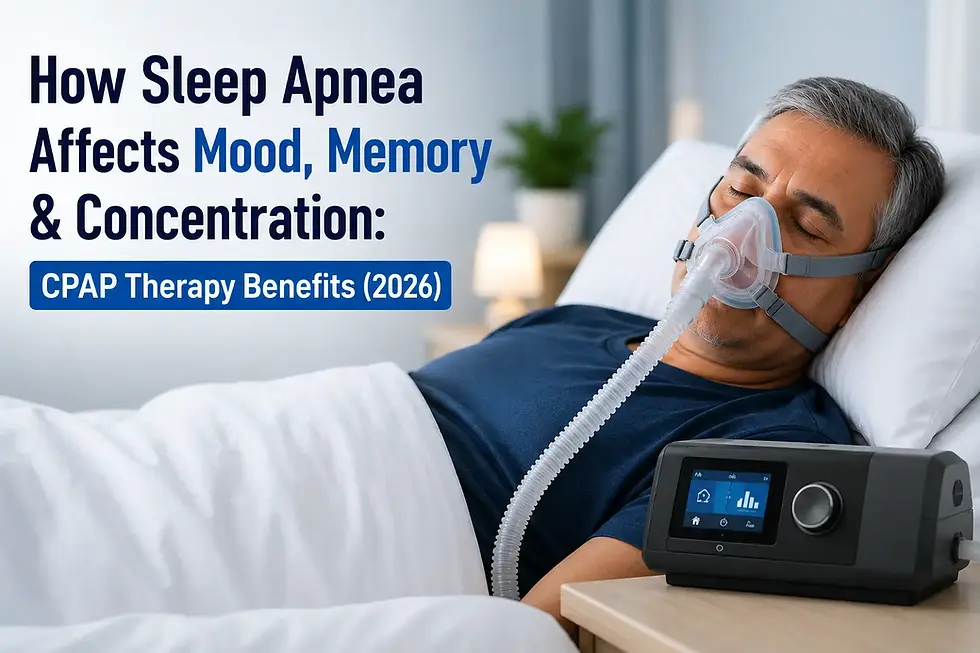
CPAP - Continuous Positive Airway Pressure - therapy is the gold-standard treatment for moderate to severe obstructive sleep apnea. It is also one of the most effective, evidence-based medical interventions in all of sleep medicine.
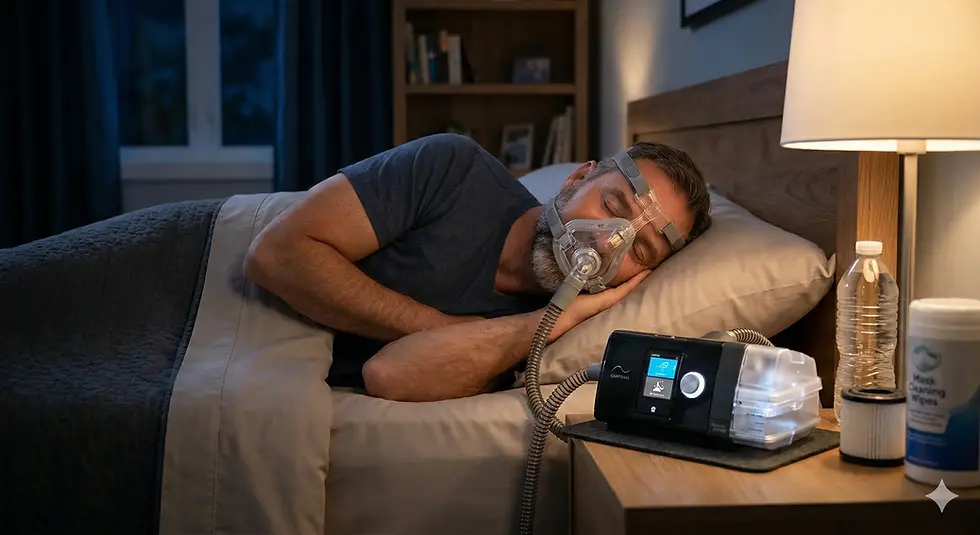
A CPAP machine delivers a gentle, consistent stream of pressurized air through a comfortable mask worn during sleep. This air pressure acts as a pneumatic splint - gently holding the airway open throughout the night so it cannot collapse. Breathing becomes continuous, smooth, and uninterrupted. Oxygen levels stay stable. The brain's stress response is never triggered. Deep, restorative sleep - Stage 3 and REM - finally becomes possible.
What Women Typically Notice After Starting CPAP Therapy
Dramatically improved daytime energy within days
Significant reduction in anxiety and worry
Sharper mental clarity and focus returning
Improved mood stability and emotional balance
Deep, uninterrupted, truly restful sleep
Renewed motivation, productivity, and confidence
For women who have spent years - sometimes a decade or more - living with undiagnosed sleep apnea, starting CPAP therapy is frequently described as transformative. Not just better sleep, but a return to feeling like themselves again: sharper, calmer, more energetic, more emotionally resilient, and more present in their lives, relationships, and work.
Modern CPAP devices are far more comfortable and sophisticated than the machines of even five years ago. They are whisper-quiet, lightweight, and travel-friendly. Auto-adjusting APAP machines automatically calibrate the pressure throughout the night to deliver exactly what is needed moment to moment. A wide range of mask styles -including nasal pillows, nasal masks, and full-face masks in sizes designed for women's faces - ensures that comfort is achievable for virtually every user.
Sleep Therapy Solutions at Healthy Jeena Sikho
We offer a comprehensive range of advanced sleep and respiratory therapy equipment - with expert guidance, affordable pricing, and complete pan-India support every step of the way.
Fixed pressure therapy
Dual pressure support
All types & sizes
Diagnose at home
Our respiratory care experts help every patient - based on their prescribed therapy, comfort preferences, and budget - select the device that will give them the best possible results from night one.
Frequently Asked Questions
Can a woman have sleep apnea without any snoring at all?
Yes - this is extremely common in women and is one of the most important facts for both patients and doctors to understand. Many women with moderate or even severe sleep apnea snore softly, occasionally, or not at all. This is because women more commonly experience hypopneas (partial airway narrowing) and REM-specific events rather than the complete blockages that produce loud snoring. The absence of snoring should never be used to rule out sleep apnea in a woman with other relevant symptoms.
Why do women wait so much longer than men to be diagnosed with sleep apnea?
Several factors combine to create this diagnostic gap: women's symptoms (fatigue, anxiety, mood changes, insomnia) closely resemble common psychological and hormonal conditions; women are less likely to report snoring; sleep study criteria were historically developed using male data; and women tend to underreport symptoms or attribute them to stress. The average diagnostic delay for women with sleep apnea can be 5–10 years compared to men - causing years of preventable suffering and health risk.
How does menopause specifically increase sleep apnea risk?
The hormones estrogen and progesterone help maintain tone in the throat muscles and stimulate steady breathing during sleep. As these hormones decline during perimenopause and menopause, the protective effect on the airway is significantly reduced. The upper airway becomes more prone to collapse during sleep. Post-menopausal women have 2–3 times higher sleep apnea risk compared to pre-menopausal women - and yet their symptoms are almost always attributed to "the change" rather than to a breathing disorder.
Is CPAP therapy comfortable for women to use?
Modern CPAP therapy is significantly more comfortable than it was even a few years ago. Today's machines are near-silent, compact, and travel-friendly. There is a wide variety of mask styles specifically sized and shaped for women's anatomy. Most women adapt within a few weeks, and the dramatic improvement in sleep quality typically makes the adjustment period very worthwhile. At Healthy Jeena Sikho, our team helps every patient find the right device and mask combination for their specific needs and comfort preferences.
What is the cost of sleep therapy in India at Healthy Jeena Sikho?
Sleep therapy support and consultation at Healthy Jeena Sikho starts at just ₹1999. We carry a full range of Auto CPAP, and BiPAP devices at various price points to accommodate every budget. We provide pan-India delivery, home setup assistance, and 24/7 customer support so that starting your sleep therapy journey is as smooth and accessible as possible. Contact our team today to find out which device is right for you.
Can treating sleep apnea help with anxiety and depression in women?
Absolutely - and this is one of the most impactful outcomes of proper treatment. Because sleep apnea keeps the nervous system in a chronic state of low-level stress throughout the night, it generates and sustains anxiety and depressive symptoms. Multiple clinical studies show that consistent CPAP therapy produces significant reductions in anxiety scores, depression severity, emotional reactivity, and stress levels -- often comparable to or better than pharmacological interventions - precisely because it addresses the neurological root cause rather than just managing symptoms.
You Deserve to Sleep Well. You Deserve to Feel Like Yourself Again.
Sleep Therapy Starting at Just ₹1999
Don't spend another year living with unexplained fatigue, anxiety, brain fog, and broken sleep. Our expert respiratory care team is ready to guide you toward better breathing, deeper sleep, and a better quality of life - starting today.
✓ Expert Respiratory Care Guidance
✓ CPAP, BiPAP & APAP Devices
✓ Pan-India Delivery
✓ 24/7 Customer Support
✓ Home Setup Assistance
✓ Masks, Accessories & Oximeters

I was mainly interested in learning what p999 actually offers rather than reading another promotional description. Information about the platform’s basic functions and requirements gives readers something useful to consider before deciding whether they want to explore it.
I used to think being constantly online https://melbet.int.in/ meant I was staying informed, until I noticed how little of what I consumed actually stuck. Most of it passed through without leaving much behind — quick impressions rather than real understanding. Slowing down, reading less but more carefully, felt counterintuitive at first, almost like falling behind. But it left me with a clearer picture of things than skimming ever did, and less of that low-grade anxiety that comes from trying to keep up with everything at once.
Hydra Launcher is a PC game launcher that helps users organize and launch games from one place. It provides a simple interface that is easy to use for managing game libraries. The website offers downloads, setup guides, and the latest software updates. Hydra Launcher is designed to make launching and managing games more convenient for PC users.
This breakdown of how sleep apnea symptoms present differently in women is incredibly important, especially since atypical signs like insomnia or chronic fatigue often lead to underdiagnosis. While staying informed on health insights and wellness strategies is vital, it's always nice to take a relaxing break and explore some nostalgic character builds or level guides over on the Cookie Run Classic Wiki.
If you are searching for a fun stickman fighting experience, Ragdoll Hit delivers entertaining gameplay with realistic ragdoll physics and creative combat mechanics.