
Oxygen Concentrator Rental Costs and Plan Terms

Oxygen concentrator rent isn’t one fixed monthly amount. The bill depends on the machine, rental period, delivery terms, and what service comes with it.
We’ll explain what to check before booking in North India, where a short rental can offer flexibility, and how to confirm that the machine fits the therapy prescribed by your doctor.
Table of Contents
What Determines an Oxygen Concentrator’s Monthly Rental Cost?
Oxygen concentrator rental plans and monthly costs vary by city, model, capacity, and rental term. A quote is useful only when it names the unit and spells out any extra charges or service terms.
At Healthy Jeena Sikho , current rental listings start from ₹3,500 per month. The live amount depends on the selected model and location, so check the product page before booking. The listed starting price is a floor, not a promise that every model costs the same.
One family may need a 5 LPM machine for a limited recovery period. Another may need a higher-capacity unit for ongoing prescribed therapy. The right device is a clinical decision, not a choice to make by price alone. Ask the treating clinician which type and capacity are suitable, then compare like with like.
Check the quote for these points:
Which model and capacity will arrive?
Is rent charged by month, or can a shorter period be billed another way?
Are delivery, setup, and collection included, or charged separately?
Who handles servicing or a machine fault during the rental?
Is a deposit required, and what are the return terms?
What happens if therapy ends sooner than expected?
Don’t assume that a monthly fee includes accessories, routine service, or emergency replacement. Ask for every inclusion and extra charge in writing. The oxygen concentrator rental listings show current options; confirm the final quote for your area and chosen unit before arranging delivery.
Key Takeaway:Compare the full written rental terms, not just the monthly figure.
Choosing a Device Type and Capacity for Prescribed Therapy
Device type shapes the rental plan because a home concentrator and a portable unit meet different needs. Your treating clinician should guide the choice based on the therapy prescribed and how the patient will use the equipment.
Home concentrators are designed for use in a fixed setting with access to power. Portable units are intended for mobility, but the word “portable” alone doesn’t tell you whether a particular unit suits the patient’s treatment plan. Ask about the prescribed device type before you compare quotes.
Rental listings may describe concentrators by capacity, such as 5 LPM or 10 LPM. That figure isn’t a dose recommendation. The clinician must decide what capacity and flow setting are appropriate. Never increase the prescribed flow on your own, and don’t assume that a unit with a higher stated capacity is automatically the right one.
Also ask whether the device provides pulse-dose delivery or continuous flow . These modes aren’t interchangeable. A patient prescribed one mode may not be suited to the other, so have the treating clinician confirm the match before delivery.
Ask the rental team to confirm the exact model, the output mode, and any items supplied with it. If you need a humidifier bottle or nasal cannula, check whether those items are included or need to be arranged separately. For medical-device information, consult official resources . That doesn’t replace advice from the treating doctor about a patient’s therapy.
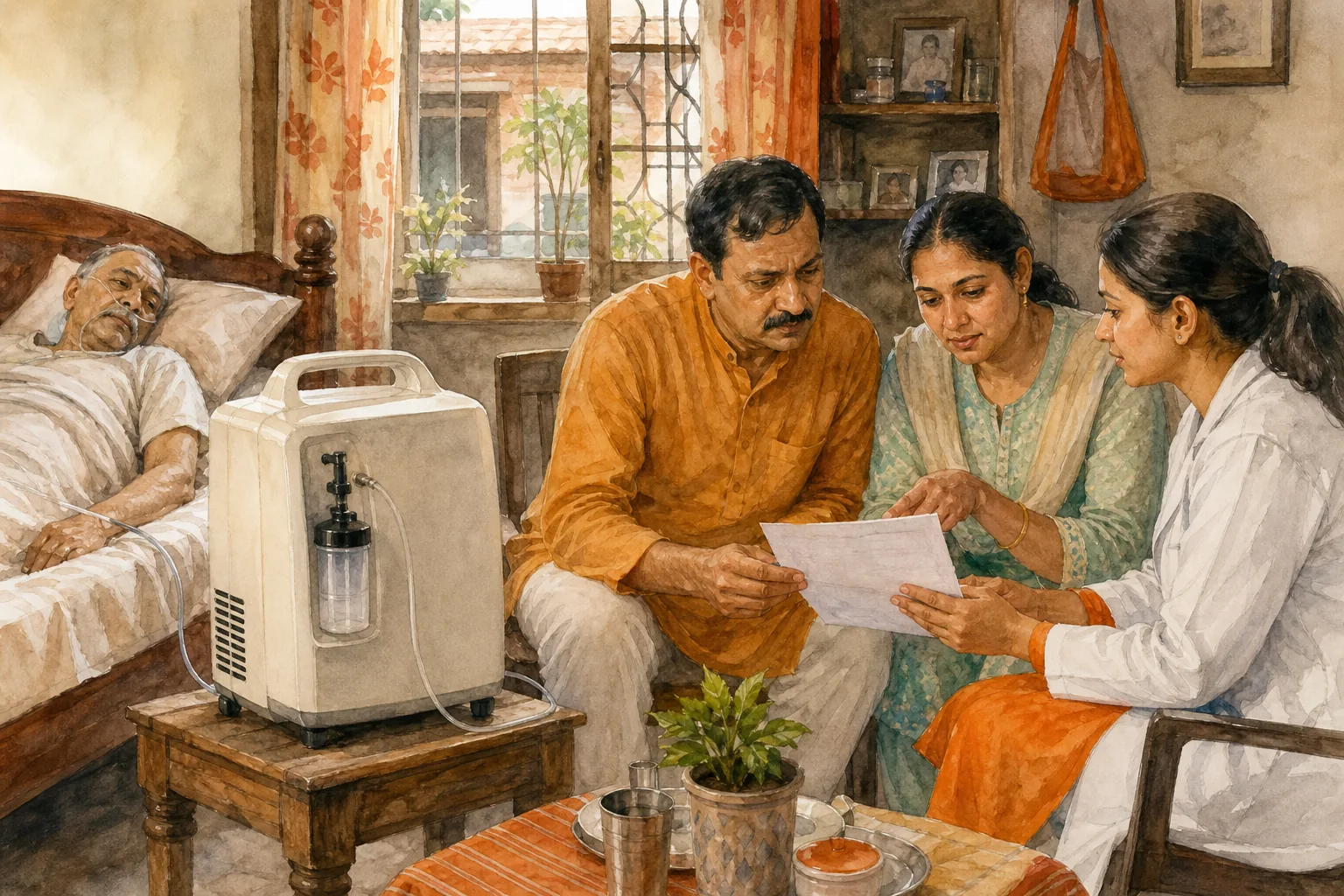
Keep the machine clear of walls so air can move around it. Never use oxygen near smoking or an open flame. These are safety basics to discuss with the care team when the equipment arrives.
Renting, Buying, or Using Oxygen Cylinders: How the Options Differ
Renting, buying, and using a cylinder each bring different costs and day-to-day needs. The right choice depends on how long the clinician expects therapy to continue, how the patient will use oxygen, and what support is available at home.
Renting can suit a temporary need or a treatment plan that may change. It avoids a large purchase at the start, and the family can ask how service is handled during the rental. But monthly payments continue for as long as the unit is rented. If the need may last a long time, compare the total rental cost with a purchase quote rather than looking at one month in isolation.
Buying means a larger payment upfront. It may make sense when long-term use is expected and the family has a clear plan for maintenance. Before buying, ask who can service the device and what support is available after the purchase. Don’t assume a warranty covers every repair or all routine upkeep.
A cylinder stores oxygen and needs to be refilled or exchanged through an appropriate service arrangement. A concentrator draws in room air and needs electricity to run. Each has usable limits. A cylinder’s supply is finite, while a concentrator depends on power. Ask the treating clinician whether a backup plan is needed for the patient’s situation.
Indian readers shouldn’t use overseas insurance or Medicare advice to estimate rental reimbursement. Advice written for those systems applies to other countries, not to Indian coverage. Don’t assume that an insurer will reimburse home oxygen equipment rental. If you have a specific policy, check directly with the insurer and get its answer in writing.
For clinical questions about oxygen therapy, follow the treating doctor’s instructions. General online information cannot set an individual patient’s oxygen flow or device mode.
Think about the likely duration, then compare the cost and support needs for that period. If the expected end date is unclear, ask whether the rental can be extended or returned early and what notice is needed.
Check the Rental Term, Inclusions, Service, and Power Needs
A low monthly quote can leave important costs unanswered. Before accepting oxygen concentrator rental terms, confirm the length of the plan and what happens if the machine needs attention or the therapy period changes.
Some North India rental listings don’t show a mandatory minimum term. That isn’t a guarantee that every rental has no lock-in, early-return fee, or notice period. Ask the provider to confirm the minimum billing period in writing. If you may need only a few weeks, make sure you know how partial months are charged before you book.
Ask for the service process in plain terms. Who should the family contact if the machine stops working? How quickly can the team respond in your location? Is a replacement unit possible if a repair takes time? Don’t rely on a verbal promise. A written answer gives the caregiver something clear to follow during a stressful moment.
Check what comes with the machine. The unit, tubing, humidifier bottle, and nasal cannula may not all be covered by one rental fee. Confirm which items are included, which are billed separately, and what needs cleaning or replacement. If a delivery team will set up the unit, ask what the caregiver will be shown before the team leaves.
Electricity is another recurring cost. The amount depends on the machine’s power rating, how many hours it runs, and the household’s tariff. Ask for the selected model’s power details and use those alongside your own electricity bill to estimate the added cost. Avoid using a generic estimate for every concentrator.
Power cuts need a plan. Ask the treating clinician what backup arrangement is suitable for the patient. If a cylinder is part of that plan, confirm how it should be stored and used. Keep the concentrator’s air openings clear, and never use oxygen near a flame or while someone is smoking.
Pro Tip:Before delivery, keep the clinician’s instructions and the rental team’s service details in one place where the caregiver can find them.
Make the rental decision only after you know the full monthly bill, the service route, and the plan for power interruptions.
Availability and Arranging a Rental in North India
Availability depends on the city, model, and current stock. Healthy Jeena Sikho’s rental service network covers 15 North Indian cities: Delhi, Noida, Greater Noida, Ghaziabad, Faridabad, Gurgaon, Lucknow, Jaipur, Ludhiana, Jalandhar, Bathinda, Chandigarh, Mohali, Panchkula, and Ambala.
Healthy Jeena Sikho has served more than 120,000 patients since 2015. The company reports a 4.9-star rating from over 10,000 Google reviews and 97% satisfaction. Its service network has 4-hour express delivery available in many locations, but timing depends on the area and current availability. Confirm the delivery estimate for your address rather than relying on a general claim.
Rentals are limited to the 15 cities listed above. Equipment sales are available across India, but that does not mean a rental is available in every location. If the patient lives outside the rental network, ask the care team about other arrangements before relying on a delivery estimate.
When you arrange a rental, keep the process focused:
Get the clinician’s instructions for device type, capacity, and delivery mode.
Share the delivery address and ask what model is available there.
Review the monthly fee, minimum term, deposit terms, and service details.
Confirm the delivery window and what the setup handover includes.
At handover, ask the caregiver to see how the machine is set up and how to get service help.
Keep a copy of the written terms and the device details after setup. If the plan changes, contact the rental team to ask about extension or collection before the next billing period begins.
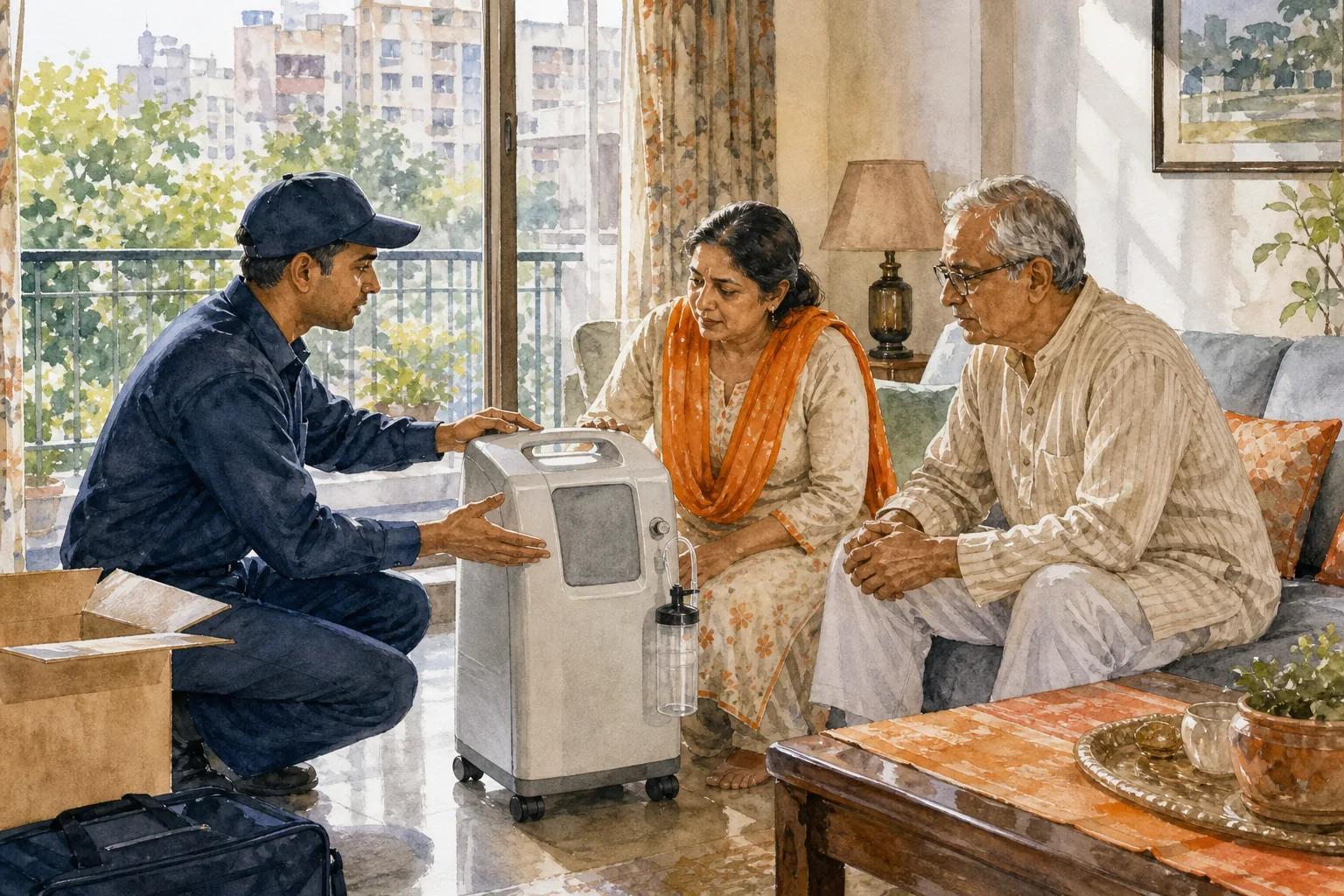
Key Takeaway:Confirm service availability for your exact address and get the delivery window in writing.
Frequently Asked Questions
How much does it cost to rent an oxygen concentrator in India?
There isn’t one fixed monthly rate across India because pricing varies by city, model, capacity, and rental term. Healthy Jeena Sikho’s product page lists rentals starting from ₹3,500 per month; check the live listing for the selected unit and confirm the final quote, service terms, and any extra charges before booking.
Can I rent an oxygen concentrator for a short time?
Yes, a short rental may be possible, but the minimum billing period varies by plan. Ask whether the provider charges by month or offers another billing method. Also confirm any notice needed for collection and whether an early return changes the amount due. Don’t assume a listing without a stated minimum term guarantees flexible billing.
Should I rent or buy an oxygen concentrator?
Renting can suit a temporary or uncertain need, while buying may be worth comparing when long-term therapy is expected. The treating clinician should first confirm the device type and capacity. Then compare the total rental payments for the likely period with a purchase quote, including the service support available for either choice.
What should I check before an oxygen concentrator rental arrives?
Confirm the model, prescribed delivery mode, accessories, delivery time, and written rental terms before the unit arrives. Ask who handles service if the device stops working. At handover, keep the air openings clear and follow the clinician’s instructions. Never change the prescribed flow or use oxygen near smoking or an open flame.
Does a rental fee include delivery and servicing?
Not always. Oxygen concentrator rental plans differ in how they handle delivery, setup, accessories, routine service, and repairs. Ask the provider to list what the monthly fee includes and what costs extra. Also ask how a machine fault is handled and whether a replacement can be arranged if the unit needs repair.
Conclusion
Choose a rental only after the treating clinician confirms the device and you have the full written cost and service terms. Check Healthy Jeena Sikho’s current rental listing, then confirm availability and delivery timing for your address before you book.


Comments