
How to Home Care Medical Equipment Rental in India

When a loved one comes home from the hospital, the first thing you need isn’t a grocery list, it’s the right medical gear. In this guide we break down everything you need to know about renting equipment for home care, from what’s available to how you keep it safe.
Table of Contents
What Home Medical Equipment Rental Covers
Renting can include everything from an adjustable hospital bed to a portable oxygen concentrator, a motorised wheelchair, or a bedside support surface. The goal is to give patients a clinical‑grade setup without the upfront purchase cost. In India, most providers bundle essential accessories, a sanitized mattress, safety rails, a bedside accessory and basic cables, so the unit is ready to use right out of the box.
Families typically face three cost pressures after discharge: the hospital bill, ongoing medication, and the equipment expense. Renting turns a large, one‑time purchase into a monthly fee that matches the recovery timeline.
Equipment categories most often rented include:
Hospital beds (manual, electric, ICU‑style)
Wheelchairs (manual, electric, recliners)
Oxygen therapy devices (concentrators and other oxygen equipment)
Respiratory support devices
Mobility aids
Home monitoring tools
Each item is delivered, set up and serviced by the rental firm for the duration of the contract. The provider usually remains responsible for routine maintenance, a promise that appears in over half of the market listings.
Key Takeaway:A rental bundle typically includes the core device plus a set of accessories that make the unit ready for home use immediately.
How Equipment Choice Relates to the Patient’s Care Needs
The first step is to match the device to the clinical prescription. A surgeon’s discharge summary will list the exact support needed, for example, a 5 L /min oxygen concentrator for COPD, or a motorised bed that can raise the head to 45° for post‑surgery feeding.
For mobility, consider the patient’s upper‑body strength and the home’s layout. Manual wheelchairs work well when a caregiver can push, but an electric model saves effort for patients with limited arm power. Measure doorway widths and any staircases; a wide‑track electric chair may need a ground‑level entry.
Respiratory devices also vary. Continuous‑flow concentrators deliver a steady stream of oxygen. Consider how respiratory support will be maintained during power outages. Wikipedia explains that flow‑rate settings must follow the doctor’s prescription, a 2 L/min setting is not interchangeable with 5 L/min.
Safety accessories matter, too. Pressure-management support may matter for bedridden patients. Side rails on a bed prevent falls, and a wheelchair with anti‑tip wheels adds stability on uneven floors.
Pro Tip:Ask the rental firm if they can provide a short‑term trial of a wheelchair before you lock in a longer contract.
Rental Duration, Pricing, and When Renting May Suit a Family
Rental periods can range from a few weeks to several months. Short‑term rentals are ideal for post‑operative recovery, while longer terms work for chronic conditions like COPD where oxygen support may be needed indefinitely.
Pricing is usually expressed as a monthly fee that includes maintenance and occasional consumables. The exact amount varies by city, device model and contract length. Healthy Jeena Sikho lists a floor price for oxygen machines starting from Rs 3,000 per month, and families can view the current rate on the product page.
When to rent?
If the doctor expects a recovery window of under six months, renting avoids the hassle of storing a bulky device after discharge.
If the family lacks space for permanent equipment, a rental eliminates the need for long‑term storage.
If the budget is tight, the monthly plan spreads the cost and leaves cash for medicines or physiotherapy.
Some providers also allow flexible upgrades, if a patient’s condition improves and a lighter device is sufficient, you can swap without penalty.
Key Takeaway:Check the rental contract for minimum term, notice period for return, and whether accessories are included.
Delivery, Setup, and Safe Use at Home
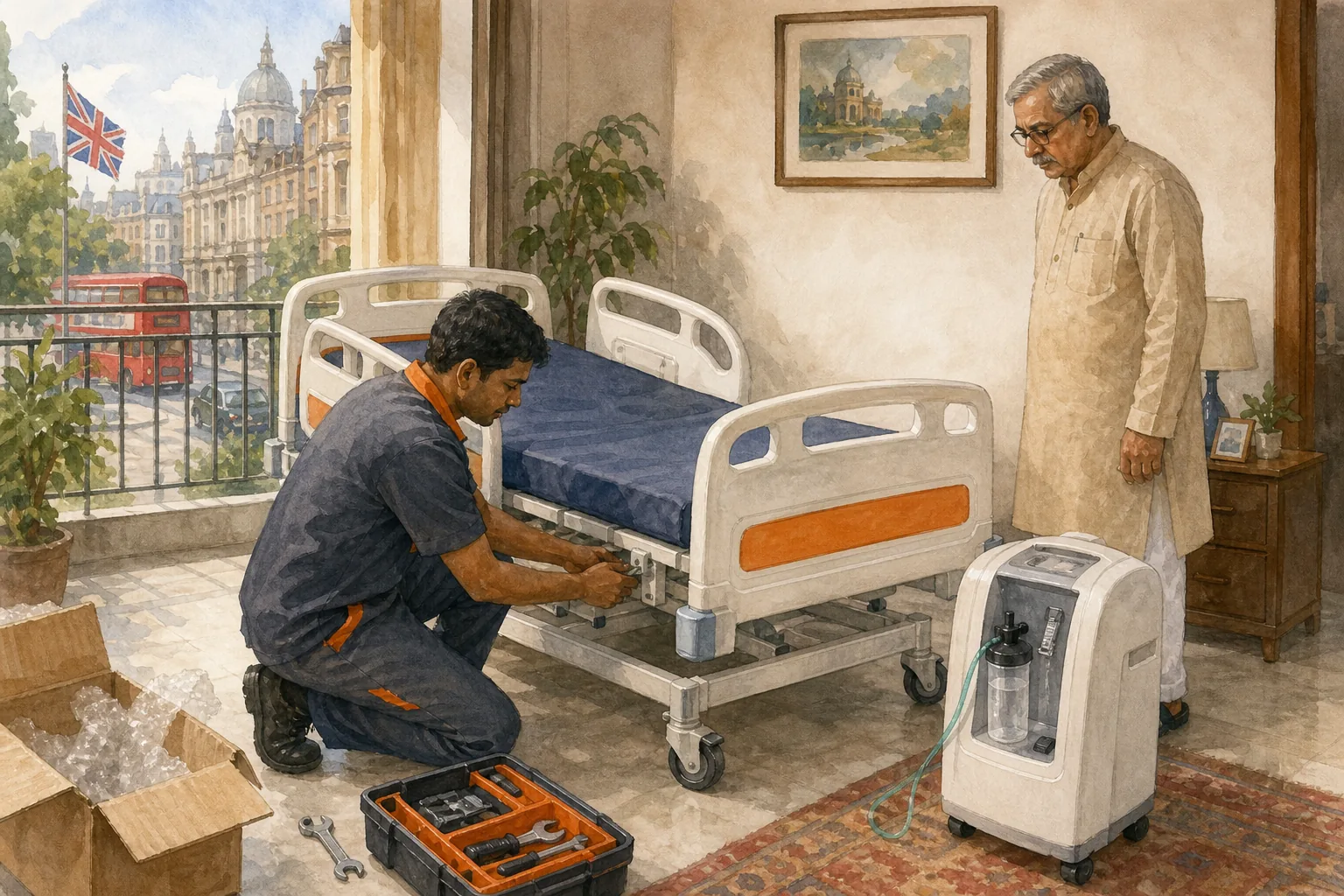
Fast, reliable delivery is a make‑or‑break factor. Healthy Jeena Sikho offers 4-hour express delivery in many locations across its North Indian service network. A trained technician arrives, unpacks the unit, assembles any moving parts, and walks the caregiver through basic operation.
Safety checks happen before the device leaves the warehouse. The equipment is sterilised, inspected for mechanical integrity, and calibrated to the prescribed settings. Once installed, the technician verifies that power cords are clear of water sources and that oxygen outlets are placed away from open flames.
During the rental, the provider handles all routine maintenance, cleaning filters, checking battery health, and repairing any wear. If a fault occurs, a service call is scheduled, often within 24 hours, to minimise downtime.
Home safety tips:
Keep oxygen equipment at least two metres from stoves, candles, or incense.
Never use oil‑based creams near the oxygen mask.
Place the hospital bed on a flat surface; avoid carpet piles that could snag wheels.
Ensure the wheelchair’s charging point is near a grounded outlet.
Pro Tip:Create a simple checklist with the technician during setup, note where the emergency shut‑off is and how to call support.
What to Confirm Before Arranging a Rental
Before you sign any agreement, ask these core questions:
Is the equipment fully sanitised and certified for home use?
What is the exact delivery window and does the firm provide a tracking link?
Will a technician set up the device and train the caregiver on safe operation?
How are consumables (filters, masks, tubing) billed, are they bundled or charged separately?
What is the process for reporting a malfunction, and is 24/7 support included?
Are there penalties for early return or extending the contract?
Check the rental contract for any hidden fees, some firms charge for extra mileage on delivery vans or for after‑hours service calls. Healthy Jeena Sikho’s terms are transparent: maintenance is free for the rental period, and any consumable cost is listed up front on the product page.
Ask whether the provider offers tools to coordinate equipment schedules, maintenance logs and clinician notes, keeping everything in one place.
Key Takeaway:A clear, written agreement that outlines delivery, setup, maintenance and return terms protects both the family and the rental company.
Frequently Asked Questions
Do I need a doctor's prescription to rent equipment?
Yes. Most rental firms, including Healthy Jeena Sikho, require a prescription for devices like oxygen concentrators, respiratory support equipment and hospital beds. The prescription ensures the settings match the patient’s clinical needs.
Can I switch equipment if the patient's condition changes?
Usually you can. Many providers allow upgrades or swaps mid‑contract, often with a small adjustment fee. Confirm the swap policy before signing.
What happens if the equipment breaks?
The rental company is responsible for repairs. Call their support line; a technician will be dispatched, and most firms replace the unit within 24 hours to avoid care disruption.
Are there any hidden costs?
Transparent providers list all charges on the product page, rental fee, consumables, delivery charge (if any) and security deposit. Healthy Jeena Sikho shows the current pricing on each item’s page, so you can see the total cost before you commit.
Is insurance coverage available for rentals?
In India, most health insurance plans do not reimburse home‑care equipment rentals. Families typically pay the rental fee out of pocket, though some corporate wellness programs may offer subsidies.
How long does delivery take?
Healthy Jeena Sikho offers 4-hour express delivery in many locations across its 15-city network.
Conclusion
Renting medical gear lets families provide hospital‑grade care at home without a massive upfront spend. We recommend reviewing the prescription, matching the device to the home layout, and confirming delivery, maintenance and return terms before you sign. Ready to get started? Visit the Hospital Bed on Rent | ICU, Electric & Patient Beds page to explore options and book a same‑day delivery.



Comments