
How to Get Home Medical Equipment After Discharge

Leaving equipment planning until discharge morning can turn a homecoming into a scramble. To learn how to get home medical equipment after hospital discharge in India, start with the treating team, get the device needs in writing, then arrange delivery and training before the patient arrives home.
Table of Contents
Step 1: Confirm the Equipment Needed Before Discharge
Ask the doctor or discharge planner what the patient will need at home and when each item must be ready. A prescription or written order can clarify the equipment type and any clinician-set instructions. Don't choose a device or change its settings based on guesswork.
Needs vary by recovery plan. A hospital bed may help with care at bedside. A wheelchair or other mobility aid may support movement around the home. Respiratory care may involve an oxygen concentrator, CPAP or BiPAP. The treating clinician should say which device is appropriate and provide its required settings. Wound-care items should follow the care plan, too.
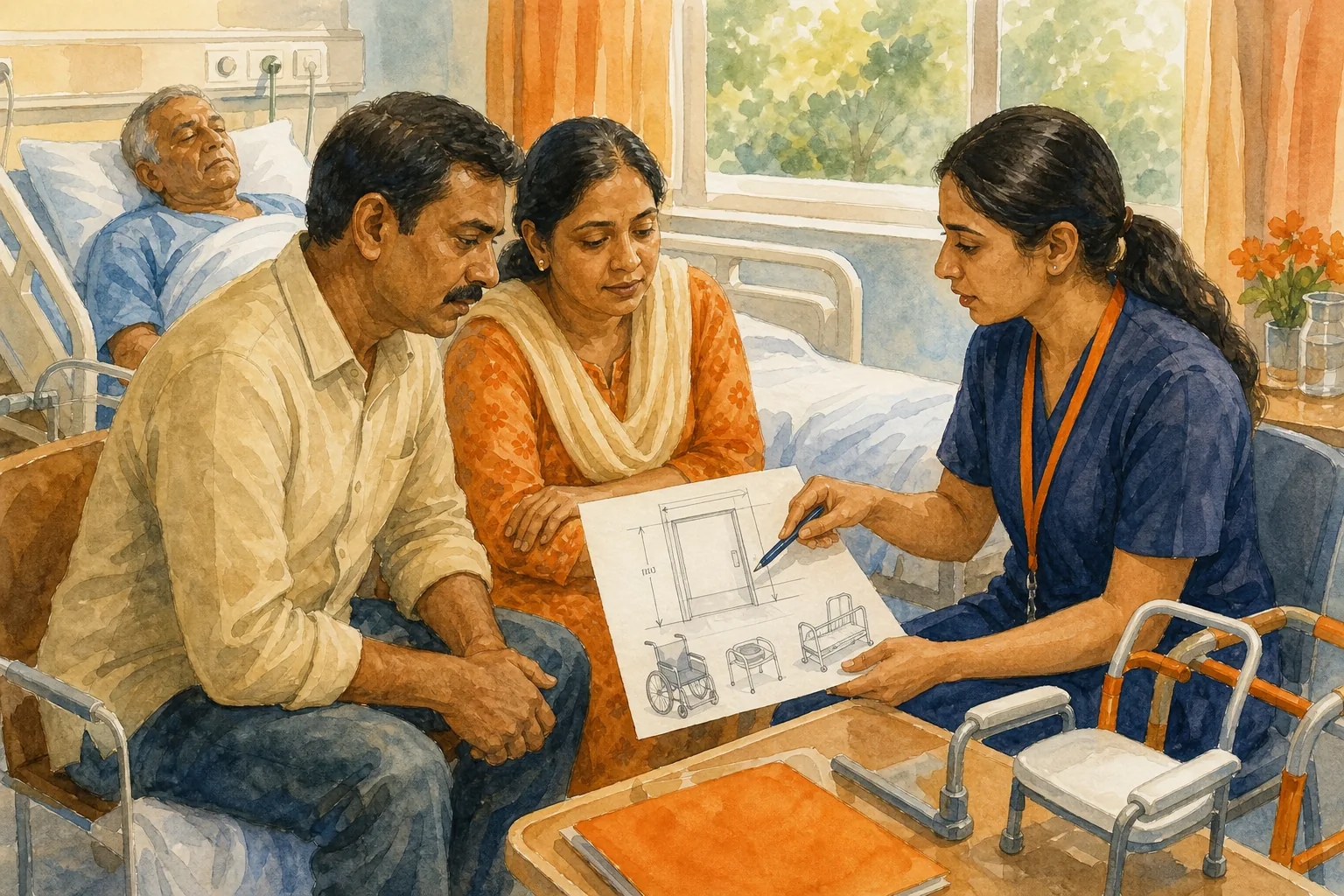
Ask the discharge team to explain which items must be in place before the patient leaves. Confirm who is arranging each one, the delivery address and the expected arrival time. If the hospital has a case manager or social worker, include them in the handoff. Tell them about stairs, narrow doorways or limited caregiver availability, since these details can affect what will work at home.
If a wheelchair is being considered, measure the entry and the route to the patient's room before choosing one. Wheelchair rental information .
Keep the clinician's written instructions with the discharge papers. For oxygen, don't exceed the prescribed flow. Pulse-dose and continuous-flow settings aren't interchangeable. Keep oxygen away from smoking and open flames, and leave the concentrator clear of walls so air can move around it.
Key Takeaway:Get the device type and clinician's instructions in writing before arranging delivery.
Step 2: Make a Discharge Checklist and Coordinate the Order
Write down each item, who is responsible for arranging it and when it needs to arrive. An order alone doesn't mean equipment is already at home. Ask the discharge planner whether the family, hospital or another care coordinator will place the order, then confirm the delivery plan directly with the supplier.
Use a short checklist and mark each task as confirmed only after you have a clear answer:
Equipment type and written clinician instructions.
Who will arrange each item and who will receive it.
Delivery date, time window and home address.
Room access, doorway measurements and space for caregivers to move.
Who will learn the setup and use steps.
Discharge medicines, follow-up plan, warning signs and emergency contacts.
Ask the hospital team to review the list before discharge. Repeat the plan back in your own words. If the patient needs home nursing or another service, confirm what has actually been arranged and when it is expected to start. Don't assume a referral means someone will arrive at a set time.
If a hospital bed is part of the plan, decide where it will go and whether the delivery team can bring it into the home. Confirm the delivery plan with the supplier.
Before discharge, ask what to do if an item is delayed. Write down the supplier's service contact details and the hospital team's point of contact, then agree who will update the clinician if the equipment won't arrive on time. If an essential item is not ready, tell the discharge team before leaving so they can review the plan with you.
Keep the medication list and equipment instructions together, but check them separately. A family member may be handling both, and it is easy to miss a medication change while sorting out a delivery. Ask the clinician or pharmacist to explain any medicine changes before the patient goes home.
Pro Tip:Put the delivery window and the name of the person receiving the equipment on the same checklist. That makes the handoff easier to track.
Step 3: Decide Whether to Rent, Buy or Borrow
Start with the likely length of need, as advised by the treating team. If the equipment is for a short recovery period, renting may avoid buying an item the family will soon stop using. If the need is expected to continue, compare rental terms with the cost of buying. Borrowing may be an option when a suitable item is available, but confirm its condition and suitability with the clinician.
Don't decide on cost alone. Check whether the exact device matches the written instructions. Ask what the rental term covers, how extensions work and how to arrange collection when the item is no longer needed. For a purchase, ask about setup guidance and what support is available if you need help using it.
Home medical equipment costs and payment arrangements vary. Don't assume an insurance policy will pay for a rental. Check the policy directly and ask the insurer what it covers before you commit. Get the provider's current quote and terms in writing, including any charges that may apply beyond the rental amount.
Healthy Jeena Sikho provides equipment on rent and for purchase. Rentals are available across its service network in 15 North Indian cities; equipment sales are available across India. A hospital bed rental page is one place to review an option if a bed is on the clinician's plan. Check the current details for the chosen item and delivery location.
For each item, note the expected end date or the date when the need will be reviewed. Ask the clinician who will decide whether to keep using it. That check-in helps the family avoid extending a rental by default or returning equipment before it is safe to do so.
Choose the arrangement only after confirming the device, written terms and delivery plan. If the expected recovery time changes, revisit the decision with the treating team and supplier.
Step 4: Prepare the Home, Receive the Equipment and Check Safe Use
Make room before delivery day. Clear the route from the entrance to the patient's room, move loose rugs and keep walkways free of clutter. Measure narrow doors and turns, then check that the planned equipment can reach its place. Leave enough space for a caregiver to assist without squeezing between furniture.
Choose a spot near the care area for supplies and keep the patient's daily essentials within easy reach. Check where the equipment will plug in and avoid placing cords across walking routes. For an oxygen concentrator, keep the vents clear of walls and never use oxygen near smoking or an open flame.
When the equipment arrives, compare it with the written order. Ask the person setting it up to show the caregiver how to use it, what to check before each use and whom to contact if something goes wrong. Have the caregiver explain the steps back in their own words. A quick demonstration is useful; hands-on practice can reveal a gap before the patient depends on the device.
Never change a clinician-set oxygen flow or CPAP or BiPAP pressure on your own. Ask the treating team if an instruction is missing or seems different from what the device shows. For oxygen, pulse-dose delivery and continuous flow are different modes, so don't treat their settings as interchangeable.
Healthy Jeena Sikho has a service network across 15 cities in North India, with four-hour express delivery available in many locations. Timing depends on the area and current availability, so confirm the delivery window for your address.
Before the first use, check that the caregiver knows the setup steps and has the clinician's written instructions nearby. Keep the discharge plan, equipment details and emergency contacts in one place. If the device doesn't match the order or the caregiver hasn't been shown how to use it, pause and ask the treating team or supplier for help.

FAQs
When should I arrange home medical equipment before discharge?
Start as soon as the discharge team identifies a likely equipment need. Ask the doctor to confirm the item and instructions, then check delivery timing with the supplier. Early planning gives the family time to measure the home and arrange caregiver training. If the discharge date changes, update the supplier and hospital team rather than assuming the original delivery plan still applies.
Do I need a doctor's prescription for home medical equipment?
Ask the treating doctor for a written order or instructions for any device linked to the patient's care. This is especially important for respiratory equipment, since a clinician must set the treatment instructions. The exact paperwork can depend on the item and care plan. If you're unsure, ask the discharge team what the supplier needs before ordering.
Should I rent or buy equipment for recovery at home?
Base the choice on the expected length of need, the clinician's plan and the written terms. Renting can suit a temporary need, while buying may be worth comparing if use is expected to continue. Ask about the rental period, extension process and collection. Confirm current charges directly, and don't assume insurance will reimburse a rental.
What should I do if the equipment is delayed?
Tell the hospital discharge planner and the supplier as soon as you learn about the delay. Ask for an updated delivery time and explain whether the patient can safely go home without the item. Let the treating team decide whether the plan needs to change. Don't substitute another device or alter prescribed settings to work around a delay.
How do I check that a caregiver can use the equipment safely?
Ask the supplier or care team to show the caregiver the setup and safe-use steps. Have the caregiver repeat the steps back and ask questions about alarms, routine checks and getting help. Keep the clinician's instructions nearby. For oxygen or breathing devices, never change prescribed settings without the treating clinician's direction.
Conclusion
Get the clinician's equipment plan in writing, then confirm delivery and caregiver training before discharge. Start with the discharge planner and use our equipment pages to check the relevant rental or purchase details for your needs.


Comments