
Why Oxygen Concentrator Is Used

Updated: Jan 20
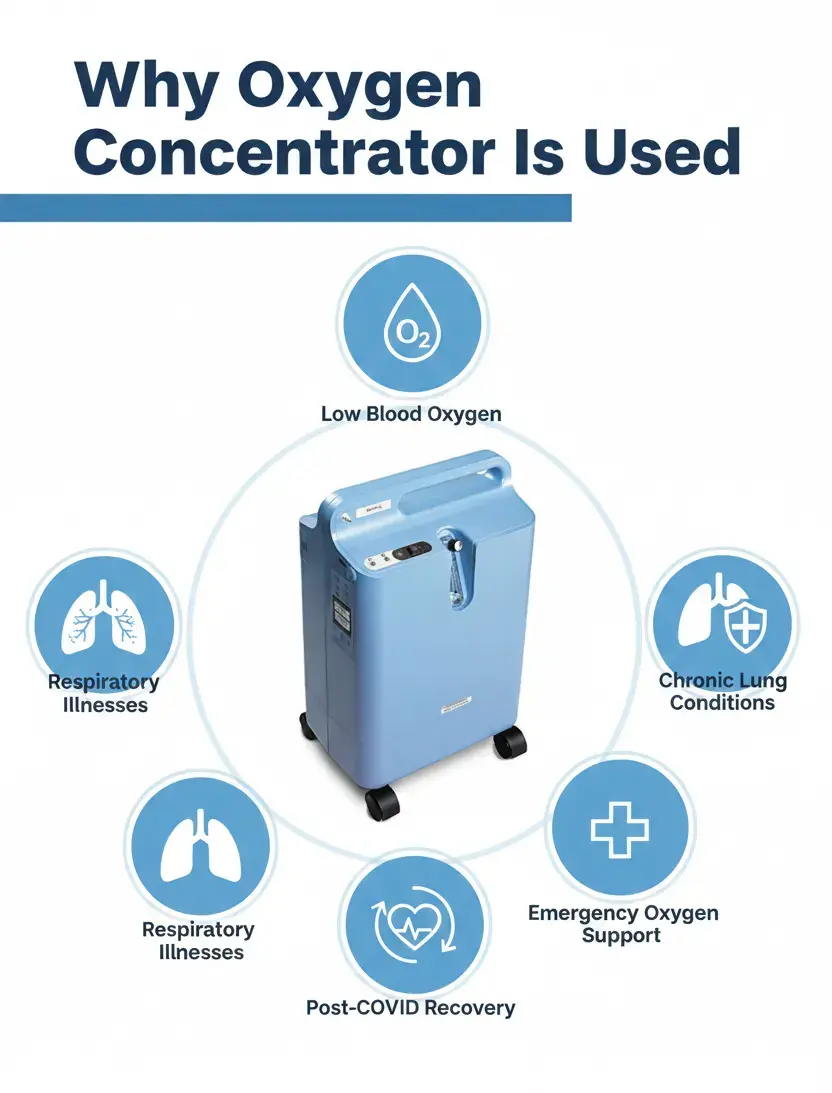
An In-Depth Guide by Healthy Jeena Sikho
Breathing is the most basic and vital function of the human body, yet millions of people struggle to get enough oxygen due to medical conditions, age-related issues, or recovery phases after illness. When the oxygen level in the blood falls below normal, the body’s organs do not receive the oxygen they need to function properly. This is where an oxygen concentrator becomes essential.
An oxygen concentrator is a medical device designed to provide supplemental oxygen to people whose oxygen saturation levels are lower than normal. At Healthy Jeena Sikho, we help families understand why oxygen concentrators are used, when they are required, and how they support safe and effective oxygen therapy at home.
Understanding Oxygen Levels in the Human Body
Under normal conditions, the oxygen saturation level in a healthy person ranges between 95% and 100%. When oxygen levels drop below this range, the body begins to show symptoms such as breathlessness, fatigue, dizziness, confusion, and in severe cases, organ damage.
Low oxygen levels, medically known as hypoxemia, can occur due to lung diseases, heart conditions, infections, or weakened respiratory systems. An oxygen concentrator helps restore and maintain safe oxygen levels by delivering concentrated oxygen directly to the patient.

What Is an Oxygen Concentrator and How Does It Work?
An oxygen concentrator is an electrically powered device that draws in air from the surrounding environment, removes nitrogen, and delivers oxygen-rich air to the patient. Unlike oxygen cylinders, which store a limited amount of oxygen, concentrators continuously generate oxygen as long as they have power.
This makes oxygen concentrators especially suitable for long-term and home-based oxygen therapy. They are designed to deliver a consistent flow of oxygen, usually through a nasal cannula or oxygen mask, based on the doctor’s prescription.
Why Oxygen Concentrator Is Used in Medical Treatment
An oxygen concentrator is used primarily to treat patients who are unable to maintain adequate oxygen levels on their own. When the lungs or heart are not functioning efficiently, oxygen delivery to the bloodstream is reduced. Supplemental oxygen helps compensate for this deficiency.
Doctors prescribe oxygen concentrators to reduce strain on vital organs, especially the heart and brain. By improving oxygen availability, patients experience reduced breathlessness, better sleep, improved energy levels, and enhanced overall quality of life.
Medical Conditions That Require Oxygen Concentrator Use
Oxygen concentrators are commonly used for patients suffering from chronic respiratory and cardiac conditions. Chronic Obstructive Pulmonary Disease (COPD) is one of the most frequent reasons for long-term oxygen therapy, as damaged lungs struggle to exchange oxygen effectively.
Patients recovering from severe COVID-19 infections often require oxygen concentrators due to lung inflammation and reduced oxygen absorption. Other conditions include pneumonia, asthma complications, pulmonary fibrosis, heart failure, and certain neurological or muscular disorders that affect breathing.
Elderly patients may also need oxygen support due to age-related weakening of lung capacity or underlying health conditions.

Why Oxygen Concentrator Is Preferred for Home Oxygen Therapy
One of the main reasons oxygen concentrators are widely used is their suitability for home care. Unlike oxygen cylinders that need frequent refilling and monitoring, concentrators offer a continuous and reliable oxygen supply.
They are easier to manage, safer for indoor use, and more cost-effective over time. For patients requiring oxygen for several hours a day or long-term therapy, an oxygen concentrator provides peace of mind and independence, especially when supported by professional home care services like those offered by Healthy Jeena Sikho.
Role of Oxygen Concentrator in Improving Quality of Life
Using an oxygen concentrator is not only about survival; it is about improving daily living. Adequate oxygen levels help patients perform routine activities with less fatigue, sleep better at night, and reduce anxiety associated with breathlessness.
Many patients report improved mental clarity, better appetite, and increased ability to move and communicate comfortably once oxygen therapy is started correctly. For caregivers and families, oxygen concentrators also reduce emergency situations caused by sudden oxygen drops.
Oxygen Concentrator vs Oxygen Cylinder: Why Concentrators Are Used More Today
While oxygen cylinders are still used in emergencies and as backups, oxygen concentrators are preferred for routine therapy. Cylinders contain a fixed amount of oxygen and need regular replacement, which can be stressful and costly.
Oxygen concentrators, on the other hand, generate oxygen continuously from room air. This makes them ideal for long-term use, especially in home settings. Many modern concentrators also support inverter operation and have safety alarms, making them more dependable for daily therapy.
Oxygen Concentrators Provided by Healthy Jeena Sikho
Types of Oxygen Concentrators Available
Philips EverFlo Oxygen Concentrator A globally trusted, low-maintenance oxygen concentrator ideal for long-term home oxygen therapy. Known for quiet operation and consistent oxygen purity.
Oxymed Mini Oxygen Concentrator A compact and efficient concentrator designed for daily home use with stable oxygen delivery.
Medoxy Oxygen Concentrator A cost-effective and dependable option for regular oxygen therapy, suitable for patients needing consistent home oxygen support.
Evox Oxygen Concentrator with Oxygen Output Designed for reliable oxygen delivery with user-friendly controls, suitable for continuous home use.
Portable Oxygen Concentrator with Battery Backup Ideal for patients who require mobility support during short outdoor activities or travel, offering oxygen delivery with battery operation.
Professional Support and Guidance by Healthy Jeena Sikho
Oxygen therapy should never feel overwhelming. That is why Healthy Jeena Sikho provides complete support, including home delivery, professional installation, live usage demonstrations, and ongoing service assistance.
We help families understand when oxygen concentrators are required, how long they should be used, and how to manage power backup and safety precautions. Our goal is to ensure uninterrupted and stress-free oxygen therapy.
When Should You Consult a Doctor About Oxygen Use?
An oxygen concentrator should always be used based on medical advice. If a patient experiences persistent breathlessness, low oxygen saturation readings, chest discomfort, or fatigue, a doctor should be consulted immediately.
Self-adjusting oxygen flow or using oxygen without prescription can be harmful. Healthy Jeena Sikho works closely with medical guidance to ensure oxygen therapy is used safely and effectively.
Conclusion
So, why is an oxygen concentrator used? It is used to support patients whose bodies cannot maintain healthy oxygen levels on their own. From chronic lung diseases to post-infection recovery and elderly care, oxygen concentrators play a critical role in modern home healthcare.
With the right machine, correct usage, and professional support from Healthy Jeena Sikho, oxygen therapy can significantly improve comfort, safety, and quality of life for patients and peace of mind for families.
Healthy Jeena Sikho – Trusted Home Oxygen Care, Right at Your Home.
Frequently Asked Questions (FAQs)
1. Why is an oxygen concentrator used instead of normal air?
An oxygen concentrator is used when a person’s lungs cannot absorb enough oxygen from normal air. It provides concentrated oxygen to maintain safe blood oxygen levels, which is essential for proper functioning of the heart, brain, and other vital organs.
2. Who needs an oxygen concentrator?
An oxygen concentrator is commonly prescribed for patients with COPD, post-COVID lung damage, pneumonia, asthma complications, heart failure, pulmonary fibrosis, and elderly patients with low oxygen saturation. It should always be used based on a doctor’s recommendation.
3. Is an oxygen concentrator used only for critical patients?
No. Oxygen concentrators are used for both critical and non-critical patients. Many patients use them at home for long-term oxygen therapy to improve breathing comfort, reduce fatigue, and prevent complications caused by low oxygen levels.
4. Can oxygen concentrators be used at home safely?
Yes. Oxygen concentrators are specifically designed for home use. When placed correctly, cleaned regularly, and used at the prescribed flow rate, they are safe and effective for long-term home oxygen therapy.
5. How does an oxygen concentrator help in recovery?
An oxygen concentrator improves oxygen delivery to the body, which helps reduce breathlessness, supports organ function, improves sleep quality, and speeds up recovery from lung infections or respiratory weakness.
6. Is an oxygen concentrator better than an oxygen cylinder?
For long-term or daily oxygen therapy, an oxygen concentrator is usually preferred because it provides continuous oxygen without the need for refilling. Oxygen cylinders are mainly used as emergency backups or for short-term use.
7. Can elderly patients use an oxygen concentrator daily?
Yes. Many elderly patients safely use oxygen concentrators daily under medical supervision. Proper flow settings, regular monitoring, and caregiver support ensure safe and comfortable usage.
8. How many hours a day can an oxygen concentrator be used?
The duration depends on the doctor’s prescription. Some patients may require oxygen for a few hours a day, while others may need continuous or overnight oxygen therapy. Always follow medical advice.
9. Does using an oxygen concentrator make the lungs weak?
No. Using an oxygen concentrator does not weaken the lungs. It supports the body by providing required oxygen levels when the lungs are unable to do so efficiently on their own.
10. Does Healthy Jeena Sikho help in choosing the right oxygen concentrator?
Yes. Healthy Jeena Sikho provides complete guidance in selecting the right oxygen concentrator based on prescription, oxygen flow requirement, duration of use, and patient condition. We also offer installation, training, and ongoing support.


This is a useful introduction to oxygen concentrators and why they may be used in certain situations. Clear health education helps readers understand medical equipment without unnecessary confusion, and https://www.canadianfurniture.ca/ appreciates accessible information that encourages informed conversations with professionals.
The explanation of why oxygen concentrators are used is both informative and accessible. Complex healthcare topics super fabrications become much easier to understand through clear writing like this. we value educational content that helps readers make informed decisions while increasing awareness about important health solutions.
Thank you for explaining the differences between B-type and D-type oxygen cylinders in such a simple and practical way. This sleepbaby.ca information can help people make informed healthcare decisions when needed. appreciates educational articles that genuinely benefit readers and families.
This is a very informative explanation about why oxygen concentrators are used and how they support people with https://www.mytruckpoint.ca/ respiratory conditions. Clear educational content like this can make an important difference for readers. Thanks for sharing valuable knowledge.
Helpful explanation of why oxygen concentrators are used and how they support people facing breathing difficulties. Medical information is most valuable when it is presented in a clear and reassuring way, and this article achieved that very well. I recently read another informative piece connected with https://www.jasonranallolaw.com/ that highlighted the value of understanding important health related decisions before taking action. Educational content like this can genuinely benefit many readers.