
How to Connect Oxygen Concentrator at Home

Updated: Dec 24, 2025
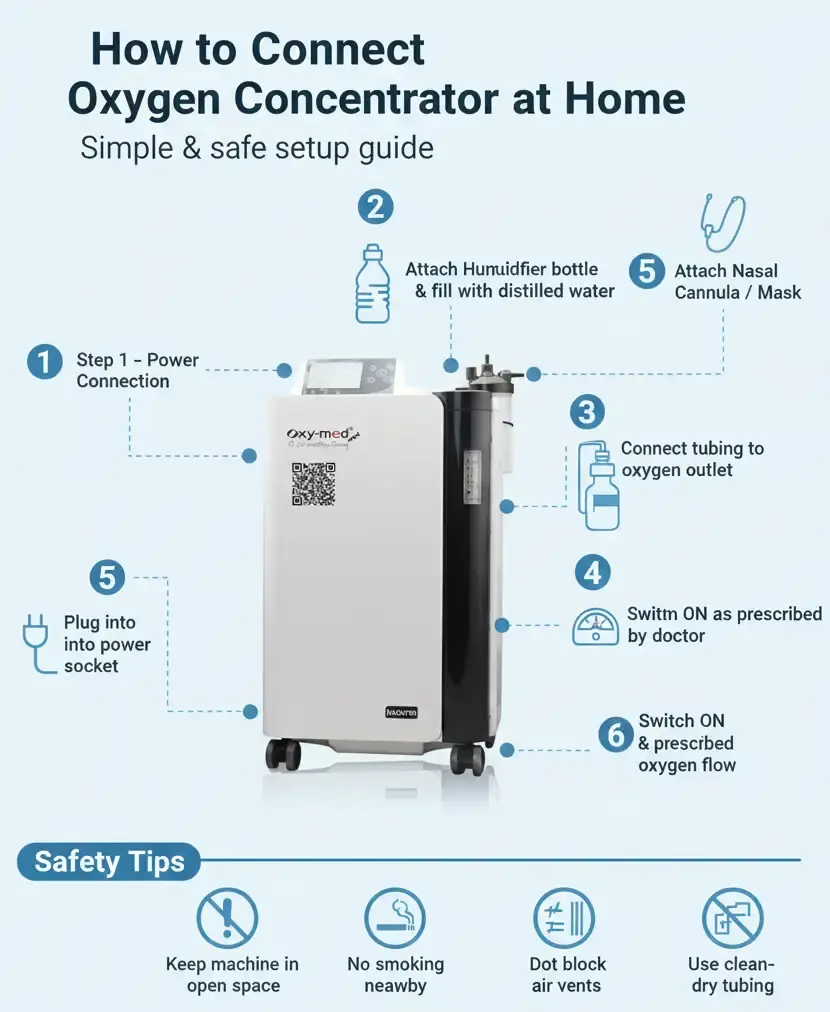
It is Important to know that How To Connect Oxygen Concentrator at Home
Connecting an oxygen concentrator correctly is the foundation of safe and effective home oxygen therapy. A small mistake during connection-such as incorrect tubing placement, wrong flow setting, or poor machine positioning-can reduce oxygen delivery and cause discomfort or panic for patients and caregivers.
Many families search online for how to connect oxygen concentrators at home, especially when the machine is newly delivered or shifted to another room. At Healthy Jeena Sikho, we believe that understanding the correct connection process empowers families to manage oxygen therapy confidently and safely.
This guide explains the entire process in simple, detailed language so that even first-time users can follow it easily.
Before connecting the oxygen concentrator, it is important to understand that the machine works by pulling in room air, filtering nitrogen, and delivering concentrated oxygen to the patient. For this process to work properly, the concentrator must have adequate airflow, correct accessories, and proper power supply.
An oxygen concentrator setup usually involves the machine itself, a power source, oxygen tubing, a nasal cannula or mask, and sometimes a humidifier bottle if prescribed by the doctor. Each component plays a critical role in ensuring smooth oxygen delivery.

Placing the Oxygen Concentrator Correctly at Home
The first step in connecting an oxygen concentrator is choosing the right location. The machine should always be placed in a well-ventilated area with sufficient space around it. Keeping the concentrator at least one to two feet away from walls, curtains, or furniture allows free airflow and prevents overheating or alarm issues.
Avoid placing the concentrator in closed rooms, near kitchens, or in dusty environments. A flat and stable surface is important to reduce vibration and noise during operation.
Connecting the Power Supply Safely
Once the machine is placed correctly, connect the power cable directly to a wall socket. Avoid using extension cords or multi-plug adapters, as they can cause voltage fluctuations and damage the machine over time.
If your area experiences frequent power cuts, a pure sine wave inverter may be used, depending on the oxygen concentrator model. After switching on the machine, allow it to warm up for a few minutes. Most oxygen concentrators take about two to five minutes to stabilize oxygen purity.
Attaching the Humidifier Bottle (If Prescribed)
Some patients experience dryness in the nose or throat during oxygen therapy. In such cases, doctors may recommend using a humidifier bottle. If advised, fill the humidifier bottle with distilled water only up to the indicated level.
The bottle should be tightly attached to the humidifier port of the concentrator. Using normal tap water should be avoided, as it can lead to infections, mineral buildup, and blockage of oxygen flow.
Connecting the Oxygen Tubing Properly
The oxygen tubing acts as the pathway that delivers oxygen from the concentrator to the patient. One end of the tubing should be securely connected to the oxygen outlet or the top of the humidifier bottle, depending on the setup.
Ensure that the tubing is straight and free from bends, twists, or compression. Even a small kink in the tubing can significantly reduce oxygen flow and trigger alarms.
Connecting the Nasal Cannula or Oxygen Mask
After attaching the tubing, connect the other end to the nasal cannula or oxygen mask.
If using a nasal cannula, the prongs should face downward and fit gently into the nostrils. The tubing should be looped over the ears and adjusted under the chin so that it stays in place without causing discomfort.
If using an oxygen mask, place it securely over the nose and mouth and adjust the strap for a comfortable fit. The mask should not feel too tight or cause pressure marks.
Setting the Correct Oxygen Flow Rate
Setting the correct oxygen flow rate is one of the most critical steps. The flow rate should always match the doctor’s prescription, which is commonly between one to five liters per minute for home oxygen therapy.
Check the flow meter and ensure the indicator aligns exactly with the prescribed number. Increasing or decreasing oxygen flow without medical advice can be harmful and should never be done.
Final Safety Checks After Connecting the Oxygen Concentrator
Once everything is connected, observe the patient for a few minutes. Oxygen should flow smoothly, the patient should breathe comfortably, and no alarm should sound from the machine.
Check that the tubing is not pulling or tangled, and ensure that the concentrator is running quietly without overheating.
Oxygen Concentrators Provided by Healthy Jeena Sikho
At Healthy Jeena Sikho, we provide a wide range of reliable, easy-to-use oxygen concentrators designed for safe and effective home oxygen therapy. Our equipment is carefully selected to meet different medical needs, usage durations, and mobility requirements.
Types of Oxygen Concentrators Available
Philips EverFlo Oxygen Concentrator A globally trusted, low-maintenance oxygen concentrator ideal for long-term home oxygen therapy. Known for quiet operation and consistent oxygen purity.
Oxymed Mini Oxygen Concentrator A compact and efficient concentrator designed for daily home use with stable oxygen delivery.
Medoxy Oxygen Concentrator A cost-effective and dependable option for regular oxygen therapy, suitable for patients needing consistent home oxygen support.
Evox Oxygen Concentrator with Oxygen Output Designed for reliable oxygen delivery with user-friendly controls, suitable for continuous home use.
Portable Oxygen Concentrator with Battery Backup Ideal for patients who require mobility support during short outdoor activities or travel, offering oxygen delivery with battery operation.

Complete Oxygen Support Services by Healthy Jeena Sikho
Along with high-quality oxygen concentrators, Healthy Jeena Sikho provides complete end-to-end support to ensure patient safety and comfort:
Home delivery and professional installation
Live setup demonstration for patients and caregivers
Easy-to-understand usage and safety guidance
Ongoing service, maintenance, and technical support
Our goal is to make home oxygen therapy simple, safe, and worry-free for every family we serve.

When to Seek Professional Help
If the oxygen concentrator keeps alarming, oxygen flow feels insufficient, the machine overheats, or the patient experiences breathlessness despite oxygen use, professional help should be sought immediately.
The team at Healthy Jeena Sikho is trained to handle oxygen concentrator setup issues, troubleshooting, and maintenance safely.
Conclusion
Learning how to connect an oxygen concentrator correctly at home is essential for uninterrupted and effective oxygen therapy. Proper placement, correct tubing connection, accurate flow settings, and regular observation can prevent most common problems.
With expert guidance and support from Healthy Jeena Sikho, families can ensure that oxygen therapy at home remains safe, comfortable, and worry-free.
Healthy Jeena Sikho – Trusted Home Oxygen Care, Right at Your Home.
Frequently Asked Questions (FAQs)
1. Which oxygen concentrators are available at Healthy Jeena Sikho?
Healthy Jeena Sikho provides multiple oxygen concentrator options for home use, including Philips EverFlo Oxygen Concentrator ,Medoxy Oxygen Concentrator, Oxymed Mini , Evox Oxygen Concentrator, and portable oxygen concentrators with battery backup.
2. Which oxygen concentrator is best for long-term home use?
For long-term home oxygen therapy, Philips EverFlo Oxygen Concentrator 5L is one of the most recommended options due to its quiet operation, low maintenance, and consistent oxygen purity. Medoxy and Oxymed concentrators are also suitable based on medical needs.
3. Does Healthy Jeena Sikho provide portable oxygen concentrators?
Yes. Healthy Jeena Sikho provides portable oxygen concentrators with battery backup, which are suitable for patients who need oxygen support during short outdoor activities or travel. Doctor consultation is advised before choosing a portable model.
4. Are these oxygen concentrators suitable for elderly patients?
Yes. All oxygen concentrators provided by Healthy Jeena Sikho are suitable for elderly patients when used as prescribed by a doctor. We focus on machines that are easy to operate, stable, and safe for home use.
5. Does Healthy Jeena Sikho provide installation and setup support?
Yes. Healthy Jeena Sikho offers home delivery, professional installation, and live setup demonstration to ensure patients and caregivers understand proper usage and safety guidelines.
6. Can these oxygen concentrators be used with an inverter?
Many home oxygen concentrators, including Philips EverFlo Oxygen Concentrator 5L and Medoxy Oxygen Concentrator, can run on a pure sine wave inverter with adequate power capacity. Our team provides guidance on suitable inverter requirements.
7. How do I choose the right oxygen concentrator for home use?
The right oxygen concentrator depends on the doctor-prescribed oxygen flow rate, patient mobility, duration of oxygen therapy, and home environment. Healthy Jeena Sikho verifies prescriptions and recommends the most suitable machine accordingly.
8. What kind of after-service support does Healthy Jeena Sikho provide?
Healthy Jeena Sikho offers ongoing service support, maintenance assistance, and troubleshooting help throughout the rental or usage period to ensure uninterrupted oxygen therapy.
9. Can I rent an oxygen concentrator from Healthy Jeena Sikho?
Yes. Healthy Jeena Sikho provides oxygen concentrators on both rent and sale, allowing families to choose based on short-term or long-term oxygen requirements.
10. When should I contact Healthy Jeena Sikho immediately?
You should contact Healthy Jeena Sikho if the oxygen concentrator alarms frequently, oxygen flow feels insufficient, the machine overheats, or the patient experiences breathlessness despite oxygen therapy.


Great Information 👏🏻
In Pips NYT, I tried to save a flexible region for last. It ended up being the tightest constraint on the board.
Insightful article
Helpful article