
How to Compare BiPAP Prices in India: Buy or Rent?

A BiPAP quote can look simple until you find out what it leaves out. This BiPAP machine price guide for buyers and renters in India walks you through the checks that make quotes easier to compare, whether you need a short-term rental or a machine to keep.
We analyzed 50 YouTube comments about bipap machines in India and found that 42% asked about device features and condition suitability.
Start with the prescription, then compare the full cost and support plan. The lowest figure alone can't tell you whether a machine fits the care plan.
Table of Contents
Step 1: Confirm the prescribed BiPAP need before comparing prices
First, check that BiPAP is the device your treating clinician has prescribed. BiPAP gives different air pressure during inhalation and exhalation. CPAP uses one continuous pressure. They aren't interchangeable choices to make based on price or comfort alone.
Ask the clinician to write down the prescribed device type and any required mode or settings. The clinician must choose and adjust those settings. Don't copy a setting from another person's machine or ask a supplier to set it without clinical direction.
BiPAP may be prescribed for different breathing needs, including some cases of sleep apnea or other respiratory conditions. The diagnosis doesn't tell you which machine or mode to choose by itself. If the prescription only says “BiPAP,” ask the clinic to clarify what the supplier needs to know before you request a quote.
Tell the supplier whether this is for home use after discharge or for a longer care plan. Also confirm who will explain the setup and whom the family should contact if the machine raises an alarm or feels hard to use. If you need a local rental, our guide to renting a BiPAP near you in India covers the usable questions to settle before arranging delivery.
Keep the prescription available when asking for a quote.
Confirm the exact device type and prescribed settings with the clinician.
Ask who is responsible for setup guidance and follow-up support.
By now, you should have a clear device requirement, not a guess based on a product name.
Step 2: Request a quote that makes the BiPAP cost clear
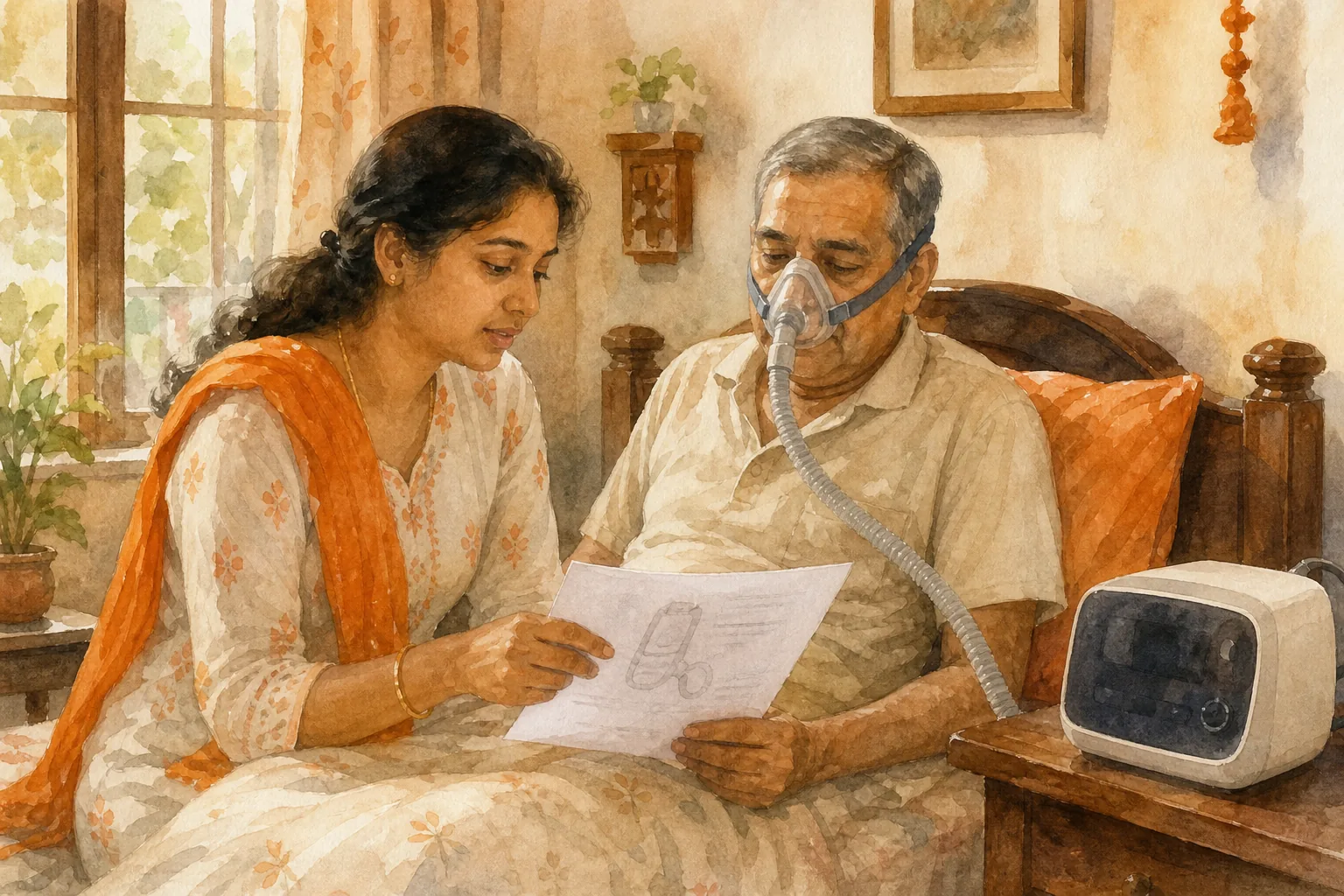
Ask for a written quote tied to the exact model and care plan. Two quotes are hard to compare if one covers only the machine and the other includes extra items or service. Ask the supplier to separate each charge so you can see what you are paying for.
For a purchase, ask whether the quote covers the machine, mask, humidifier if prescribed, delivery, setup guidance, warranty terms, and after-sales support. These may not all be included. Have the supplier state what applies to that specific quote rather than assuming from a photo or a general product description.
For a rental, ask how the billing period works and when charges begin. Confirm the minimum term, the process for extending or ending the rental, and any fees that may apply. Ask whether the rental includes the mask or other accessories, and how service is handled if the device needs attention. Get the answers in writing.
Check the exact model name on the quote against the clinician's instructions. A price attached to a different model or mode doesn't help you make a like-for-like choice. Healthy Jeena Sikho has a BiPAP machine price and purchase options page where you can check the relevant listing and ask for current quote details.
Don't read a higher price as proof that a machine has features your care plan needs. Ask the supplier to name the feature and explain how it relates to the clinician's prescription. If the quote uses a technical term you don't recognize, ask for a plain-language explanation before paying.
Request the model name and itemized charges.
Confirm what comes with a rental versus a purchase.
Ask for warranty and service terms in writing.
By now, you should be able to compare the full quote, not just the headline price.
Step 3: Decide whether renting or buying fits the care plan
Choose based on the expected length of use and the clinician's plan. Renting can suit a temporary need, such as home care during recovery, or a period when the family is still confirming how long equipment will be needed. Buying may make sense when the clinician expects ongoing use and the family is ready to manage the machine over time.
To compare costs, work out the expected rental spend across the likely care period, then compare it with the purchase quote. Include the rental term and any stated extra charges. For a purchase, include accessories and any service costs shown in the quote. Don't assume a rental can be converted into a purchase or that payments will count toward ownership. Ask whether either term applies.
There isn't one break-even point that fits every family. A short, uncertain period can make a rental easier to plan. A long-term prescription may make a purchase worth reviewing, but only if the exact device remains suitable and the family has a plan for servicing it. If the care plan changes, ask the clinician before changing devices.
We provide medical equipment for rent and purchase through Healthy Jeena Sikho. Rentals are available across our service network in 15 North Indian cities, while equipment sales are available across India. Our BiPAP rental cost guide explains which rental terms to check before you compare a monthly quote with a purchase.
For a purchase, ask a bank or other finance provider directly whether it has a suitable payment or loan option. Check the total repayment amount, fees, and due dates before agreeing. Don't treat financing as a discount, and don't assume that a medical device purchase or rental will be reimbursed by insurance.
By now, you should have a preferred option based on the likely care period, the written terms, and the clinician's direction.

Step 4: Check the machine, mask, and support before committing
Confirm the machine's key details against the prescription before you place an order. Ask which therapy mode it supports and whether the clinician has approved that model. Pressure settings must match the clinician's instructions. A supplier shouldn't choose or change them based on the price tier.
Then check the parts that affect day-to-day use. Ask whether a humidifier is included or available if the clinician recommends one. Confirm which mask comes with the quote, whether it fits the patient's needs, and whether the supplier can explain how to position it. A poorly fitting mask can make home use difficult, so resolve fit questions before the handover.
Ask about sound, power needs, and battery or backup options if these matter in your home. Do not assume a model has a certain noise level or backup feature without checking its exact specifications. If your area has power cuts, ask the supplier what backup setup is compatible, then confirm the plan with the clinician where needed.
Before you commit, ask who handles faults, what the warranty covers for a purchase, and what service applies during a rental. Also ask how to clean the parts and how often to replace consumables. Follow the device maker's instructions for cleaning. Don't use a home remedy or cleaning product unless the instructions allow it.
Keep the comparison focused on confirmed facts. In market listings, technical details such as pressure range, humidifier type, and connectivity are not always described in the same way. Ask for the specifications of the exact machine in the quote instead of treating a broad product category as a full spec sheet.
By now, you should know what the quote includes and who will help if a setup or service issue comes up.
Pro Tip:Save the prescription, quote, model name, and service terms together. That gives the caregiver one clear record to use during the handover.
Step 5: Arrange delivery and plan the home setup
Before delivery, confirm the address, delivery window, and the name of the person who will receive the machine. Ask whether setup guidance is part of the arrangement. Healthy Jeena Sikho provides rentals in its North India service network, and same-day express delivery is available in many locations. Confirm the timing for your address rather than assuming a specific delivery window.
Choose a stable spot near the patient's bed, with access to power and enough room for the equipment. Keep the area tidy so the caregiver can reach the device and its parts. The supplier should explain the basic setup and show the family how to follow the clinician's prescription. Don't change settings during unboxing or use the machine in a way that differs from the clinician's instructions.
At handover, check that the model matches the quote and that the included parts are present. Ask the person showing the setup to explain how to switch the machine on and off, how to respond to routine alerts, and what to do if the device stops working. If anything doesn't match the quote, raise it before the handover is complete.
Write down the supplier's service process and the rental end date, if applicable. Set a reminder to review the care plan with the treating clinician before the rental term ends or if the patient's needs change. For families in Delhi NCR, our Delhi NCR BiPAP rental guide helps with the local rental steps and delivery checks.
By now, the family should know what arrived, how to follow the prescribed setup, and whom to contact about service.
Frequently Asked Questions
How much does a BiPAP machine cost in India?
The cost depends on the exact machine, the quote terms, and whether you rent or buy. Ask for current pricing tied to the prescribed model. Compare what the quote includes, such as accessories or setup guidance, along with the rental term or purchase warranty. A headline price alone can't show the full cost of home use.
Is it better to rent or buy a BiPAP machine?
Renting may fit a temporary or uncertain care period, while buying may suit planned long-term use. Compare the likely rental spend across the care period with the purchase quote, including any stated charges and accessories. The treating clinician should confirm the device remains suitable if the care plan changes.
Can I choose BiPAP settings myself?
No. The treating clinician must prescribe and adjust BiPAP settings. Don't copy settings from another person or change them to reduce cost or improve comfort without clinical advice. If the machine feels uncomfortable or the patient's breathing needs change, contact the treating clinician and follow their instructions.
What should a BiPAP quote include?
A useful quote names the exact model and separates the charges. Ask whether it includes the mask, humidifier if prescribed, delivery, setup guidance, and service. For a rental, confirm the billing period and terms for extending or ending it. For a purchase, ask for the warranty terms. Get the details in writing.
Does BiPAP replace CPAP or a ventilator?
No device should be swapped based on a price comparison. BiPAP and CPAP use different pressure approaches, and a ventilator is a separate clinical decision. The treating clinician must choose the device for the patient's needs. If the prescription or supplier quote uses unclear terms, ask the clinician to clarify before arranging equipment.
Conclusion
Compare written quotes for the exact prescribed machine, then choose rental or purchase based on the care plan and full terms. Before you arrange delivery, confirm the model and setup details with the clinician and supplier. Healthy Jeena Sikho provides equipment for rent in 15 North India cities and sells equipment across India. Check the relevant BiPAP listing for current quote details.


Comments