
How Heatwaves Affect Oxygen Levels in Respiratory Patients

Updated: Jul 2
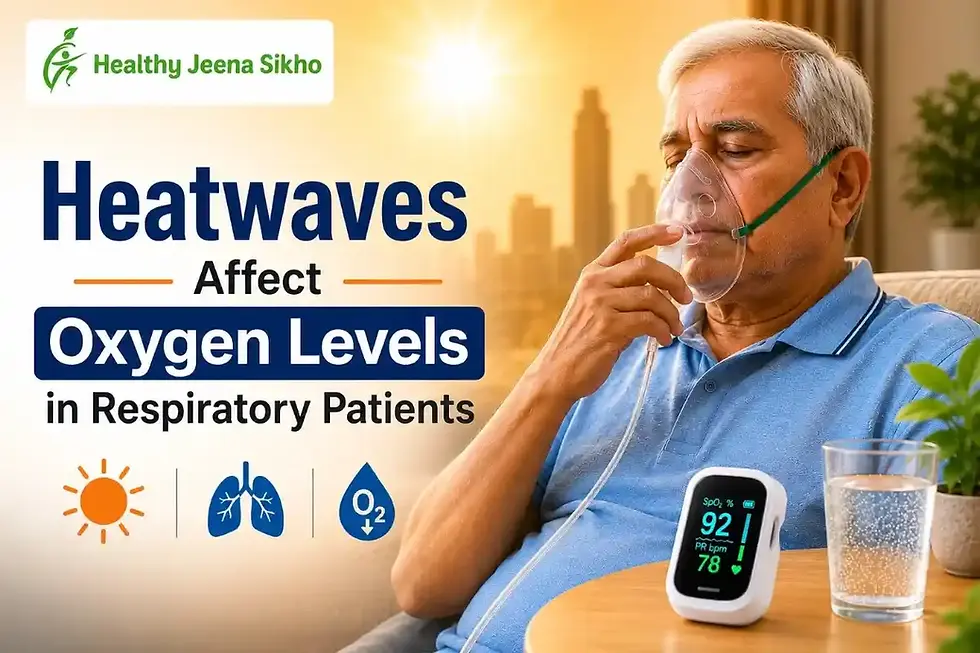
Heatwaves reduce the body's ability to maintain stable oxygen levels by increasing breathing rate, thickening airway mucus, worsening lung inflammation, and reducing the efficiency of oxygen exchange inside the lungs. Respiratory patients — including those living with COPD, asthma, interstitial lung disease, and post-COVID lung damage — are especially vulnerable because their lungs already operate with reduced capacity and cannot compensate effectively when extreme heat places additional demands on the respiratory system.
Every summer, millions of Indians with chronic respiratory disease face a threat that is both serious and largely preventable — yet most do not see it coming until it becomes a crisis.
India recorded its longest and most severe heatwave season in over a decade in 2024. Temperatures exceeded 45°C across Rajasthan, Uttar Pradesh, Delhi, and Madhya Pradesh for weeks at a stretch. For the general population, this meant discomfort and fatigue. For the estimated 55 million Indians living with chronic obstructive pulmonary disease (COPD) — and tens of millions more with asthma and other lung conditions — it meant a direct and measurable threat to blood oxygen levels and lung function.
At Healthy Jeena Sikho, we work every day with respiratory patients across India. Each summer, we see the same pattern: patients who were managing well through winter begin to deteriorate in the heat. Breathlessness worsens. Oxygen levels fall. Hospital visits increase. And in almost every case, the deterioration could have been anticipated and prevented with the right knowledge and preparation.
This guide gives you that knowledge — clearly, accurately, and in enough detail to protect yourself or a loved one through extreme summer heat.
In this guide, Healthy Jeena Sikho covers:
The exact medical mechanisms by which heatwaves lower oxygen levels
Which respiratory conditions carry the greatest risk
How to monitor blood oxygen levels accurately at home
Warning signs that require immediate emergency care
Evidence-based protective strategies from our respiratory care team
Special guidance for patients on supplemental oxygen therapy
When to call Healthy Jeena Sikho and when to go directly to emergency
What Happens to the Body During a Heatwave?
A heatwave is defined by the India Meteorological Department (IMD) as a period during which maximum temperatures reach at least 40°C in plains regions, or when temperatures exceed the seasonal normal by 4.5°C or more for two or more consecutive days.
When the body is exposed to sustained extreme heat, it activates an emergency thermoregulation response designed to prevent overheating:
Vasodilation — blood vessels near the skin surface widen to release stored body heat
Sweating — rapid fluid loss through the skin enables evaporative surface cooling
Increased heart rate — the heart beats harder and faster to push blood to the skin
Faster breathing — respiration accelerates to expel heat through exhaled air
Blood flow redistribution — circulation is diverted away from internal organs toward the skin
Each of these responses places added strain on the lungs and respiratory muscles. For a person with healthy lungs and full breathing capacity, the body adapts without reaching a crisis point. For a person whose lungs are already operating at reduced capacity due to chronic disease, this added strain can rapidly push the respiratory system past its physiological limits — with serious consequences for blood oxygen levels.
How Heatwaves Affect Oxygen Levels in Respiratory? Patients The 6 Medical Mechanisms
Mechanism 1 — Faster Breathing Reduces Gas Exchange Efficiency
When core body temperature rises, the breathing rate accelerates — a physiological response called tachypnea. While faster breathing helps expel heat through exhaled air, it simultaneously makes each breath shallower. Shallow breathing fails to fully inflate the lower lobes of the lungs, which contain the largest concentration of alveoli — the microscopic air sacs where oxygen passes from the lungs into the bloodstream.
The result is a physiological paradox: the body is breathing more frequently but exchanging less oxygen with each breath. In healthy lungs, this is compensated for quickly. In lungs already affected by chronic disease — where alveolar surface area is already reduced — even small reductions in gas exchange efficiency can cause measurable drops in blood oxygen saturation, recorded as a falling SpO₂ reading on a pulse oximeter.
Mechanism 2 — Hot Air Triggers Airway Inflammation and
Constriction
Hot, dry air is a direct chemical and physical irritant to the bronchial lining. When inhaled at high temperatures, it provokes an inflammatory response inside the airways — causing the bronchial walls to swell, produce excess mucus, and narrow in diameter. This process is known as heat-induced bronchoconstriction, and it is particularly severe in patients with pre-existing airway inflammation such as asthma and COPD.
Research published in the European Respiratory Journal confirmed that biological markers of airway inflammation increase significantly during heatwave periods, correlating directly with increased emergency hospital admissions for acute respiratory distress across multiple countries.
When airways become inflamed and constricted:
Resistance to airflow increases with every single breath
Greater muscular effort is required just to move air in and out of the lungs
Less oxygen reaches the alveoli per respiratory cycle
Respiratory muscles fatigue faster — particularly dangerous in COPD patients
Mechanism 3 — Ozone and Air Pollution Surge During Heatwaves
Heatwaves do not only bring extreme temperatures — they bring severely degraded air quality simultaneously. High temperatures dramatically accelerate the photochemical reactions between sunlight, nitrogen oxides, and volatile organic compounds that produce ground-level ozone (O₃) — one of the most potent lung irritants known to respiratory medicine.
During Indian heatwave events, urban ozone concentrations regularly exceed the safe limits set by the Central Pollution Control Board (CPCB), particularly in Delhi, Mumbai, and other metropolitan cities. Fine particulate matter (PM2.5) simultaneously rises as hot, stagnant air traps pollution close to ground level.
Pollutant | Effect on Respiratory System | Impact on Oxygen Levels |
Ground-level ozone (O₃) | Inflames bronchial lining, reduces FEV₁ | Reduces alveolar oxygen transfer efficiency |
Fine particulate matter (PM2.5) | Penetrates deep into alveoli | Directly impairs gas exchange at cellular level |
Nitrogen dioxide (NO₂) | Causes airway hyperresponsiveness | Worsens bronchospasm and airflow restriction |
Carbon monoxide (CO) | Binds haemoglobin preferentially over oxygen | Directly reduces oxygen-carrying capacity of blood |
For respiratory patients who must be exposed to outdoor air — even briefly — during peak pollution and heat hours, this combination can trigger acute exacerbations within hours of exposure.
Mechanism 4 — Dehydration Thickens Mucus and Causes Airway Plugging
Heatwaves cause substantial fluid loss through sweating — easily one to two litres per hour during intense heat exposure or mild physical activity. This rapid dehydration reduces the water content of mucus secretions throughout the entire respiratory tract, producing thick, viscous, difficult-to-clear mucus.
For healthy individuals, mildly thicker mucus creates minimal problems. For patients with COPD, bronchiectasis, or other conditions involving excessive mucus production, heat-related dehydration can cause mucus plugging — a serious complication in which thick mucus physically blocks entire sections of the airway. Any lung segment behind a mucus plug cannot participate in gas exchange, directly and immediately reducing the effective surface area available for oxygen absorption into the blood.
Mucus plugging during heatwaves is one of the most underrecognised yet most dangerous mechanisms of oxygen level reduction in chronic respiratory patients — and it is almost entirely preventable through consistent hydration.
Mechanism 5 — Heat Increases the Body's Oxygen Demand
As core body temperature rises, every organ system accelerates its metabolic activity in an attempt to maintain internal balance. The heart beats faster and harder. Muscles work under greater strain. Even the brain consumes more energy during heat stress. This collective metabolic acceleration dramatically increases the body's total oxygen consumption — the amount of oxygen tissues require every minute simply to continue functioning normally.
For a patient whose lungs can barely meet baseline oxygen demand under comfortable conditions, a heatwave-induced surge in whole-body oxygen requirement creates a critical and rapidly worsening supply-demand imbalance. The lungs are being asked to deliver significantly more oxygen at precisely the moment their capacity to do so is being simultaneously compromised from multiple directions.
Mechanism 6 — The Bohr Effect Reduces Haemoglobin's Oxygen Carrying Capacity
"At the molecular level, elevated body temperature reduces haemoglobin's chemical affinity for oxygen — a well-established physiological principle known as the Bohr Effect. At higher temperatures, the oxygen-haemoglobin dissociation curve shifts rightward, meaning haemoglobin binds oxygen less efficiently in the lungs while releasing it more readily to peripheral tissues. For patients with SpO₂ readings already at the lower end of the acceptable range — a common clinical picture in moderate to severe COPD and interstitial lung disease — this molecular reduction in haemoglobin oxygen binding efficiency can push SpO₂ readings below the clinically critical threshold of 90%, triggering a medical emergency."At higher temperatures, the oxygen-haemoglobin dissociation curve shifts rightward, meaning haemoglobin binds oxygen less efficiently in the lungs while releasing it more readily to peripheral tissues.
For patients with SpO₂ readings already at the lower end of the acceptable range — a common clinical picture in moderate to severe COPD and interstitial lung disease — this molecular reduction in haemoglobin oxygen binding efficiency can push SpO₂ readings below the clinically critical threshold of 90%, triggering a medical emergency.
Summary — How Heatwaves Lower Oxygen Levels in Respiratory Patients
Mechanism | Primary Trigger | Effect on Oxygen Levels |
Tachypnea (faster, shallower breathing) | Rising core body temperature | Reduced alveolar gas exchange efficiency |
Airway inflammation and bronchoconstriction | Hot dry air inhalation | Narrowed airways, restricted airflow and O₂ delivery |
Ground-level ozone and PM2.5 surge | Photochemical heatwave reactions | Direct alveolar tissue damage and haemoglobin interference |
Mucus thickening and plugging | Dehydration from excessive sweating | Blocked airways, reduced functional lung surface area |
Elevated whole-body metabolic demand | Systemic heat stress response | Higher O₂ consumption against compromised lung supply |
Bohr Effect | Elevated core body temperature | Reduced haemoglobin O₂ binding efficiency in lungs |
Which Respiratory Conditions Are Most Vulnerable to Heatwaves?
Chronic Obstructive Pulmonary Disease (COPD)
COPD represents the single highest-risk respiratory condition during heatwave events. Patients with COPD have permanently reduced alveolar surface area, chronically impaired gas exchange, and elevated baseline respiratory effort even at rest. Every heatwave mechanism described above operates simultaneously and additively in COPD patients — meaning the total physiological impact is far greater than any single mechanism alone.
Research across multiple countries has consistently demonstrated that emergency hospital admissions for acute COPD exacerbation increase by 14 to 28% during sustained heatwave events, with mortality risk during these exacerbations significantly elevated compared to non-heatwave periods.
Specific risks for COPD patients during heatwaves include:
Acute hypoxic exacerbation requiring emergency supplemental oxygen
Respiratory muscle fatigue from sustained elevated breathing effort
Mucus plugging secondary to dehydration
Right heart strain (cor pulmonale) from sustained hypoxia
Risk of type 2 respiratory failure in advanced disease stages
At Healthy Jeena Sikho, our COPD patients receive personalised heatwave management plans every spring — because preparation before the heat arrives is far more effective than crisis management after it begins.
Asthma
Asthma patients face a uniquely dangerous combination during Indian heatwaves. Ground-level ozone spikes are among the most potent bronchospasm triggers in respiratory medicine. Combined with heat-induced airway inflammation, elevated and more widely dispersed pollen counts, and the physical stress of thermoregulation, heatwaves consistently produce sharp spikes in asthma emergency presentations across Indian cities.
Uncontrolled heat-triggered asthma can escalate to status asthmaticus — a prolonged, life-threatening asthma attack that does not respond to standard rescue bronchodilator therapy and requires immediate hospital-based intervention.
Interstitial Lung Disease (ILD) and Pulmonary Fibrosis
ILD patients have permanently scarred and stiffened lung tissue with severely reduced oxygen diffusion capacity across the alveolar membrane. Their physiological reserve — the additional capacity available to compensate for added respiratory stress — is minimal or effectively absent. Even moderate outdoor heat exposure can push SpO₂ below the clinically safe threshold of 94% in ILD patients, particularly during any level of physical exertion.
Patients with ILD should treat every heatwave period as a period of heightened medical risk requiring proactive management — not a reactive response after symptoms have already worsened.
Bronchiectasis
Bronchiectasis patients produce chronically elevated volumes of mucus inside structurally damaged and permanently widened airways. Heat-related dehydration during a heatwave dramatically increases mucus viscosity in this already vulnerable population, elevating both the risk of acute infective exacerbation and the risk of mucus plugging. The combination of dehydration-thickened mucus and heat-induced airway inflammation makes bronchiectasis patients particularly sensitive to heatwave conditions.
Post-COVID Lung Damage
Post-COVID respiratory syndrome affects a significant and growing number of COVID-19 survivors across India, producing residual lung inflammation, measurably reduced diffusion capacity (DLCO), microclot formation in pulmonary vessels, and persistent unexplained breathlessness. Heat stress in this population frequently unmasks previously subclinical oxygen impairment — triggering symptomatic breathlessness and SpO₂ drops during activities that were previously tolerated without difficulty.
Post-COVID patients who feel broadly recovered under comfortable conditions may be considerably more vulnerable to heatwave effects than they or their families realise. This is a population Healthy Jeena Sikho works with closely, and heatwave preparation is now a standard part of our post-COVID respiratory recovery programme.
Pulmonary Hypertension
The systemic vasodilation caused by extreme heat reduces systemic blood pressure while pulmonary arterial pressure remains elevated — paradoxically worsening right heart strain in pulmonary hypertension patients. Oxygen desaturation in this population can occur rapidly and unpredictably under heat stress and may be difficult to reverse without prompt medical intervention.
Warning Signs That Oxygen Levels Are Dropping
Act immediately. Do not wait. Many respiratory patients underestimate their own symptom severity during heatwaves — assuming breathlessness is just the heat, or that symptoms will pass. Recognising these warning signs early and responding without delay can be the difference between a phone call to Healthy Jeena Sikho and a life-threatening emergency.
Early Warning Signs — Act Now
Breathing feels noticeably faster or more effortful than your personal normal for no clear reason
Shortness of breath during activities that were recently comfortable and easy
Unusual or disproportionate fatigue — feeling exhausted without significant exertion
Mild confusion, unusual mental slowness, or difficulty concentrating
Resting heart rate noticeably higher than your personal baseline
Dry mouth, dark urine, or reduced urination frequency — early indicators of dehydration
Reaching for your rescue inhaler more frequently than usual
Serious Warning Signs — Seek Emergency Care Immediately
SpO₂ reading below 92% on a pulse oximeter measured at rest
Breathlessness that does not improve after resting, using medication, or moving to a cooler environment
Cyanosis — a blue, grey, or very pale discolouration of the lips, tongue, fingertips, or skin around the mouth
Severe chest tightness, pressure, or pain alongside breathing difficulty
Confusion, disorientation, inability to follow a conversation, or altered consciousness
Unable to complete a single sentence without stopping to breathe
Rescue inhaler providing no meaningful relief after two consecutive doses
Collapse or loss of consciousness
How to Monitor Oxygen Levels at Home During a Heatwave
Every respiratory patient managed by Healthy Jeena Sikho is advised to own and use a pulse oximeter — a simple, non-invasive device that clips onto the fingertip and measures SpO₂ (peripheral blood oxygen saturation) within seconds. During a heatwave, it is not just a useful monitoring tool — it can be a life-saving one.
How to Get an Accurate Pulse Oximeter Reading
Sit quietly and still for at least five minutes before measuring
Ensure fingertips are warm — cold fingers produce falsely low readings
Remove nail polish from the measurement finger if present
Hold the measuring hand still at heart level during the reading
Wait for the displayed number to fully stabilise before recording it
Record the reading along with the time and any concurrent symptoms
SpO₂ Reference Guide for Respiratory Patients
SpO₂ Reading | Clinical Meaning | Action to Take |
97 to 100% | Normal oxygen saturation | Continue twice-daily monitoring |
94 to 96% | Acceptable but warrants attention | Rest immediately, move to a cool environment, hydrate, recheck in 30 minutes |
90 to 93% | Low — requires same-day medical attention | Contact Healthy Jeena Sikho or your respiratory specialist today |
Below 90% | Critically low — medical emergency | Call emergency services or go to hospital immediately — do not delay |
Evidence-Based Protective Strategies for Respiratory Patients During Heatwaves
1. Stay Indoors During Peak Heat and Ozone Hours
Outdoor temperatures and ground-level ozone concentrations both peak between 11 AM and 4 PM during heatwave conditions in India. Respiratory patients should treat this window as a medical contraindication to outdoor exposure — not merely a comfort recommendation. Remaining indoors in a cooled environment during these hours simultaneously reduces all six mechanisms of heat-related oxygen reduction described above.
Air conditioning during a heatwave is a medically indicated intervention for high-risk respiratory patients — not a luxury. If home air conditioning is not available, Healthy Jeena Sikho recommends identifying a cool indoor location — a family member's home, a community centre, or an air-conditioned public space — to spend peak heat hours in.
2. Hydrate Proactively, Consistently, and Strategically
Thirst is a late physiological signal. By the time a respiratory patient — particularly an older adult — feels thirsty during a heatwave, meaningful dehydration has already begun. Proactive hydration must begin before symptoms develop.
Healthy Jeena Sikho hydration guidance for heatwave periods:
Aim for a minimum of 2.5 to 3 litres of water daily — more if sweating significantly
Take small, regular sips throughout the day rather than large volumes infrequently
Use oral rehydration solutions if sweating is heavy or prolonged
Avoid caffeinated drinks, carbonated beverages, and alcohol — all accelerate fluid loss and worsen dehydration
Cool (not ice-cold) water is absorbed most efficiently and comfortably by the body
Consistent hydration is the single most accessible and most effective strategy for preventing mucus plugging — one of the most dangerous and most preventable heatwave complications for respiratory patients.
3. Never Interrupt Prescribed Respiratory Medications
This is one of the most important and most frequently violated principles we see at Healthy Jeena Sikho during heatwave season. Patients reduce or stop medications because they feel broadly unwell, because they assume heat is the only cause, or because they are spending more time outdoors and forget their schedule.
During a heatwave, respiratory patients must:
Continue all controller inhalers — inhaled corticosteroids (ICS), long-acting beta agonists (LABA), and long-acting muscarinic antagonists (LAMA) — on their normal schedule without interruption
Keep rescue inhalers physically accessible at all times — in a pocket, handbag, or within immediate reach
Discuss nebuliser medication schedules with their Healthy Jeena Sikho specialist if symptoms are worsening
Ask proactively whether a short-course oral corticosteroid plan for early exacerbation management is appropriate for their individual condition before summer begins
4. Monitor SpO₂ at Minimum Twice Every Day
During a heatwave, respiratory patients should check their pulse oximeter reading at least once in the morning and once in the evening — and immediately whenever any change in symptoms is noticed. A written log of readings, measurement time, and concurrent symptoms is invaluable for clinical review.
At Healthy Jeena Sikho, we ask heatwave-season patients to share their SpO₂ logs with our team during telephone check-ins — enabling early identification of gradual deterioration before it becomes an emergency.
5. Actively Optimise Indoor Air Quality
Even staying indoors does not automatically mean breathing clean air during a heatwave:
Use HEPA-filter air purifiers to reduce indoor PM2.5 concentrations
Keep windows and external doors closed during peak ozone hours even if air conditioning is running
Avoid burning incense, candles, or using aerosol products indoors during heatwave periods
Ensure air conditioning filters are clean — dirty or blocked filters recirculate trapped particulates
If cooking on gas, ensure kitchen ventilation is functioning properly and the patient is in a separate room
6. Reduce Physical Activity Significantly
Physical exertion during a heatwave simultaneously raises core body temperature, increases total metabolic oxygen demand, accelerates breathing rate, and — if outdoors — increases pollutant inhalation. For respiratory patients, this combination can produce rapid SpO₂ deterioration within minutes. Healthy Jeena Sikho guidance:
Avoid all non-essential outdoor activity between 11 AM and 4 PM without exception
If outdoor activity is medically or practically unavoidable, restrict it to early morning before 8 AM or after 7 PM when temperatures and ozone levels are lower
Reduce the intensity of all physical activities — including indoor activities — during heatwave periods
Rest immediately at the first sign of breathlessness, dizziness, chest tightness, or unusual fatigue
Prioritise seated or horizontal rest during peak heat hours
7. Keep the Sleeping Environment Cool
Core body temperature naturally falls during sleep — a process that is essential for restorative sleep quality and effective overnight breathing regulation. During heatwaves, an overheated bedroom prevents this natural temperature reduction, increasing nighttime breathing effort and the risk of overnight oxygen desaturation.
Healthy Jeena Sikho recommends maintaining a bedroom temperature below 24°C for respiratory patients during heatwave periods. This typically requires air conditioning, a fan directed away from the patient's face, and breathable cotton bedding.
8. Create a Written Heatwave Emergency Action Plan Before Summer
Every respiratory patient under Healthy Jeena Sikho's care is encouraged to prepare a personalised written heatwave action plan in consultation with their specialist before the summer season begins. This plan should clearly specify:
Personal SpO₂ threshold for contacting Healthy Jeena Sikho (for example, below 93%)
Personal SpO₂ threshold for immediate emergency hospital attendance (for example, below 90%)
Medication escalation steps to take at the very first sign of deterioration
The nearest hospital with respiratory emergency capability and its address
Emergency contact numbers for family members and Healthy Jeena Sikho
Clear instructions for what to do if living alone and symptoms deteriorate rapidly
Special Guidance for Patients on Supplemental Oxygen Therapy
Patients already prescribed long-term oxygen therapy (LTOT) face additional heatwave-specific challenges that require proactive planning and communication with their Healthy Jeena Sikho care team before a heatwave arrives.
Challenge | Recommended Action |
Position concentrator in a well-ventilated room, ideally separate from the main sleeping area | |
Prescribed flow rate potentially insufficient under added heat stress | Contact Healthy Jeena Sikho to review flow rate before and during heatwave forecast periods |
Risk of oxygen cylinder supply running low during extended heatwave | Order additional supply well in advance — do not wait until supply is nearly exhausted |
Dry, hot ambient air reducing humidification effectiveness | Review humidification setup with Healthy Jeena Sikho and increase humidification if clinically indicated |
Higher fall and confusion risk from combined heat and hypoxia | Ensure a family member or trusted carer checks in at least twice every day during heatwave periods |
LTOT patients should contact Healthy Jeena Sikho proactively when a heatwave is forecast — not after symptoms have already changed.
Who Is at Highest Risk of Oxygen Level Decline During a Heatwave?
Risk Factor | Why It Elevates Heatwave Risk |
COPD — any stage, especially moderate to severe | Minimal lung reserve — unable to compensate for additional heat-related respiratory stress |
Moderate or severe asthma | High sensitivity to ozone spikes and hot air — rapid bronchospasm risk |
Interstitial lung disease or pulmonary fibrosis | Stiff lungs with near-zero diffusion reserve and minimal compensation capacity |
Already prescribed supplemental oxygen therapy | Baseline dependence indicates critically limited lung function with no physiological buffer |
Adults over the age of 65 | Reduced thermoregulation efficiency and diminished physiological compensation capacity |
Post-COVID lung involvement | Residual inflammation, reduced DLCO, and microclot-related diffusion impairment |
Residence in high-pollution urban area | Compounded ozone and PM2.5 exposure during heatwave events |
Living alone without daily carer contact | Delayed recognition of deteriorating symptoms and delayed emergency response |
Poor baseline hydration habits | Rapid mucus thickening and airway plugging risk |
Obesity with respiratory involvement | Compromised diaphragm mechanics under combined heat load and excess weight |
When to Seek Emergency Medical Care
Go to your nearest emergency department or call emergency services immediately if a respiratory patient experiences any of the following:
SpO₂ dropping and remaining below 90% despite rest, hydration, and medication use
Rapidly worsening breathlessness over a period of minutes to a few hours
Cyanosis — blue, grey, or very pale colouration of the lips, tongue, or fingertips
Chest pain occurring alongside breathing difficulty
Severe confusion, inability to stay awake, or any loss of consciousness
No meaningful clinical response to rescue bronchodilator after two consecutive doses
Signs of heat stroke alongside respiratory symptoms — very high body temperature, absent sweating, hot dry skin, and rapid deterioration of consciousness level
Time is critical. Severe hypoxia — blood oxygen below 85% — can begin causing irreversible damage to the heart, brain, and kidneys within minutes. When you are uncertain whether symptoms are serious enough, check the SpO₂ reading. If it is below 90%, go to emergency immediately. It is always better to be assessed and reassured than to wait at home while oxygen levels continue to fall.
Frequently Asked Questions
Q: Can a heatwave cause oxygen levels to drop even in people without lung disease?
In people with healthy and fully functioning lungs, the body's compensation mechanisms typically prevent clinically significant SpO₂ drops during a heatwave. However, severe heat stroke, extreme physical exertion in high-temperature conditions, or prolonged outdoor exposure without adequate hydration can reduce SpO₂ even in individuals without pre-existing respiratory disease. Respiratory patients face the same risk at considerably lower temperatures, with far less physiological warning before oxygen levels reach dangerous territory.
Q: How much can SpO₂ drop during a heatwave in COPD patients?
COPD patients can experience SpO₂ reductions of 3 to 8 percentage points during acute heatwave exacerbations, depending on individual disease severity and the intensity and duration of heat exposure. A patient with a stable baseline SpO₂ of 94% under normal conditions could see readings fall to 86 to 91% during a severe heatwave event — a range that requires immediate medical intervention. Even a 3-point drop in a patient with advanced COPD carries significant and potentially life-threatening clinical risk.
Q: Is air conditioning safe and recommended for respiratory patients during a heatwave?
Yes — air conditioning is positively recommended by the Healthy Jeena Sikho respiratory care team for high-risk respiratory patients during heatwaves. Cooler indoor temperatures reduce airway inflammation, lower breathing rate, reduce ozone and PM2.5 exposure, and decrease the body's total thermoregulatory burden on the respiratory system. The only important maintenance precaution is cleaning air conditioning filters regularly to prevent the accumulation of mould, dust, or bacteria that could independently worsen respiratory symptoms.
Q: Should asthma patients increase their rescue inhaler use during a heatwave as a precaution?
Rescue inhalers should be used as clinically needed for acute breathlessness symptoms — not used more frequently as a preventive heatwave strategy or pre-emptively without clinical justification. If a patient finds they are reaching for their rescue inhaler more than twice per week during a heatwave, this is a signal that underlying asthma control has deteriorated and requires prompt medical review. Increased rescue inhaler use is always a warning sign requiring clinical attention — not simply a management approach to continue.
Q: Does high humidity make heatwaves more dangerous for respiratory patients than dry heat?
Both humid and dry heatwaves present serious risks for respiratory patients, but through different mechanisms. High humidity combined with extreme heat creates additional breathing burden because warm, moisture-saturated air is physiologically more demanding to breathe and significantly reduces the effectiveness of the body's own evaporative cooling through sweating. Dry heatwaves cause faster dehydration and more rapid airway drying. Humid heat tends to produce faster overall physiological deterioration in patients with severe lung disease, while dry heat creates greater risk of rapid mucus thickening and plugging.
Q: Can drinking more water during a heatwave restore falling oxygen levels?
Adequate and proactive hydration supports oxygen levels indirectly — by maintaining mucus fluidity, preventing airway plugging, and sustaining the cardiovascular function needed to transport oxygenated blood efficiently around the body. However, drinking water alone cannot restore oxygen levels that are already dropping due to active airway inflammation, bronchoconstriction, or significant alveolar damage. Falling SpO₂ in a respiratory patient requires medical treatment. Hydration is prevention, not cure.
Q: Are children with asthma at higher risk during heatwaves than adults?
Yes — children with asthma are disproportionately vulnerable during heatwave events. Their airways are narrower relative to overall body size, their baseline breathing rate is already higher than adults, they are significantly less able to self-monitor and accurately report deteriorating symptoms early, and they are much more likely to remain physically active outdoors in heat without recognising the risk. Parents and carers of children with asthma should monitor peak flow readings and SpO₂ closely throughout heatwave periods and keep asthmatic children indoors during peak heat and ozone hours without exception.
Q: What indoor temperature does Healthy Jeena Sikho recommend for respiratory patients during a heatwave?
The Healthy Jeena Sikho respiratory care team recommends maintaining indoor temperatures between 18°C and 24°C for respiratory patients during heatwave periods. Above 26°C indoors, airway stress and breathing effort begin to increase measurably in patients with chronic lung disease. For patients with severe COPD or ILD, maintaining the lower end of this range — closer to 18 to 20°C — is preferable during peak heatwave events. If maintaining this temperature is not possible at home, please contact Healthy Jeena Sikho to discuss alternative arrangements.
Q: How can I tell whether breathlessness during a heatwave is heat stress or a genuine oxygen emergency?
Mild increased breathlessness that fully improves within 10 to 15 minutes of moving to a cool, quiet environment, resting, using prescribed medication, and hydrating may indicate manageable heat stress rather than acute hypoxia. However, any breathlessness accompanied by SpO₂ below 92%, cyanosis, chest pain, confusion, or that does not meaningfully improve with these basic measures within 15 minutes should be treated as a potential oxygen emergency. Check the SpO₂ reading — if it is below 90%, go to emergency immediately without further delay.
Final Thoughts from Healthy Jeena Sikho
Heatwaves are an intensifying public health reality across India — and for the tens of millions of Indians living with chronic respiratory disease, they represent a direct and growing threat to lung function and blood oxygen levels.
The six physiological mechanisms that drive this threat are real, medically well-established, and operate simultaneously during a heatwave: shallow tachypneic breathing reduces gas exchange efficiency, hot dry air inflames and constricts airways, ozone and PM2.5 damage alveolar tissue, dehydration causes mucus plugging, elevated metabolic demand outpaces compromised lung supply, and the Bohr Effect reduces haemoglobin oxygen binding — all at the same time.
Understanding these mechanisms is not academic. It is the foundation of effective self-protection.
At Healthy Jeena Sikho, we have seen the real difference that preparation makes. The patients who stay safe through heatwaves are those who monitor their SpO₂ proactively, stay indoors during peak hours without exception, hydrate consistently throughout the day before thirst develops, never interrupt their medications, and have a clear written action plan agreed with their specialist before summer begins.
The patients who end up in an emergency are almost always those who waited — waited to see if it would pass, waited until symptoms became severe, waited until oxygen levels had already fallen to dangerous levels.
Please do not wait.
If you or a loved one has a respiratory condition, contact Healthy Jeena Sikho today. Our team will help you build a personalised heatwave management plan so that this summer is safer, more comfortable, and more controlled than the last.
Is the Heat Making It Harder to Breathe?
You should not have to struggle through an Indian summer with worsening breathlessness, falling oxygen levels, or uncontrolled respiratory symptoms. At Healthy Jeena Sikho, our specialist respiratory care team is here to help you prepare, protect, and manage — before a crisis develops.
We provide:
Advanced lung function assessment and SpO₂ monitoring
Personalised heatwave respiratory management plans
COPD, asthma, ILD, and post-COVID specialist consultations
Long-term oxygen therapy review and heatwave-specific optimisation
Emergency respiratory guidance and ongoing specialist support throughout summer
Protect your lungs before the heat peaks — not after the crisis begins.


As someone who looks after elderly people, I found this blog very informative and practical. Working as a caregiver in Dubai, I know how important it is to monitor oxygen levels and keep patients well hydrated during hot weather. The warning signs and prevention tips are explained in a simple way that families and caregivers can easily follow. Thank you for sharing such valuable information.