
How to Rent a Hospital Bed Near You

A hospital bed can make home recovery safer for the patient and less tiring for the caregiver. The challenge is choosing the right bed quickly, confirming local rental availability, and ensuring it fits your room and care plan. This guide explains how to compare hospital bed options near you, select a suitable mattress and accessories, confirm delivery and setup, and manage rental costs safely.
Table of Contents
Step 1: Check Local Hospital Bed Rental Availability
When you search for hospital bed rent near me, start with your exact delivery area. Rental stock and delivery coverage can change by city, so confirm the location before discussing models.
Healthy Jeena Sikho provides hospital bed rentals across 15 cities in North India: Delhi, Noida, Greater Noida, Ghaziabad, Faridabad, Gurgaon, Lucknow, Jaipur, Ludhiana, Jalandhar, Bathinda, Chandigarh, Mohali, Panchkula and Ambala. Rentals are limited to these service areas, while equipment sales are available across India.
In many locations, 4-hour express delivery is available. That can help when a patient is leaving hospital sooner than planned. Still, ask about current stock, the delivery window and whether the delivery team can reach your building or floor.
Have these details ready before you place an order:
The patient’s city and full delivery address.
The expected rental start date.
How long the bed may be needed.
The patient’s approximate weight and mobility level.
Whether stairs, a narrow lift or a tight doorway may affect delivery.
Our hospital bed rental service lists the current rental details and helps families begin with the right local option. We recommend checking availability before choosing features, because the model you want may not be ready for immediate dispatch.

Key Takeaway:Confirm your city, delivery date and available stock first. A nearby rental is useful only if it can reach the home when the patient needs it.
Step 2: Choose the Hospital Bed Type and Features You Need
For hospital bed rent near me, choose features based on the patient’s daily care needs, not on a long feature list. A bed for a short recovery may need less adjustment than one used for long hours each day.
Manual beds use a crank. They may suit a patient who needs limited repositioning and has a caregiver who can operate the mechanism. Semi-electric beds use a motor for some adjustments, while other movements remain manual. Some beds use a remote for powered adjustments.
Raising the backrest can help a patient sit up for meals or conversation. Height adjustment can make transfers easier and reduce bending during care. Side rails may give support during repositioning, but they do not remove the risk of falls and must be used according to clinical advice.
A hospital bed is designed for one patient. Never place two people on it. Also confirm the bed’s stated weight capacity with the rental team. If the patient needs more space or has a higher body weight, ask whether a bariatric bed is available. Do not assume a standard bed will be suitable.
Care need | Feature to ask about | Question to settle before renting |
Patient needs help sitting up | Powered backrest adjustment | Can the patient or caregiver use the remote safely? |
Frequent transfers | Height adjustment and locking wheels | Can the bed reach a safe transfer height? |
Fall risk at night | Suitable side rails and low positioning | Has the treating clinician advised rail use? |
Long hours in bed | Pressure-relief mattress compatibility | Which mattress matches the care plan? |
Higher weight or wider posture | Bariatric frame | What capacity and room width are required? |
Hospital beds are medical equipment built around positioning and care access. Their adjustable design supports essential activities such as repositioning, transfers and bedside care. The rental team can explain the available model, but the treating clinician should decide whether a specific position is suitable for the patient.
Do not pay for advanced positioning just because it sounds useful. If the patient only needs back elevation and caregiver access, a simpler model may meet the need.
Step 3: Select the Mattress and Accessories for Home Care
The mattress is part of the care plan, not a minor add-on. When arranging hospital bed rent near me, tell us how much time the patient spends in bed and whether a clinician has raised concerns about pressure injury .
Some mattress types may suit short-term home-care needs, while others may be considered for patients who spend long periods in bed or have a pressure injury risk. The treating clinician should guide this choice. A pressure-relief mattress cannot replace regular skin checks, repositioning advice or nursing care.
Different mattresses can change the bed height, feel and transfer point. Check that the mattress fits the frame and that the rails remain suitable after it is installed. Never add a loose mattress topper without checking compatibility first.
Ask about accessories only when they solve a clear care problem:
An over-bed table keeps meals and personal items within reach. It should not be used to pull the patient up.
An IV pole may help when prescribed equipment must stay near the bed. Ask who will manage it.
If the bed will support a chronic condition, a progressive illness, or ongoing home care, purchasing often provides better value over time.
Wheel locks keep the frame in place during care and transfers. Check them before each transfer.
Side rails can provide a handhold, but they can also create a trapping or climbing risk for some patients.
Pressure injuries can become serious. The Wikipedia reference on pressure ulcers explains that prolonged pressure can damage skin and deeper tissue. If you see persistent redness, broken skin, swelling or pain, contact the treating clinician rather than changing the mattress settings yourself.
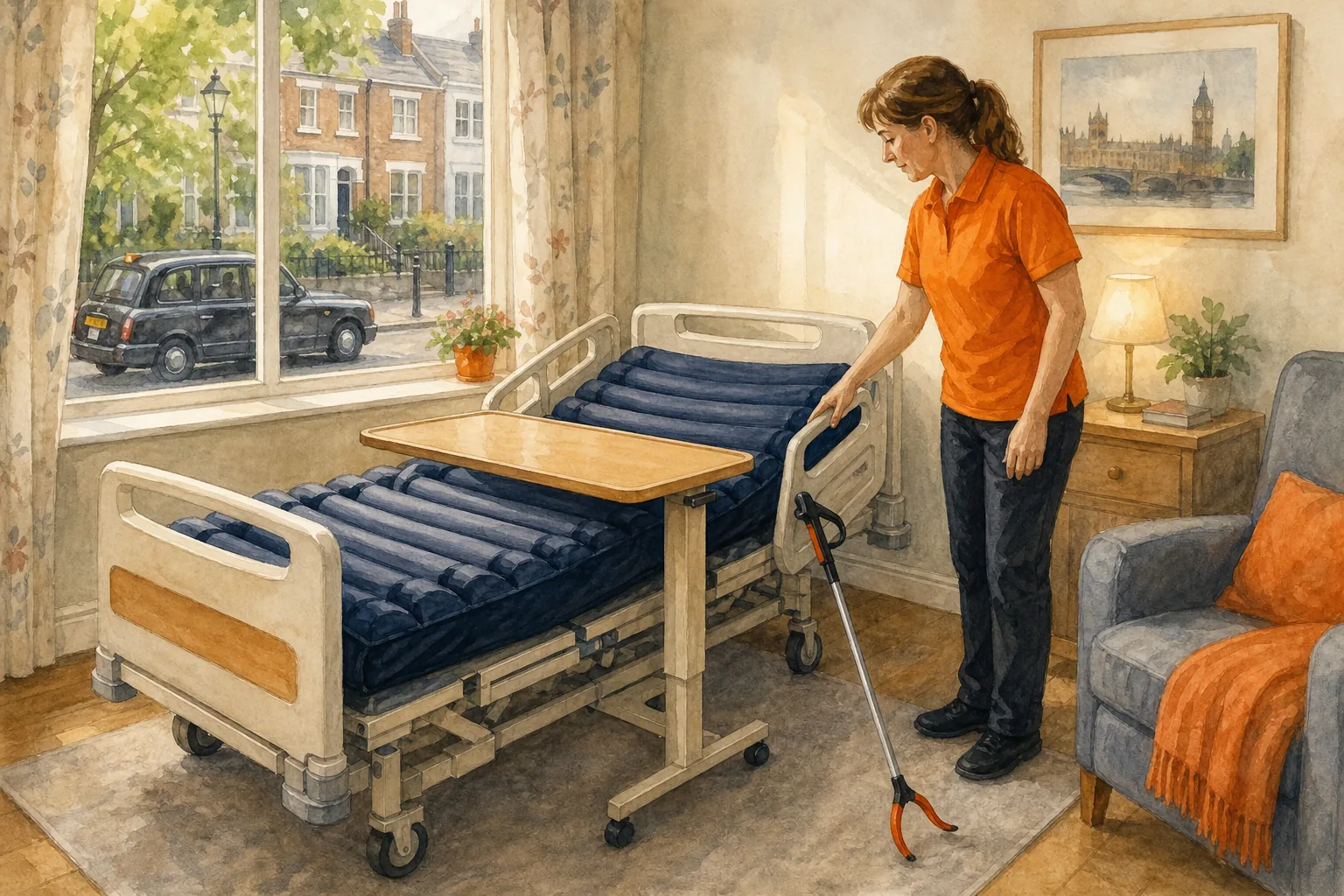
Pro Tip:Take a photo of the room before delivery. It helps you spot tight corners, blocked sockets and furniture that may need to move.
Step 4: Confirm the Rental Order, Documents and Setup Requirements
Before confirming hospital bed rent near me, write down the agreed model, mattress, rental term and delivery plan. A clear order reduces confusion when several family members are helping with discharge.
Ask the rental team what documents they need. Requirements may depend on the equipment and rental arrangement. Keep the patient’s basic details, delivery address and treating clinician’s advice available if requested. Medical-necessity approval is not something a rental company should guess on your behalf.
Measure the route from the entrance to the room. Check the doorway width, lift size, turning space and the final bed position. Leave space beside the bed for a caregiver to work. Keep the path clear so the bed can be moved during an emergency or transfer.
The room should have a safe electrical socket if the selected bed or mattress uses power. Keep cables away from walking paths. Don't use a damaged extension lead or hide a cable under a loose rug.
During delivery, remain present if possible. Ask the technician to show you:
How to raise and lower the back and leg sections.
How to adjust height, if the bed has that function.
How to lock the wheels.
How to raise and lower the rails.
What to do if the remote or supplied equipment stops working.
Then ask the caregiver to repeat the main steps. Watching a demonstration is helpful, but using the controls yourself is safer. Keep the rental documents and service instructions in the room, where every caregiver can find them.
Healthy Jeena Sikho has served families since 2015 and supports urgent and planned home-care equipment needs through its North India service network. We can also help families arranging related equipment, such as an oxygen machine on rent , when that equipment has been prescribed.
Step 5: Review the Cost and Use the Bed Safely
Rental cost depends on the city, bed model, mattress, accessories and rental term. Healthy Jeena Sikho lists hospital bed rental options on its rental page. Check the product page for current pricing before you confirm, because rates can change.
Renting often makes sense for a short recovery. If the patient may need the bed for many months, compare the total rental cost with a purchase price. A longer rental is not automatically cheaper. Ask how the rental term is counted, what happens when the patient no longer needs the bed and how pickup is arranged.
Also ask which costs are included. Confirm delivery, installation, pickup, mattress use and accessory charges in writing. Do not rely on a low monthly figure if important services are listed separately.
Use these safety habits every day:
Lock the wheels before care, transfers or repositioning.
Keep the bed at its lowest safe height when the patient is resting, unless the clinician advises another position.
Keep rails in the position advised for that patient. Rails are not a substitute for supervision.
Keep the remote where the patient or caregiver can reach it, but prevent accidental button presses.
Inspect the frame, cables, mattress and wheels. Report damage before using the bed.
Use only the mattress and accessories approved for that bed frame.
Read the relevant medical-device safety guidance before using unfamiliar equipment, and follow the rental team’s instructions. If a patient becomes trapped, falls, has breathing trouble or develops a sudden change in condition, seek urgent medical help. For bed positions, mattress choices and any clinical setting, follow the treating clinician’s direction.
Ready to arrange home care?Check Healthy Jeena Sikho’s current hospital bed rental availability, then share the patient’s needs and delivery address so we can guide the next step.
Frequently Asked Questions
How can I find hospital bed rent near me in India?
You can find hospital bed rentals by checking whether your city falls within the rental provider’s service area. Healthy Jeena Sikho serves 15 cities in North India, including Delhi, Jaipur, Lucknow, Chandigarh and nearby listed cities. Share your address, required date and patient needs before selecting a model, because local stock can affect delivery.
How much does it cost to rent a hospital bed?
Hospital bed rental pricing varies by city, model, mattress and rental term. Confirm the current amount before ordering, and ask whether delivery, setup, pickup or accessories are charged separately.
Can I rent a hospital bed for only a few weeks?
Yes, many families rent a hospital bed for a short recovery period, but the minimum rental term depends on the provider and model. Tell the rental team the expected discharge date and likely recovery period. If the patient needs the bed for several months, compare the full rental cost with the available purchase option.
Do I need a doctor’s prescription to rent a hospital bed?
A prescription may not always be required to arrange hospital bed rent near me, but a clinician should guide the bed type, mattress and positioning needs. This is especially important for pressure injuries, breathing problems, high fall risk or higher body weight. Ask the treating clinician what equipment the patient can use safely.
What should I check before the bed is delivered?
Before delivery, measure the doorway and route to the room. Clear space beside the bed and check for a safe electrical socket if needed. Keep the patient’s address and rental details ready. During setup, learn how to lock the wheels, use the remote, adjust the rails and report a fault.
Conclusion
Choose a hospital bed rental by matching the bed, mattress and accessories to the patient’s care plan and the room at home. Start by checking availability in your city, then review the current rental details from Healthy Jeena Sikho and share the required delivery date. A short, clear conversation before dispatch can prevent an unsafe or unsuitable setup.


Comments