
How to Prepare Your Home for a Hospital Bed

Preparing your home for a hospital bed installation is easier when you break it into clear steps. We’ll help you check the bed and care plan, measure the room, make space for safe movement, and get ready for installation.
We analyzed 44 comments from YouTube and Reddit about preparing a home for hospital bed installation and found that 48% mentioned assembly instructions.
Table of Contents
Step 1: Confirm the Bed, Care Needs and Installation Plan
Start with the treating doctor’s care instructions. The right setup depends on the patient’s mobility, the kind of help they need, and how long they may use the bed. A bed for short-term recovery may differ from one used for ongoing home care.
Ask the care team what the patient needs help with each day. Will they need support to sit up, transfer to a wheelchair, or change position? Does the care plan include another device, such as an oxygen concentrator, which provides oxygen from room air? The answers affect where the bed should go and how much space caregivers need.
Before arranging a bed, confirm its type and dimensions with the supplier. Ask which functions it has, how it is adjusted, and whether it needs a power outlet. Check that the mattress suits the bed frame. If the patient is at risk of pressure injuries, ask the treating clinician whether a pressure-relief mattress is needed. Don’t choose a mattress or change a prescribed care plan on guesswork.
Side rails need the same care. Ask the clinician whether rails suit the patient’s needs, then check that the rails fit the bed. Rails can create an entrapment risk if they’re unsuitable or used incorrectly. Make sure the person who will provide care knows how to use the bed and its safety features.
Next, agree on delivery and installation details. Confirm the delivery date, who will assemble the bed, and whether the room must be ready before the team arrives. If you’re arranging a temporary bed, compare the expected care period with the rental term. Our hospital bed rental information can help families understand the rental option as they plan for home care.
Healthy Jeena Sikho provides equipment on rent and for purchase. Rentals are available across our service network in 15 North Indian cities, while equipment sales are available across India. Four-hour express delivery is available in many locations. Confirm the arrangement for your area and care timeline before setting the room plan.
By now you should have:the clinician’s care guidance, the bed type and measurements, and a clear plan for delivery and setup.
Step 2: Measure the Room, Bed Route and Working Space
Measure the full route before the bed arrives. A bed may fit inside a room but still be hard to bring through a doorway, along a narrow passage, or around a stair landing. Use a tape measure and write each measurement down.
Measure the room’s length and width. Then measure the bed’s full footprint, including any side rails and parts that extend when adjusted. Ask the supplier for the exact dimensions of the bed you’ll receive. Don’t rely on a typical size, since models can differ.
Mark the planned bed area on the floor with paper or removable tape. Leave working space around the bed so a caregiver can reach the patient and complete routine care. If a wheelchair will be used, allow enough room to approach and turn near the bed. The needed space depends on the wheelchair, the room layout, and how the patient transfers.
Check the route from the building entrance to the room. Measure door openings and narrow spots. Look for steps, sharp turns, raised thresholds, and low objects that could block the bed or make it hard to move. Include the lift or stairway if the bed has to pass through one. Ask the delivery team about any tight turn before delivery day.
Think about the items that will share the room. A bedside table, a caregiver’s chair, a wheelchair, or another care device can take up space. Place each item on your sketch. Keep the path to the door clear, and make sure caregivers can reach the bed without moving furniture every time they provide care.
Also check nearby routes to the bathroom and exit. If the patient will use a wheelchair, test the route with it before installation. A doorway that works for walking may be too narrow for a chair. Avoid storing bags, stools, or laundry baskets along the route.
If your measurements leave little room, don’t force the bed into place. Ask the supplier whether a different position would work, then check it with the care team. The bed should leave enough space for care, safe transfers, and a clear exit path.
By now you should have:a room sketch with bed dimensions, the delivery route, and the locations of key furniture and equipment.

Step 3: Clear the Area and Prepare a Stable, Protected Floor
Clear the planned bed space before delivery. Move loose furniture, floor mats, cables, and personal items out of the work area. A clean, open floor gives the delivery team room to assemble the bed and gives caregivers a safer path once it is in place.
Look closely at the floor. It should be firm and level where the bed will stand. Check for loose tiles, raised edges, deep cracks, or soft spots. If the bed has wheels, ask how to lock them and whether the floor surface is suitable. Don’t place the bed on an uneven platform or wedge something under a leg to make it level.
Protect the floor in a way that doesn’t add a trip hazard. Ask the supplier whether the bed’s wheels or feet need floor protection. Any protector must sit flat and stay in place. Loose plastic, folded fabric, or a rug that bunches under a wheel can cause slips or make the bed shift.
For a smooth tile floor, take extra care with rugs and mats. Remove small loose rugs from the bed area and walking route. If a mat is needed near the bedside, choose one that lies flat and won’t slide. Keep the patient’s route to the bathroom clear too. Spills should be cleaned up at once.
Plan where the delivery team can set down parts while assembling the bed. Keep this space separate from the patient’s walking path. If the patient is already at home, arrange for them to stay in a safe area away from tools and moving parts during installation.
Noise can be a concern in a shared home, especially if the patient needs rest. Ask the installer what work will take place and when. Move breakable objects away from the work area. Once the bed is set up, listen for unusual rattles during normal operation. Don’t add homemade pads or blocks to quiet the bed; ask the supplier to check the cause.
Caregiver access matters as much as the patient’s path. Leave a clear place for the person helping with care to stand, bend, or sit. If more than one caregiver may work at the bedside, consider where each person can safely stand without blocking the exit.
Pro Tip:Take a photo of the cleared room and marked bed area before delivery. It gives the installer a quick view of the planned layout and helps you spot anything that still needs to move.
By now you should have:a firm, clear floor area with no loose rugs or objects in the bed’s path.
Step 4: Check the Power Outlet, Cables and Bed Position
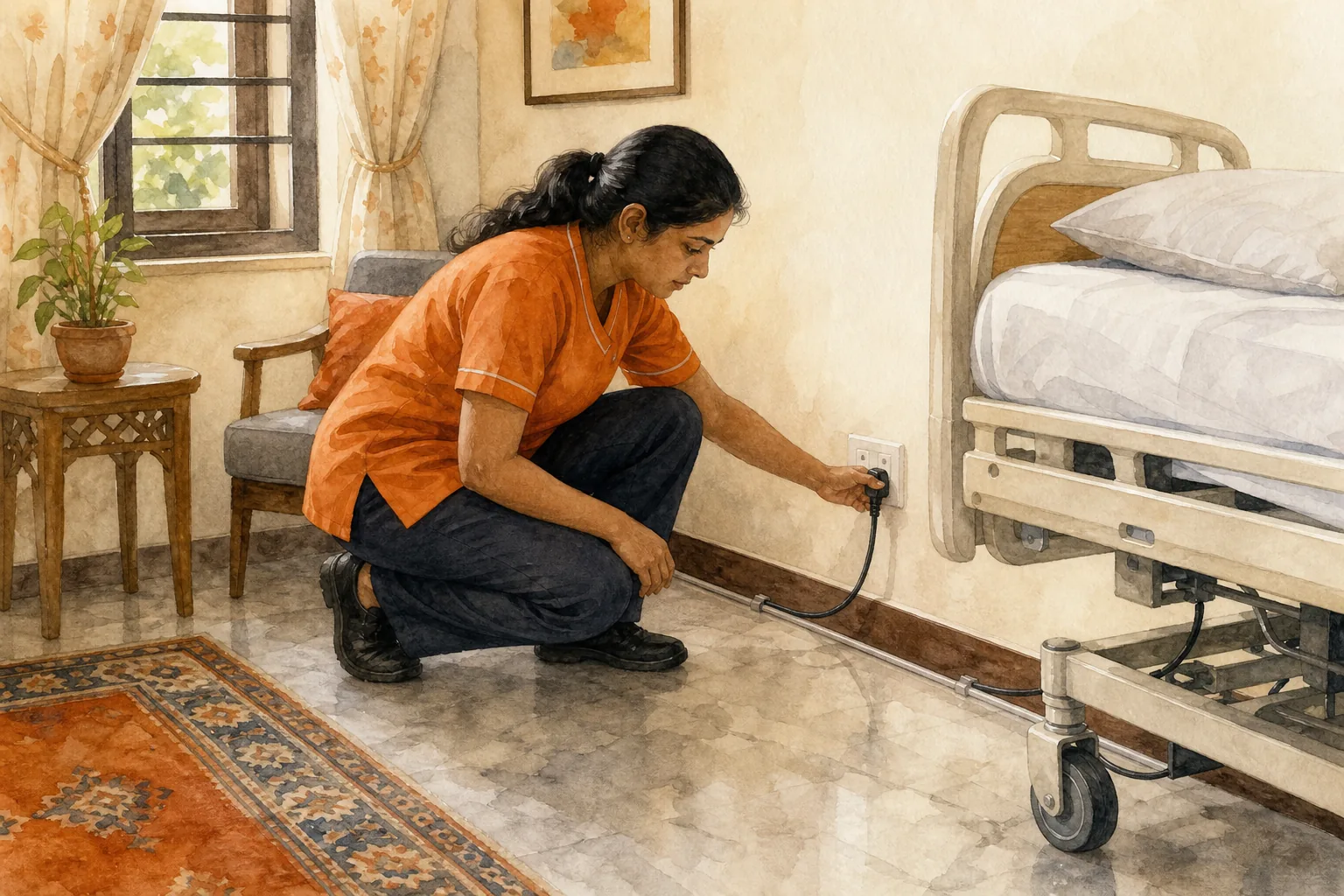
If the bed adjusts with an electric motor, confirm its power needs with the supplier before placing it. Choose a position that lets the power cable reach the outlet without crossing a walkway or stretching across the room.
Check that the outlet is easy to reach but not where it can be knocked, splashed, or blocked by furniture. Keep the plug and cable visible enough for a caregiver to check them. Don’t run a cable under a rug or beneath the bed where it may be trapped by a moving part.
Ask the supplier or installer whether a surge protector or backup power source is suitable for that bed. Don’t assume that a power strip, inverter, or UPS can support it. The device maker’s instructions should guide the setup. If power loss could leave the patient unable to adjust the bed, ask how to lower or move it safely during an outage.
Plan cables for every device in the care area. A mattress pump or another prescribed device may also need power. Keep the cables apart where possible, and use a safe route that won’t catch a foot or wheelchair wheel. Don’t overload an outlet or use a damaged extension lead.
Position the bed so its controls are reachable by the caregiver who will use them. Keep the hand control in its intended place, away from moving parts. Ask the installer to show you how to use each function and where to store the control when it’s not in use.
Bed position is a care decision, not a matter of comfort alone. Follow the treating clinician’s directions for head, leg, or other positioning. If the patient uses oxygen, keep the equipment in its prescribed location and follow the clinician’s and device maker’s instructions. Never use oxygen near an open flame or smoking. Keep a concentrator clear of walls so air can flow, and never exceed the prescribed flow. Pulse-dose and continuous-flow settings are not interchangeable.
Before the installer leaves, ask them to move the bed through its functions while you watch. Check that the cable stays clear and doesn’t pull tight as the bed moves. If you see a damaged wire, smell burning, or hear an unusual sound, stop using the bed and contact the supplier for guidance.
By now you should have:a safe outlet plan, a clear cable route, and instructions for the bed’s controls and power-loss procedure.
Step 5: Organise Tools, Help, Installation and Costs
Ask whether the bed will arrive assembled or require assembly at home. If a delivery team is installing it, clear the work area and keep the room accessible. If you’re expected to assemble any part yourself, get the instructions and confirm which tools are needed before delivery.
Don’t guess how to put a bed together. Frames, rails, motors, and controls can vary. Follow the bed’s own instructions, and don’t use parts that don’t fit. If you’re unsure, pause and ask the supplier or installer rather than testing a connection or fastening by trial and error.
Arrange the right help for the work. One person can keep the route clear while another stays with the patient. If heavy parts need moving, don’t lift them alone. Ask the delivery team what they need from your household, such as access to the room or space for assembly.
Get clear on costs before confirming the arrangement. For a rental, ask how the rental term is counted and what happens if the care period changes. Confirm which delivery, installation, and support tasks are included in your arrangement. For a purchase, ask what the installation process covers and what instructions or support come with the bed. Ask for the details in writing so family members share the same plan.
Make a simple budget that includes the bed arrangement and any related items the treating team has recommended. Those might include a suitable mattress or another home-care device. Don’t buy extra equipment just because it appears on a general checklist. Check the patient’s actual care plan first.
Families may also wonder whether insurance or another benefit will cover equipment. Don’t assume it will. Ask the relevant hospital or payer to explain any terms that apply to your own case before you count on reimbursement. Keep receipts and written terms with the discharge paperwork.
Healthy Jeena Sikho has served families since 2015 and supports home-care equipment needs across its North India service network. If you’re arranging a bed, confirm current availability, delivery timing, and installation details for your location before the discharge date.
By now you should have:an installation plan, the right help for delivery day, and a written view of the costs and rental or purchase terms.
Step 6: Check Safety After Installation and Plan Ongoing Care
Do a safety check before the patient uses the bed. Ask the installer to show you the controls and explain the bed’s functions. Make sure the people who provide care know how to use them and understand which actions should follow the clinician’s directions.
Check that the bed sits firmly in its planned spot. If it has wheels, ask how to lock them and check that they’re locked when the bed should stay in place. Look at the cable route again. It shouldn’t run under a wheel or hang where someone could trip.
Test the bed’s movement as the installer shows you. Watch for anything that catches or shifts. Confirm that the hand control works as expected and can be kept safely within reach of the caregiver. Don’t let a patient try a function on their own until the treating clinician or installer has explained its use.
Check the mattress and rails against the bed instructions. The mattress should sit as intended, and any rail should be fitted and used only as directed. Rails aren’t a substitute for supervision or a personalised fall-prevention plan. Ask the care team to review whether the setup fits the patient, especially if they are confused, restless, or likely to try to leave the bed.
Walk the route from the bed to the door and bathroom. Move a wheelchair along its usual path if one will be used. Check that the bed doesn’t block the exit or prevent a caregiver from reaching the patient. Keep essential items in their planned place, but leave the floor clear.
Make a short handover sheet for family members and paid caregivers. Write down the supplier’s instructions, the care team’s guidance, and whom to contact for equipment support. Avoid writing medical settings from memory. Any bed position or device setting used for care should match the treating clinician’s directions.
For ongoing care, check the bed and cable during regular room tidying. Look for loose parts, damage, or a change in how the bed sounds or moves. Follow the supplier’s instructions for cleaning and care. Don’t attempt repairs to electrical or moving parts yourself.
If the bed stops working, first keep the patient safe and follow the manual’s instructions. Don’t force a stuck part or pull a cable from the motor. If the bed can’t be adjusted as directed, contact the supplier and ask the treating team what to do while you wait.
Key Takeaway:Keep the room layout, bed instructions, and care guidance together so each caregiver follows the same safe setup.
By now you should have:a checked bed, a clear route, and a shared plan for daily use and equipment support.
Frequently Asked Questions
How much space do I need for a hospital bed at home?
You need room for the bed itself plus clear space for caregivers to reach the patient and help with transfers. Measure the bed with its rails, then include furniture and any wheelchair or other care equipment. The right amount depends on the room and the patient’s needs, so test the planned layout before delivery.
Can I install a hospital bed myself?
You can assemble a bed yourself only if the supplier’s instructions allow it and you can follow them safely. Bed parts and controls differ, so don’t guess or substitute fittings. Ask in advance whether installation is included and what your household needs to do. If anything feels unclear during setup, stop and ask the supplier.
What should I do if the electric bed loses power?
Keep the patient safe and follow the bed’s manual or the installer’s instructions for a power loss. Ask before installation whether the bed has a safe way to adjust it without power, and whether a backup source is suitable. Don’t connect an unapproved power device or force the bed’s moving parts.
Should I use side rails on a hospital bed at home?
Ask the treating clinician whether rails suit the patient and the bed. Rails can help with some care needs, but an unsuitable fit or incorrect use can create an entrapment risk. Use only rails made for the bed and follow its instructions. Review the setup if the patient’s movement or awareness changes.
How do I keep the floor safe around a hospital bed?
Keep the bed area and walking route clear. Remove loose rugs and objects that could catch a foot or wheelchair wheel. If you use a mat, make sure it lies flat and stays in place. Clean spills promptly, and ask the supplier how to protect the floor beneath the bed’s wheels or feet.
Conclusion
Measure the route and room before you confirm delivery, then follow the clinician’s care plan when setting up the bed. If a home bed rental is part of your plan, review Healthy Jeena Sikho’s hospital bed rental details and confirm the arrangements for your location.



Comments