
How Sleep Apnea Affects Mood, Memory & Concentration: CPAP Therapy Benefits (2026)
- Riya Barman
- 2 days ago
- 9 min read

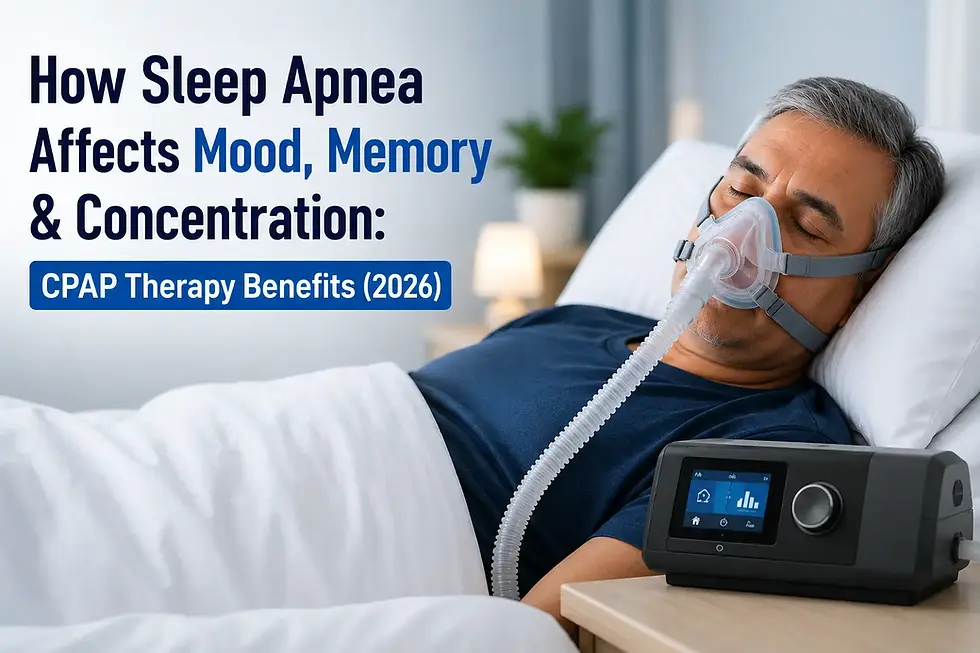
Quick Answer: Sleep Apnea Affects repeated oxygen deprivation and sleep fragmentation, damaging mood regulation, memory processing, and concentration. Studies show CPAP therapy significantly improves episodic memory, attention, and mood within 3-6 months. Affordable sleep therapy starts at just ₹999 at Healthy Jeena Sikho with CPAP machines from ₹15,000.
Important: If you experience severe daytime sleepiness, dangerous drowsiness while driving, or severe mood disturbances, consult a sleep specialist immediately. Sleep apnea is a serious medical condition that requires professional diagnosis and treatment.
Struggling with mood, memory, or concentration? Sleep apnea may be the hidden cause. Get affordable sleep therapy consultation at ₹999.
📞 Call Now +91 9876978488
Affordable Sleep Therapy Starting at Just ₹999
One of the biggest reasons patients delay sleep apnea treatment is cost concerns.
To make sleep therapy more accessible, Healthy Jeena Sikho provides sleep therapy support starting at just ₹999.
This helps patients begin proper sleep and respiratory care without unnecessary financial pressure.
Patients experiencing:
Loud snoring
Daytime fatigue
Poor concentration
Mood swings
Morning headaches
Breathing pauses during sleep
Excessive daytime sleepiness
can connect with our respiratory care experts for guidance and sleep therapy support.
Early diagnosis and treatment can significantly improve:
Sleep quality
Mood
Concentration
Energy levels
Mental clarity
Memory
Emotional health
What Is Sleep Apnea?
Sleep apnea is a serious sleep disorder where breathing repeatedly stops and starts during sleep. The most common form is obstructive sleep apnea (OSA), where the upper airway becomes partially or completely blocked during sleep, reducing oxygen flow to the brain and body.
These breathing interruptions can happen dozens to hundreds of times per night. Even though you may not fully wake up, your brain is repeatedly disturbed, preventing deep, restorative sleep.
As a result, your body remains under chronic stress throughout the night. Over time, this poor sleep quality starts affecting brain performance, emotional stability, memory, mental clarity, concentration, and daily energy levels.
Why Sleep Is Critical for Brain Function
Healthy sleep is not just about rest - it's when your brain performs essential maintenance work. During deep sleep, your brain:
Critical functions that happen during deep sleep:
Memory processing - Converts short-term memories into long-term storage
Emotional regulation - Processes emotions and stabilizes mood
Mental recovery - Repairs neural connections from daily stress
Learning consolidation - Solidifies new skills and information
Hormonal balance - Regulates stress hormones, mood chemicals, appetite
Waste clearance - Brain removes toxins accumulated during the day
But sleep apnea interrupts this process repeatedly. Every breathing interruption causes:
Oxygen levels to drop sharply
The brain to become stressed and alert
Sleep cycles to restart (fragmented sleep)
Stress hormones to spike
Mental recovery to be incomplete
Even if you spend 8 hours in bed, if you have sleep apnea, your brain never gets the restorative sleep it needs.
How Sleep Apnea Damages Mood & Mental Health
One of the earliest signs of untreated sleep apnea is mood disturbance. Because the brain never receives proper oxygen and rest, emotional regulation systems break down.
People with OSA commonly experience irritability, increased stress, anxiety, and depression.
Mood symptoms caused by sleep apnea:
Irritability & anger — React emotionally to minor problems
Mood swings — Emotions change rapidly without reason
Depression symptoms — Persistent sadness, hopelessness, loss of interest
Anxiety — Constant worry, nervousness, panic attacks
Emotional exhaustion — Feeling mentally drained despite sleeping
Social withdrawal — Avoiding friends, family, social activities
Why this happens: As oxygen levels fluctuate repeatedly, your nervous system remains under constant stress. Meanwhile, stress hormones (cortisol) stay elevated. The brain's emotional regulation center — the prefrontal cortex — becomes exhausted and can't manage emotions properly.
Research shows up to 63% of sleep apnea patients experience depression, with overlapping symptoms of sleeplessness, exhaustion, irritable mood, and memory impairment.
Is mood affecting your quality of life?
Sleep apnea may be the hidden cause. Our specialists diagnose and treat sleep disorders that damage mental health.
📞 Consult Now +91 9876978488
Sleep Apnea & Memory Loss: The Scientific Link
Memory problems are one of the most common complaints from sleep apnea patients. And for good reason — sleep apnea directly damages the brain regions responsible for memory.
During deep sleep, your brain:
Consolidates information into long-term memory
Clears short-term working memory
Strengthens learning ability
Organizes and files away daily experiences
But sleep apnea interrupts these critical stages repeatedly. As oxygen supply fluctuates and sleep remains fragmented, the brain struggles to properly process and store information, causing forgetfulness, difficulty remembering conversations, and trouble recalling names and details.
Memory problems caused by sleep apnea:
Forgetting appointments, meetings, commitments
Misplacing everyday items (keys, phone, wallet)
Trouble remembering people's names or faces
Re-reading the same paragraph repeatedly without comprehension
Difficulty learning new information or skills
Trouble following conversations or stories
For elderly patients especially: Untreated sleep apnea accelerates age-related cognitive decline and can be mistaken for early-stage dementia or Alzheimer's disease.
Research shows disruptions to REM and slow-wave sleep (both critical for memory consolidation) contribute significantly to memory loss in sleep apnea patients.
Why Sleep Apnea Destroys Concentration & Focus
If you struggle to focus at work, school, or home — even after sleeping — sleep apnea may be the culprit.
Because the brain remains fatigued from poor sleep quality, it cannot allocate enough energy for concentration. This causes what's commonly called "brain fog."
Concentration problems from sleep apnea:
Difficulty focusing on tasks for more than 5-10 minutes
Reduced productivity at work despite trying hard
Dangerous daytime drowsiness while driving
Mental slowness — everything feels like moving through fog
Impaired decision-making and problem-solving
Reduced reaction time and alertness
OSA patients struggle with difficulty concentrating, remembering things, making decisions, and reacting to situations.
In the workplace: Sleep Apnea Affects reduces work performance, communication ability, and productivity - potentially affecting career advancement and income.
For students: Poor concentration and weakened memory directly impact academic performance and learning ability.
For drivers: Untreated sleep apnea is a serious safety hazard. Dangerous daytime drowsiness increases the risk of accidents.
Oxygen Deprivation & Brain Damage
The core reason sleep apnea damages mental health is repeated oxygen deprivation. Every breathing pause temporarily cuts oxygen supply to the brain.
Over time, this chronic oxygen deprivation puts severe stress on:
Brain cells - Neurons die from lack of oxygen
The nervous system - Stays in constant "fight or flight" mode
The heart - Forced to work harder pumping oxygen
Mental recovery processes - Can't complete, leaving brain exhausted
Untreated sleep apnea increases the risk of anxiety, depression, severe fatigue, cognitive decline, and emotional stress. Chronic sleep deprivation deprives the brain of the restorative rest it needs to function well.
The silver lining: Research shows CPAP therapy has been proven to effectively reverse brain damage caused by severe sleep apnea and is considered a potentially life-saving intervention.
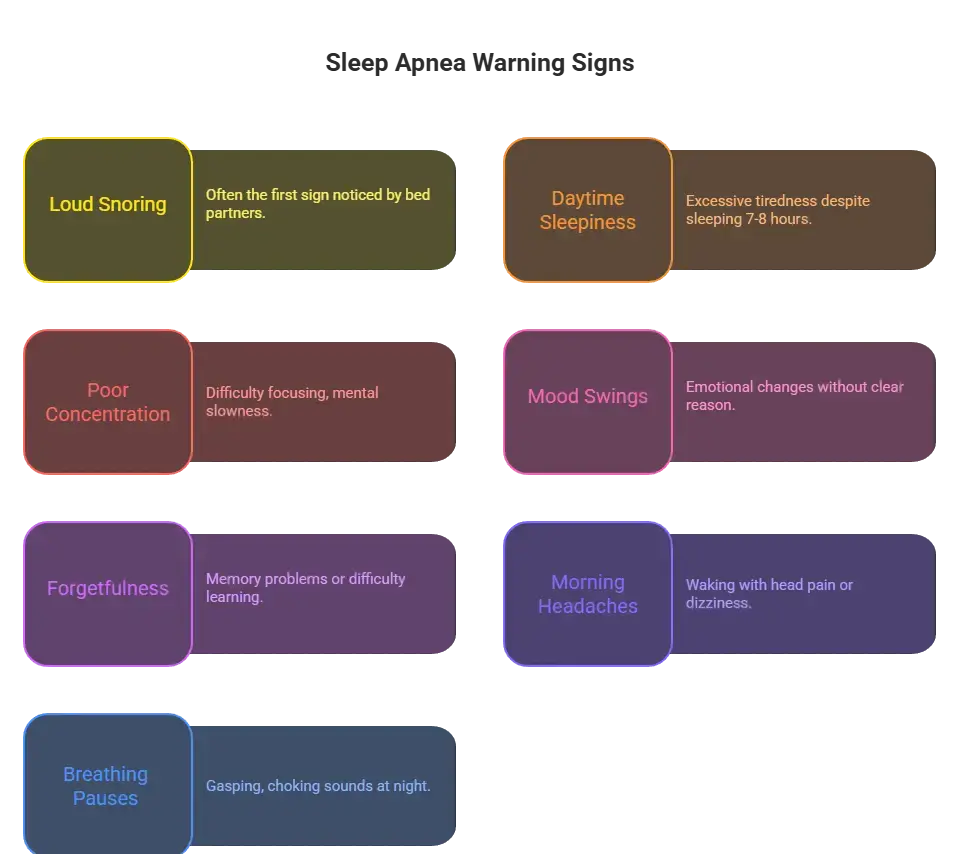
7 Warning Signs You May Have Sleep Apnea
Many people live with undiagnosed sleep apnea for years. If you experience any of these signs, consult a sleep specialist:
Warning signs of sleep apnea:
Loud snoring — Often the first sign noticed by bed partners
Daytime sleepiness — Excessive tiredness despite sleeping 7-8 hours
Poor concentration & brain fog — Difficulty focusing, mental slowness
Mood swings & irritability — Emotional changes without clear reason
Forgetfulness — Memory problems or difficulty learning
Morning headaches — Waking with head pain or dizziness
Breathing pauses during sleep — Gasping, choking sounds at night (noticed by partner)
Important: If bed partners notice you stop breathing, gasp, or choke during sleep, this is a clear sign to seek immediate evaluation.
How CPAP Therapy Reverses Cognitive Decline
The good news: sleep apnea is treatable. And treatment works remarkably well.
CPAP (Continuous Positive Airway Pressure) therapy is the gold-standard treatment for moderate to severe sleep apnea. The CPAP machine delivers pressurized air through a mask, keeping the airway open during sleep and preventing breathing interruptions.
How CPAP therapy helps:
Benefits of CPAP therapy:
Restores oxygen levels — Brain gets constant oxygen supply
Improves sleep quality — Breathing interruptions stop completely
Enables deep sleep — Brain can complete restorative sleep cycles
Reduces stress hormones — Nervous system finally relaxes
Mental clarity returns — Brain fog clears
The timeline for improvement:
2-4 Weeks
Improved daytime alertness
Better mood & emotional stability
Reduced irritability
More energy
3-6 Months
Memory improvements
Better concentration & focus
Sharper thinking
Significant mood improvement
Research shows CPAP therapy significantly enhances subjective sleep quality and cognitive functions, including episodic memory, inhibition, sustained attention, working memory, and executive control. Noticeable performance improvements were observed in cognitive tasks, particularly after 3-6 months of CPAP use. Participants also reported substantial gains in quality of life, reduced daytime sleepiness, and improved mood.
Over one year of CPAP therapy, studies found reversal of visible brain damage and significant improvement in nearly all cognitive and mood symptoms.
CPAP Machines & Sleep Therapy Solutions at Healthy Jeena Sikho
Healthy Jeena Sikho offers a complete range of CPAP machines, BiPAP devices, masks, and sleep therapy equipment from trusted manufacturers:
CPAP Machine | Price | Key Features | Benefits |
₹28,000 | Auto-adjusting pressure, easy display, compact design | Ideal for new sleep apnea patients, comfortable therapy, affordable & reliable | |
₹61,000 | Gender-specific algorithm, SmartStart & SmartStop, humidification | Customized therapy for women, improved comfort, better sleep tracking | |
₹53,300 | Ultra-compact, travel-friendly, auto pressure adjustment | Perfect for travelers, portable sleep therapy solution | |
₹17,000 | Fixed pressure therapy, simple controls | Budget-friendly option, easy for first-time users | |
₹30,000 | Auto pressure algorithm, quiet operation, compact build | Reliable nightly therapy, balanced pricing & technology |
Why Choose Healthy Jeena Sikho for CPAP Therapy?
sleep therapy consultation — ₹999 includes assessment & device recommendation
Expert guidance years experience, 100,000+ patients treated
Home delivery & installation Setup assistance at your home
Phone & WhatsApp assistance anytime Trusted Home Healthcare Support
24/7 customer support for patients and caregivers
Sleep Therapy solutions starting at just ₹999
Expert guidance for CPAP, BiPAP, Oxygen Therapy & Respiratory Care
Healthy Jeena Sikho is trusted by patients and families for reliable home healthcare and respiratory care solutions.
In addition to sleep therapy devices, patients can also explore:
Our mission is to make healthcare more accessible, comfortable, and patient-friendly.
Final Thoughts
Sleep apnea is much more than a snoring problem.
It can silently affect:
Mood
Emotional health
Memory
Concentration
Productivity
Mental clarity
Overall quality of life
Many people struggling with constant fatigue, irritability, forgetfulness, or poor focus may actually be suffering from untreated sleep apnea without realizing it.
The good news is that proper diagnosis and sleep therapy can dramatically improve both mental and physical well-being.
If you or your loved one experiences loud snoring, daytime tiredness, poor concentration, or breathing interruptions during sleep, contact Healthy Jeena Sikho for affordable sleep therapy solutions starting at just ₹999 and take the first step toward healthier sleep, better breathing, and improved quality of life.
Frequently Asked Questions About Sleep Apnea & CPAP Therapy
Q1. How does sleep apnea affect mood and mental health?
Sleep apnea causes repeated oxygen deprivation and sleep fragmentation, putting the nervous system under constant stress. This leads to irritability, mood swings, anxiety, depression, and emotional exhaustion. Studies show 63% of sleep apnea patients experience depression symptoms. Low oxygen levels impair emotional regulation and stress management in the brain.
Q2. Can CPAP therapy improve memory and concentration?
Yes. Research shows CPAP therapy significantly improves episodic memory, sustained attention, working memory, and executive function. Studies found noticeable improvements in cognitive tasks within 3-6 months of CPAP use. By restoring oxygen supply and sleep quality, CPAP helps the brain recover its memory-processing and concentration abilities.
Q3. What is CPAP therapy and how does it work?
CPAP (Continuous Positive Airway Pressure) therapy uses a machine to deliver pressurized air through a mask during sleep. This keeps the airway open, preventing breathing interruptions. CPAP restores oxygen levels, improves sleep quality, and allows the brain to complete memory processing, emotional regulation, and mental recovery cycles.
Q4. How quickly does CPAP therapy improve mood and concentration?
Many patients notice improvements in mood and alertness within 2-4 weeks of starting CPAP therapy. More significant cognitive improvements in memory and concentration typically occur within 3-6 months of consistent CPAP use. The timeline depends on severity of sleep apnea and compliance with therapy.
Q5. What is the cost of CPAP therapy at Healthy Jeena Sikho?
Sleep therapy consultation starts at just ₹999. CPAP machines range from ₹15,000 to ₹35,000 depending on type (Auto CPAP, BiPAP) and features. Healthy Jeena Sikho offers EMI options (from ₹1,500/month), home delivery, and 2-year warranty on all CPAP machines. First-time patients qualify for ₹1,000–2,000 discount.
Q6. Should I see a doctor before starting CPAP therapy?
Yes, proper diagnosis is essential. A sleep specialist conducts a sleep study (polysomnography) to confirm sleep apnea and determine severity. At Healthy Jeena Sikho, our respiratory care experts help coordinate with your doctor and provide guidance on selecting the right CPAP machine for your condition.
Q7. Can untreated sleep apnea cause permanent brain damage?
Yes, chronic untreated sleep apnea can cause progressive cognitive decline, memory loss, and structural brain changes. However, research shows CPAP therapy can reverse much of this damage. Within one year of consistent CPAP use, visible brain improvements are observed. Early treatment prevents long-term cognitive decline and is considered potentially life-saving.
Q8. What are the long-term health risks of untreated sleep apnea?
Untreated sleep apnea increases the risk of: high blood pressure, heart disease, stroke, type 2 diabetes, heart attacks, arrhythmias, cognitive decline, depression, and anxiety. Early diagnosis and treatment can dramatically improve both mental and physical health outcomes.


Comments