
Can You Get a CPAP Machine Without a Sleep Test?

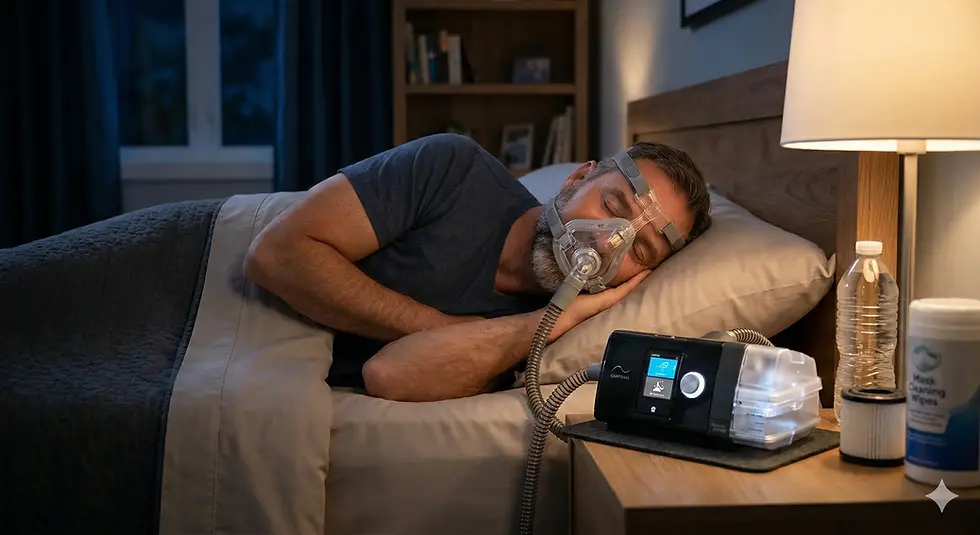
Sleep apnea affects millions of people worldwide, yet many remain undiagnosed for years. Loud snoring, choking during sleep, excessive daytime fatigue, morning headaches, and poor concentration often lead people to suspect obstructive sleep apnea (OSA). Naturally, many start searching online:
"Can I rent a CPAP machine without a sleep test?"
or
"Do I really need a sleep study before using CPAP?"
It's a fair question.
Waiting for specialist appointments, arranging a sleep study test, and understanding different PAP machines can feel overwhelming—especially when you're desperate for a good night's sleep.
However, there's an important distinction between what is technically possible and what is medically recommended.
Some suppliers may provide a CPAP machine without asking for a prescription or sleep study.
That does not make it safe.
CPAP therapy is a medical treatment—not a wellness gadget. Using the wrong therapy or incorrect pressure settings may delay proper diagnosis, reduce treatment effectiveness, or even worsen certain underlying conditions.
At Healthy Jeena Sikho, patient safety comes first. We do not provide CPAP machines without a valid doctor's prescription because we believe treatment should always begin with the correct diagnosis.
This guide explains:
Whether a sleep study is necessary
Why doctors recommend testing first
Risks of self-starting CPAP
What international sleep guidelines say
Indian regulations regarding CPAP
Healthy Jeena Sikho's policy
The safest and fastest way to begin treatment
Quick Answer
Can You Get a CPAP Machine Without a Sleep Test?
Technically, some vendors may provide or rent a CPAP machine without requesting a sleep study or prescription. However, this is not medically recommended.
A CPAP machine delivers pressurised air into your airway throughout the night. The amount of pressure required varies significantly from one person to another.
Without a proper sleep evaluation, there is no reliable way to determine:
whether you actually have obstructive sleep apnea
how severe your condition is
whether CPAP is the right therapy
whether you instead require Auto-CPAP (APAP), BiPAP, or another form of treatment
what pressure settings should be used
International sleep medicine guidelines recommend confirming the diagnosis through an appropriate sleep study before initiating Positive Airway Pressure (PAP) therapy.
Healthy Jeena Sikho requires a valid doctor's prescription before providing a CPAP machine.
Key Takeaways
✔ CPAP therapy should begin only after proper medical evaluation.
✔ A sleep study determines whether you actually have obstructive sleep apnea.
✔ Incorrect CPAP settings may reduce treatment effectiveness and make therapy uncomfortable.
✔ Not every person who snores has sleep apnea.
✔ Other conditions—including central sleep apnea—require different treatment.
✔ A Home Sleep Apnea Test is often sufficient for patients with suspected uncomplicated OSA.
✔ Responsible CPAP providers recommend a prescription before therapy.
✔ At Healthy Jeena Sikho, we provide CPAP machines only against a valid prescription.
Why Do People Want a CPAP Before a Sleep Study?
There are several understandable reasons people begin looking for a CPAP machine before consulting a sleep specialist.
1. Symptoms are becoming unbearable
Many people experience:
Loud snoring
Witnessed pauses in breathing
Choking during sleep
Morning headaches
Extreme daytime sleepiness
Poor work performance
Difficulty concentrating
These sleep apnea symptoms can persist for months or even years before someone seeks medical help.

2. They believe they already know the diagnosis
Often a spouse or family member notices:
"You stop breathing every night."
This understandably leads many people to assume they already have sleep apnea.
While these symptoms strongly suggest obstructive sleep apnea, they cannot confirm the diagnosis.
3. They want immediate relief
Waiting several weeks for an appointment can be frustrating.
Many people think:
"If CPAP is the treatment anyway, why not start now?"
Unfortunately, medicine rarely works that way.
Starting treatment before confirming the diagnosis may delay identification of other serious disorders.
4. They want to avoid spending money on testing
Some believe skipping the sleep study saves money.
Ironically, the opposite is often true.
Using an unsuitable machine...
trying multiple masks...
changing pressure repeatedly...
visiting doctors again...
...often costs substantially more than getting the diagnosis right from the beginning.
5. They read conflicting advice online
The internet contains thousands of discussions suggesting people "just buy an Auto CPAP."
Some online retailers even advertise:
"No prescription required."
While this may be possible depending on local regulations, reputable sleep specialists consistently recommend beginning therapy only after appropriate medical evaluation.
Medical decisions should be based on clinical evidence—not anonymous internet advice.
Why a Sleep Study Matters Before Starting CPAP
Before understanding whether you need a CPAP machine, it's important to understand what a sleep study actually measures.
Many people assume a sleep study simply tells you whether you snore.
In reality, it provides detailed information about how your body functions while you're asleep and helps determine whether CPAP therapy is appropriate—or whether another treatment would be be more suitable.
What Is a Sleep Study?
A sleep study (also called polysomnography or a sleep apnea test) is a diagnostic test used to evaluate your breathing, oxygen levels, heart rate, and sleep patterns overnight.
Its primary purpose is to determine whether you have Obstructive Sleep Apnea (OSA) or another sleep-related breathing disorder.
Unlike symptom checklists or online quizzes, a sleep study provides objective medical data that helps your doctor diagnose the condition accurately and recommend the most appropriate treatment.
What Does a Sleep Study Measure?
Depending on the type of sleep study, it may monitor:
Parameter | Why It Matters |
Airflow | Detects breathing interruptions |
Oxygen Saturation (SpO₂) | Measures drops in blood oxygen levels |
Respiratory Effort | Identifies whether breathing difficulty is caused by airway blockage or another condition |
Heart Rate | Detects changes associated with breathing events |
Snoring | Evaluates snoring intensity and frequency |
Body Position | Determines whether symptoms worsen in certain sleeping positions |
Brain Activity (EEG) | Measures sleep stages (mainly in laboratory studies) |
Eye Movement (EOG) | Helps identify REM sleep |
Muscle Activity (EMG) | Detects muscle tone changes during sleep |
Together, these measurements help your doctor determine:
whether you have sleep apnea
what type of sleep apnea you have
how severe it is
whether PAP therapy is appropriate
which machine is most suitable
what pressure settings are likely to be effective
Types of Sleep Studies
Not every patient requires an overnight hospital stay.
Today's diagnostic options range from convenient home testing to comprehensive laboratory evaluations.

1. Level 3 Home Sleep Apnea Test (HSAT)
This is the most commonly recommended test for adults with suspected uncomplicated obstructive sleep apnea.
The test is performed in the comfort of your own home using a portable monitoring device.
It typically measures:
Airflow
Oxygen saturation
Respiratory effort
Heart rate
Snoring
Best For
Loud snoring
Excessive daytime sleepiness
Witnessed breathing pauses
Suspected uncomplicated OSA
Advantages
✔ Sleep in your own bed
✔ More affordable than lab studies
✔ Convenient
✔ Results available quickly
2. Level 2 Sleep Study
A Level 2 study is more comprehensive than a standard home sleep apnea test.
In addition to breathing parameters, it also records:
Brain activity
Eye movement
Muscle activity
This provides a more detailed picture of sleep quality and architecture.
Doctors may recommend this when a standard home sleep study is inconclusive.
3. Level 1 In-Lab Polysomnography
This is considered the gold standard for diagnosing complex sleep disorders.
The study is performed overnight in a sleep laboratory under the supervision of trained sleep technicians.
It continuously monitors:
EEG (brain waves)
Eye movements
Muscle activity
ECG
Airflow
Oxygen saturation
Respiratory effort
Leg movements
Sleeping position
Video recording (where applicable)
Usually Recommended For
Suspected central sleep apnea
Neuromuscular disorders
Complex respiratory disorders
Significant heart disease
Previous inconclusive sleep study
Patients requiring advanced PAP titration
Comparison of Sleep Study Types
Feature | Level 3 Home Test | Level 2 Study | Level 1 Lab Study |
Location | Home | Home/Lab | Sleep Laboratory |
Measures Breathing | ✔ | ✔ | ✔ |
Measures Oxygen | ✔ | ✔ | ✔ |
Measures Brain Activity | ✘ | ✔ | ✔ |
Measures Eye Movement | ✘ | ✔ | ✔ |
Measures Muscle Activity | ✘ | ✔ | ✔ |
Technician Present | ✘ | Usually No | ✔ |
Best For | Typical OSA | Intermediate Cases | Complex Disorders |
Understanding the Apnea-Hypopnea Index (AHI)
One of the most important results from a sleep study is the Apnea-Hypopnea Index (AHI).
AHI measures the average number of breathing interruptions you experience per hour of sleep.
These interruptions include:
Apnea: Complete cessation of airflow.
Hypopnea: Partial reduction in airflow associated with oxygen desaturation or sleep disruption.
The AHI helps determine the severity of sleep apnea and guides treatment decisions.
AHI Classification
AHI (Events/Hour) | Severity |
Below 5 | Normal |
5–14 | Mild OSA |
15–29 | Moderate OSA |
30 or above | Severe OSA |
Generally:
Mild OSA may be managed with lifestyle changes, oral appliances, positional therapy, or PAP therapy depending on symptoms and associated health conditions.
Moderate OSA often warrants PAP therapy.
Severe OSA usually requires prompt treatment due to the increased risk of cardiovascular and other health complications.
Your doctor considers the AHI alongside your symptoms, medical history, and overall health before recommending a treatment plan.
Why Snoring Alone Doesn't Mean You Need CPAP
One of the biggest misconceptions is:
"I snore, so I must need a CPAP machine."
Snoring is common, but not everyone who snores has obstructive sleep apnea.
Snoring can occur due to:
Nasal congestion
Allergies
Deviated nasal septum
Enlarged tonsils
Alcohol consumption before bedtime
Sleeping on your back
Weight gain
Age-related changes in airway muscles
Similarly, some individuals with sleep apnea may not complain of loud snoring at all.
This is why symptoms alone cannot confirm the diagnosis.
CPAP Isn't the Right Treatment for Everyone
Another common misconception is that CPAP is the default treatment for all sleep-related breathing problems.
In reality, treatment depends on the underlying diagnosis.
Depending on your sleep study and medical evaluation, your doctor may recommend:
Condition | Possible Treatment |
Mild OSA | Lifestyle modification, positional therapy, oral appliance, or PAP therapy in selected patients |
Moderate OSA | CPAP or Auto-CPAP |
Severe OSA | CPAP, Auto-CPAP, or BiPAP depending on clinical assessment |
Central Sleep Apnea | Specialised evaluation; treatment may include other PAP modalities or management of the underlying cause |
COPD–OSA Overlap Syndrome | Often requires individualised PAP therapy and close medical supervision |
Obesity Hypoventilation Syndrome | Frequently requires BiPAP rather than standard CPAP |
Using a CPAP machine without knowing your underlying condition may not provide effective treatment and could delay appropriate care.
Why Doctors Recommend Testing First
A sleep study is not simply a formality before obtaining a CPAP machine.
It helps answer critical clinical questions:
Do you actually have sleep apnea?
If yes, what type?
How severe is it?
Is CPAP the appropriate therapy?
Would APAP or BiPAP be more suitable?
What pressure settings are likely to be effective?
Are there other medical conditions contributing to your symptoms?
The goal is not just to start treatment quickly—but to start the right treatment based on accurate diagnostic information.
Risks of Using a CPAP Machine Without Proper Diagnosis & What Medical Guidelines Recommend
Many people assume that using a CPAP machine "just in case" cannot do much harm. Since it delivers pressurised air to keep the airway open, it may seem like a safe device to try before seeing a doctor.
However, CPAP therapy is a prescription medical treatment—not a general wellness device.
Starting therapy without confirming the diagnosis may lead to ineffective treatment, unnecessary expenses, delayed diagnosis of other conditions, and difficulty adapting to therapy.
Let's understand why.
Why Self-Treating Suspected Sleep Apnea Can Be Risky
While CPAP is considered the gold standard treatment for Obstructive Sleep Apnea (OSA), it is designed for a specific medical condition.
If your symptoms are caused by something else, simply using a CPAP machine may not solve the problem.
In some cases, it can delay the identification of the actual cause of your symptoms.
Risk 1: You May Not Have Obstructive Sleep Apnea
Snoring and daytime fatigue are common symptoms—but they are not unique to OSA.
Several medical conditions can produce similar symptoms.
These include:
Central Sleep Apnea (CSA)
Upper Airway Resistance Syndrome (UARS)
Obesity Hypoventilation Syndrome (OHS)
COPD–OSA Overlap Syndrome
Chronic insomnia
Restless Legs Syndrome (RLS)
Periodic Limb Movement Disorder (PLMD)
Heart failure–related breathing disorders
Certain neurological disorders
Each condition requires a different evaluation and treatment plan.
A sleep study helps distinguish between these disorders.
Risk 2: CPAP May Not Be the Right Device
Many people use the terms CPAP, Auto CPAP, and BiPAP interchangeably.
They are not the same.
Each machine serves a different clinical purpose.
CPAP (Continuous Positive Airway Pressure)
Delivers one constant pressure throughout the night.
Commonly prescribed for many patients with obstructive sleep apnea.
Auto CPAP (APAP)
Automatically adjusts pressure based on breathing patterns.
Suitable for selected patients as determined by a physician.
BiPAP (Bi-Level Positive Airway Pressure)
Provides two different pressure levels:
Higher pressure while inhaling
Lower pressure while exhaling
Doctors may recommend BiPAP for patients with:
COPD
Neuromuscular disorders
High-pressure requirements
CPAP intolerance in appropriate clinical situations
Without a proper diagnosis, there is no reliable way to know which therapy is appropriate for you.
Risk 3: Incorrect Pressure Settings
One of the most important parts of PAP therapy is selecting the correct pressure.
Too little pressure may allow the airway to continue collapsing during sleep.
Too much pressure can make therapy uncomfortable and reduce adherence.
Possible issues include:
Air swallowing (aerophagia)
Dry mouth
Mask leaks
Difficulty exhaling
Nasal irritation
Sleep disruption
Poor long-term compliance
This is one reason doctors use sleep study findings and clinical assessment to determine appropriate pressure settings.
Risk 4: Delayed Diagnosis of Serious Conditions
Assuming every breathing problem during sleep is obstructive sleep apnea can delay diagnosis of other medical conditions.
For example:
Central Sleep Apnea
In central sleep apnea, the brain temporarily fails to send appropriate signals to the breathing muscles.
The airway is not blocked in the same way as OSA.
Management differs significantly and often requires specialist evaluation.
COPD–OSA Overlap Syndrome
Patients with both chronic obstructive pulmonary disease (COPD) and obstructive sleep apnea often require individualised
treatment plans.
Proper diagnosis helps determine the most appropriate PAP therapy and ongoing management.
Obesity Hypoventilation Syndrome
Patients with obesity hypoventilation syndrome may retain carbon dioxide while sleeping.
These patients often require specialist care and may benefit from therapies other than standard CPAP.
Ignoring these possibilities by self-starting CPAP could delay appropriate medical treatment.
Risk 5: Poor First Experience with CPAP
Many people who try CPAP without professional guidance stop using it within a few days because:
the mask doesn't fit properly
pressure feels uncomfortable
they don't understand how to use the machine
they expected immediate results
the underlying diagnosis wasn't confirmed
A poor initial experience may discourage someone from using PAP therapy later—even when it is truly needed.
Proper setup, mask fitting, patient education, and follow-up significantly improve long-term adherence.
Risk 6: Increased Costs in the Long Run
Some people believe skipping the sleep study saves money.
In reality, repeated trial-and-error often becomes more expensive.
You may end up paying for:
multiple rentals
different masks
pressure adjustments
additional consultations
repeat testing later
A proper diagnosis at the beginning often leads to more effective treatment and avoids unnecessary expenses.
Renting a CPAP Without a Sleep Study vs After Proper Diagnosis
Factor | Without Sleep Study | After Proper Diagnosis |
Diagnosis Confirmed | ❌ No | ✅ Yes |
Appropriate Machine Selected | Uncertain | Based on medical evaluation |
Pressure Settings | Estimated | Individually prescribed |
Risk of Incorrect Therapy | Higher | Lower |
Long-Term Success | Less predictable | More likely |
Medical Supervision | Often limited | Ongoing follow-up possible |
Treatment Confidence | Lower | Higher |
What Do International Medical Guidelines Recommend?
Leading sleep medicine organisations consistently recommend objective diagnostic testing before initiating PAP therapy.
According to the American Academy of Sleep Medicine (AASM):
Symptoms alone should not be used to diagnose obstructive sleep apnea.
Diagnostic testing should be performed using either:
Home Sleep Apnea Testing (HSAT) for appropriate patients, or
In-Laboratory Polysomnography when clinically indicated.
Treatment decisions should be based on the overall clinical assessment and test results.
Similarly, organisations such as the American Thoracic Society (ATS) and other international respiratory societies emphasise that PAP therapy should be initiated after appropriate evaluation by a qualified healthcare professional.
What About India?
Many people ask:
"Is a prescription legally required to rent a CPAP machine in India?"
India's medical device regulations differ from those in countries such as the United States.
While regulations govern the manufacture, import, and quality standards of medical devices, responsible clinical practice still requires appropriate medical evaluation before initiating CPAP therapy.
Whether or not a vendor asks for paperwork, starting PAP therapy should always be guided by a qualified doctor or sleep specialist.
Healthy Jeena Sikho's Policy
At Healthy Jeena Sikho, patient safety is our highest priority.
We do not provide CPAP machines without a valid doctor's prescription.
Our recommended pathway is simple:
Consult a qualified physician or sleep specialist.
Undergo a Home Sleep Apnea Test or laboratory sleep study, if advised.
Receive your sleep study report and prescription.
Choose the PAP device recommended for your condition.
Receive professional guidance on machine setup, mask fitting, and therapy use.
This approach helps ensure that patients receive the most appropriate treatment based on their individual needs.
Why "Diagnosis First" Is the Better Approach
Beginning CPAP therapy without understanding the underlying condition may seem like a shortcut, but it often creates more uncertainty.
A sleep study provides essential information that cannot be determined from symptoms alone. It confirms whether sleep apnea is present, assesses its severity, and helps doctors recommend the most suitable treatment.
The objective isn't simply to start therapy quickly—it's to start the right therapy safely and effectively.
Home Sleep Apnea Testing, CPAP Rental Process & Pricing
If your doctor suspects obstructive sleep apnea (OSA), the next step is usually diagnostic testing. Fortunately, not everyone needs to spend a night in a hospital. For many adults with uncomplicated symptoms, a Home Sleep Apnea Test (HSAT) offers a convenient, reliable, and clinically accepted way to evaluate breathing during sleep.
At Healthy Jeena Sikho, we encourage patients to complete appropriate testing before starting CPAP therapy so that the treatment is tailored to their individual needs.
What Is a Home Sleep Apnea Test?
A Home Sleep Apnea Test (HSAT) is a portable diagnostic study that records key breathing-related parameters while you sleep in your own home.
Instead of spending the night in a sleep laboratory, you wear a compact monitoring device that collects information about your breathing, oxygen levels, and respiratory effort throughout the night.
The recorded data is then reviewed by a qualified sleep physician or pulmonologist, who determines whether obstructive sleep apnea is present and recommends the next steps.
What Does the Test Measure?
A typical Level 3 Home Sleep Apnea Test records:
Parameter | Purpose |
Airflow | Detects pauses or reductions in breathing |
Oxygen Saturation (SpO₂) | Measures drops in blood oxygen levels |
Respiratory Effort | Identifies breathing effort during sleep |
Heart Rate | Monitors heart rate changes associated with breathing events |
Snoring | Records snoring intensity and frequency |
Body Position | Determines whether symptoms worsen in specific sleeping positions |
These measurements help calculate your Apnea-Hypopnea Index (AHI) and assist your doctor in diagnosing sleep apnea.
Who Is a Home Sleep Test Suitable For?
A Home Sleep Apnea Test is generally recommended for adults who have symptoms suggestive of uncomplicated obstructive sleep apnea, such as:
Loud habitual snoring
Witnessed pauses in breathing during sleep
Waking up gasping or choking
Excessive daytime sleepiness
Morning headaches
Non-restorative sleep
Difficulty concentrating during the day
Your physician will determine whether a home test is appropriate based on your symptoms and medical history.
Who May Need an In-Lab Sleep Study Instead?
A comprehensive in-laboratory sleep study may be more appropriate if you have:
Suspected central sleep apnea
Significant heart failure
Advanced neurological disorders
Severe chronic lung disease
Neuromuscular disorders
Previous inconclusive home sleep study
Other complex sleep disorders
These patients often require more detailed monitoring than a standard home study can provide.
What Happens During the Home Sleep Test?
The process is simple and designed to minimise disruption to your normal sleep routine.

Step 1: Consultation
A doctor or sleep specialist evaluates your symptoms and determines whether a Home Sleep Apnea Test is appropriate.
Step 2: Device Setup
A trained technician explains how to wear the portable monitoring device.
Depending on the device used, sensors may be placed to monitor airflow, oxygen levels, and breathing effort.
Step 3: Sleep at Home
You sleep in your own bed as you normally would.
The device automatically records your overnight breathing patterns.
Step 4: Data Analysis
The recorded data is reviewed by a qualified sleep physician or pulmonologist.
Your report includes important findings such as:
Apnea-Hypopnea Index (AHI)
Oxygen saturation trends
Snoring analysis
Respiratory events
Overall interpretation
Step 5: Treatment Recommendation
If obstructive sleep apnea is diagnosed, your doctor may recommend:
Lifestyle modifications
Weight management
Positional therapy
Oral appliances
CPAP therapy
Auto CPAP (APAP)
BiPAP therapy
Additional evaluation, depending on your condition
Why Diagnosis Before CPAP Matters
A sleep study doesn't simply answer the question:
"Do I have sleep apnea?"
It also helps determine:
Whether PAP therapy is required
Which PAP device is most appropriate
The severity of the condition
Whether additional investigations are necessary
Whether other medical conditions are contributing to your symptoms
This information allows treatment to be individualised rather than based on guesswork.
Healthy Jeena Sikho's Recommended Treatment Journey
At Healthy Jeena Sikho, we believe that effective therapy begins with an accurate diagnosis.
Our recommended pathway is:
Step | What Happens |
1 | Consult a qualified doctor or sleep specialist |
2 | Complete a Home Sleep Apnea Test (if advised) |
3 | Receive your sleep study report |
4 | Obtain a valid doctor's prescription |
5 | Select the PAP device recommended for your condition |
6 | Receive professional setup and mask fitting |
7 | Begin therapy with ongoing medical follow-up |
This approach supports safe and evidence-based treatment.
CPAP Rental After Diagnosis
Once your doctor has recommended CPAP therapy and provided a prescription, renting a machine can be a practical option—especially if you wish to try therapy before purchasing or need it for a short period.
Depending on your clinical needs, available options may include:
Fixed Pressure CPAP
Auto CPAP (APAP)
Premium Auto CPAP with advanced comfort features
The exact machine recommended depends on your prescription and medical requirements.
Illustrative CPAP Rental Options
Machine | Type | Suitable For |
Auto CPAP | Patients prescribed Auto PAP therapy | |
Fixed Pressure | Doctor-prescribed fixed pressure therapy | |
Auto CPAP | Mild to moderate OSA (as prescribed) | |
BMC G2S Auto CPAP | Auto CPAP | Long-term PAP therapy |
Auto CPAP | Advanced comfort and automatic pressure adjustment | |
Auto CPAP | Latest-generation PAP therapy with enhanced features |
Note: Machine selection should always follow your doctor's prescription.
What's Typically Included with a CPAP Rental?
Depending on the provider and rental package, CPAP rentals may include:
CPAP or Auto CPAP machine
Power adapter
Air tubing
Filters
Humidifier (where applicable)
Initial setup assistance
Demonstration of machine use
Masks may be supplied separately or selected based on clinical recommendations and patient preference.
Before You Rent a CPAP Machine
Before beginning therapy, ensure that you have:
✔ A confirmed diagnosis
✔ A valid prescription
✔ Guidance on machine settings
✔ An appropriately fitted mask
✔ Basic education on cleaning and maintenance
✔ Follow-up with your doctor if symptoms persist
Taking these steps can improve comfort, treatment adherence, and long-term outcomes.
Why Healthy Jeena Sikho Requires a Prescription
CPAP therapy is a medical treatment intended for patients who have been appropriately evaluated by a healthcare professional.
For this reason:
Healthy Jeena Sikho does not provide CPAP machines without a valid doctor's prescription.
Our focus is to support patients through:
Proper diagnosis
Appropriate machine selection
Professional setup
Safe therapy initiation
Ongoing patient education
This helps ensure that treatment is based on medical need rather than assumptions.
Frequently Asked Questions (FAQs)
Q1. Can I buy or rent a CPAP machine without a sleep study?
While some vendors may provide a CPAP machine without asking for a sleep study or prescription, this is not medically recommended. A sleep study helps confirm whether you actually have obstructive sleep apnea (OSA), determines its severity, and guides your doctor in selecting the appropriate therapy. At Healthy Jeena Sikho, we provide CPAP machines only against a valid doctor's prescription to ensure safe and effective treatment.
Q2. Can I use an Auto CPAP (APAP) without a prescription?
Auto CPAP machines automatically adjust pressure within a prescribed range, but they are not a substitute for diagnosis. They still require a doctor's evaluation and appropriate settings. Self-starting an Auto CPAP without medical guidance may delay the diagnosis of other sleep disorders or lead to ineffective therapy.
Q3. What if I already know I have sleep apnea because I snore loudly?
Loud snoring is a common symptom of obstructive sleep apnea, but it is not enough to confirm the diagnosis. Many conditions—including nasal congestion, allergies, obesity, alcohol use, and other sleep disorders—can also cause snoring. A sleep study is needed to determine whether sleep apnea is present and whether CPAP therapy is appropriate.
Q4. Is a Home Sleep Apnea Test accurate?
For adults with suspected uncomplicated obstructive sleep apnea, a Level 3 Home Sleep Apnea Test (HSAT) is widely accepted and can provide sufficient information for diagnosis. However, patients with complex medical conditions or suspected central sleep apnea may require an in-laboratory sleep study.
Q5. How long does a Home Sleep Apnea Test take?
The test is usually performed overnight while you sleep at home. After the device is returned, the data is analysed by a qualified sleep physician or pulmonologist. The time required to receive the report may vary depending on the healthcare provider.
Q6. What is the difference between CPAP, Auto CPAP, and BiPAP?
CPAP (Continuous Positive Airway Pressure): Delivers one constant pressure throughout the night.
Auto CPAP (APAP): Automatically adjusts pressure within a prescribed range based on your breathing.
BiPAP (Bi-Level Positive Airway Pressure): Delivers separate pressures for inhalation and exhalation and is used for selected medical conditions.
Your doctor will recommend the most appropriate device based on your diagnosis and clinical assessment.
Q7. Can using the wrong CPAP pressure be harmful?
Incorrect pressure settings may make therapy uncomfortable or less effective. Some patients experience:
Air swallowing (aerophagia)
Mask leaks
Dry mouth
Difficulty exhaling
Poor sleep quality
Reduced treatment adherence
This is why pressure settings should be determined by a qualified healthcare professional.
Q8. Do I always need an overnight hospital sleep study?
No. Many adults with suspected uncomplicated obstructive sleep apnea can undergo a Home Sleep Apnea Test. However, individuals with complex medical conditions or suspected central sleep apnea may require an in-laboratory sleep study.
Q9. Can I rent a CPAP machine before deciding to buy one?
Yes. Renting may be a practical option for patients who have already been evaluated by a doctor and prescribed PAP therapy. It allows patients to become familiar with treatment before making a purchase decision. Always follow your physician's recommendation regarding the type of machine required.
Q10. Does Healthy Jeena Sikho provide CPAP machines without a prescription?
No.
At Healthy Jeena Sikho, patient safety is our priority. We provide CPAP machines only against a valid doctor's prescription. If you suspect sleep apnea, we recommend consulting a sleep specialist, completing the appropriate diagnostic evaluation, and beginning therapy based on medical advice.
Common Myths vs Facts
Myth | Fact |
If I snore, I definitely need a CPAP machine. | Snoring alone does not confirm obstructive sleep apnea. A sleep study is required for diagnosis. |
Auto CPAP works for everyone. | Auto CPAP is suitable only for selected patients and should be prescribed by a doctor. |
Using CPAP without a diagnosis cannot cause any problems. | Incorrect therapy may delay proper diagnosis and reduce treatment effectiveness. |
A sleep study is always done in a hospital. | Many patients are eligible for a Home Sleep Apnea Test performed in their own home. |
Buying a CPAP online is enough. | Proper diagnosis, machine selection, pressure settings, mask fitting, and follow-up are all important for successful therapy. |
Final Thoughts
If you suspect that you have sleep apnea, it's understandable to want relief as quickly as possible. Symptoms such as loud snoring, interrupted breathing during sleep, and excessive daytime fatigue can significantly affect your quality of life.
However, starting CPAP therapy without proper medical evaluation is not the safest approach.
A sleep study provides essential information that symptoms alone cannot reveal. It confirms the diagnosis, measures the severity of the condition, and helps your doctor recommend the most appropriate treatment.
Whether you require CPAP, Auto CPAP, BiPAP, or another form of therapy should always be based on clinical assessment rather than guesswork.
By taking the time to get an accurate diagnosis first, you improve the likelihood of successful treatment, better long-term adherence, and improved overall health.
Why Choose Healthy Jeena Sikho?
At Healthy Jeena Sikho, we believe in delivering evidence-based home healthcare solutions with patient safety at the centre of every recommendation.
We Offer:
✔ Home Sleep Apnea Test support
✔ CPAP and Auto CPAP solutions after valid prescription
✔ Guidance on machine selection
✔ Professional setup assistance
✔ Mask fitting support
✔ Ongoing customer assistance
Our goal is not simply to provide a machine—but to help patients begin the right therapy safely and confidently.
Ready to Take the Next Step?
If you're experiencing symptoms such as:
Loud snoring
Witnessed breathing pauses
Morning headaches
Daytime sleepiness
Difficulty concentrating
Waking up gasping for air
don't ignore them.
Speak with a qualified healthcare professional and undergo the appropriate sleep evaluation. Once you have a diagnosis and prescription, our team can help you choose the right PAP device for your treatment plan.
Contact Healthy Jeena Sikho
📞 Phone: +91 98769 78488
🌐 Website: https://www.healthyjeenasikho.com
📍 Service Available Across: Delhi NCR, Noida, Greater Noida, Ghaziabad, Gurugram, Chandigarh, Mohali, Panchkula, Jaipur, Lucknow, Ludhiana, Jalandhar and surrounding locations.
Related Articles
References
American Academy of Sleep Medicine (AASM) – Clinical Practice Guidelines for Diagnostic Testing for Adult Obstructive Sleep Apnea.
Sleep Foundation – Understanding Sleep Apnea and Positive Airway Pressure Therapy.
American Thoracic Society (ATS) – Clinical Guidance on Sleep-Related Breathing Disorders.
National Heart, Lung, and Blood Institute (NHLBI) – Sleep Apnea Overview.
Medical Disclaimer
This article is intended for general educational purposes only and should not be considered medical advice. Information provided here is not a substitute for consultation with a qualified physician or sleep specialist. Diagnosis and treatment decisions should always be based on a comprehensive clinical evaluation, appropriate diagnostic testing, and professional medical judgment. If you think you may have obstructive sleep apnea or another sleep disorder, seek advice from a licensed healthcare professional before starting any form of Positive Airway Pressure (PAP) therapy.


Ragarding real-time data visualization tools kansas city, ks I had the chance to explore real-time data visualization tools in Kansas City, and I was genuinely impressed! The user-friendly interfaces made it incredibly easy to navigate through complex datasets, transforming raw numbers into engaging visuals. The responsiveness of the tools allowed for seamless updates, which kept my team informed and agile during our projects. Overall, the experience was not only efficient but also inspiring, as it opened up new avenues for data-driven decision-making in our organization. Highly recommend these tools for anyone looking to enhance their data analysis capabilities!
Nice content about Allpanelexch. The information is straightforward and provides readers with useful details about different online exchange options. This can help visitors understand the platform better and learn about available services.
Nhà mình ở Lạng Sơn, mùa đông trên này lạnh khá bất thường nên hay phải xem thời tiết Lạng Sơn mỗi sáng trước khi đi làm để biết có cần mặc thêm áo ấm hay không. Trước đây toàn đoán theo cảm giác ra ngoài rồi mới biết lạnh hơn dự tính, từ khi dùng trang này thì chủ động hơn hẳn. Thông tin nhiệt độ theo từng khung giờ hiển thị khá rõ, kèm cả cảnh báo sương muối vào những ngày rét đậm, điều mà nhiều trang thời tiết khác không có. Trang mở nhanh, không phải chờ lâu dù đang dùng mạng ở vùng núi hay chập chờn. Từ khi theo dõi thường xuyên, việc chuẩn bị…
I liked the way the article connects modern technology with everyday entertainment habits.
https://www.guru-bhai-247.io/
I was comparing gaming clubs in New Zealand and realized that the hardest part wasn't finding options, but figuring out which ones people actually enjoyed using. I spent time reading different community conversations because those discussions usually reveal things that official pages don't mention. Users talked about their personal experience, the overall feel of the platform, and small details that made a difference. During that search, Casino Grand Mondial appeared in several unrelated discussions, and the natural way people mentioned it made me interested in learning more.